Every year, India loses an estimated ₹92,651 crore worth of agricultural produce to post-harvest damage — fruits and vegetables accounting for the maximum share. A 2022 NABCONS study commissioned by the Ministry of Food Processing Industries found that post-harvest decay for fruits ranges between 6% and 15%, and for vegetables between 4.87% and 11.61%. At scale, that adds up to nearly 49.9 million metric tonnes of horticultural product loss every year — food that had been grown, harvested, processed, and then just wasted before it could reach a plate.
The fundamental cause for this is not inferior farming methods - it is the absence of effective cold chain logistics for fruits and vegetables across the farmland-to-market supply chain.
Why Perishable Items Require a Distinct Logistics Framework
Fruits and vegetables, even after harvesting, continue to respire, emit ethylene, lose moisture, and ripen. As cold chain experts state, this post-harvest biological reaction makes them completely different from other dry items, with significantly higher risks at every stage of managing, storing, and transporting the harvest.
The troubles pour in faster. At temperatures that exceed 28°C, degradation amplifies rapidly. The wrong humidity levels lead to leafy vegetables being wilted and losing sellable weight and volume in a few hours. With climate-based produce — tomatoes, bananas, mangoes, avocados — unmonitored exposure to ethylene or excess heat can accelerate fast ripening, resulting in unmarketable products before it reaches the mandi or the retailer.
In India, it’s aggravated by the climate conditions and geographical terrain. Long transit routes — from Nashik onion-specific zones to markets in the north, from banana farmlands in Andhra Pradesh to metro distribution points — extending from 24 to 72 hours, under sweltering conditions. In the absence of perishable produce transportation infrastructure based on temperature control, damaged produce is not an exception - it is an expected cost.
The Cold Chain Journey: Farm to Retail
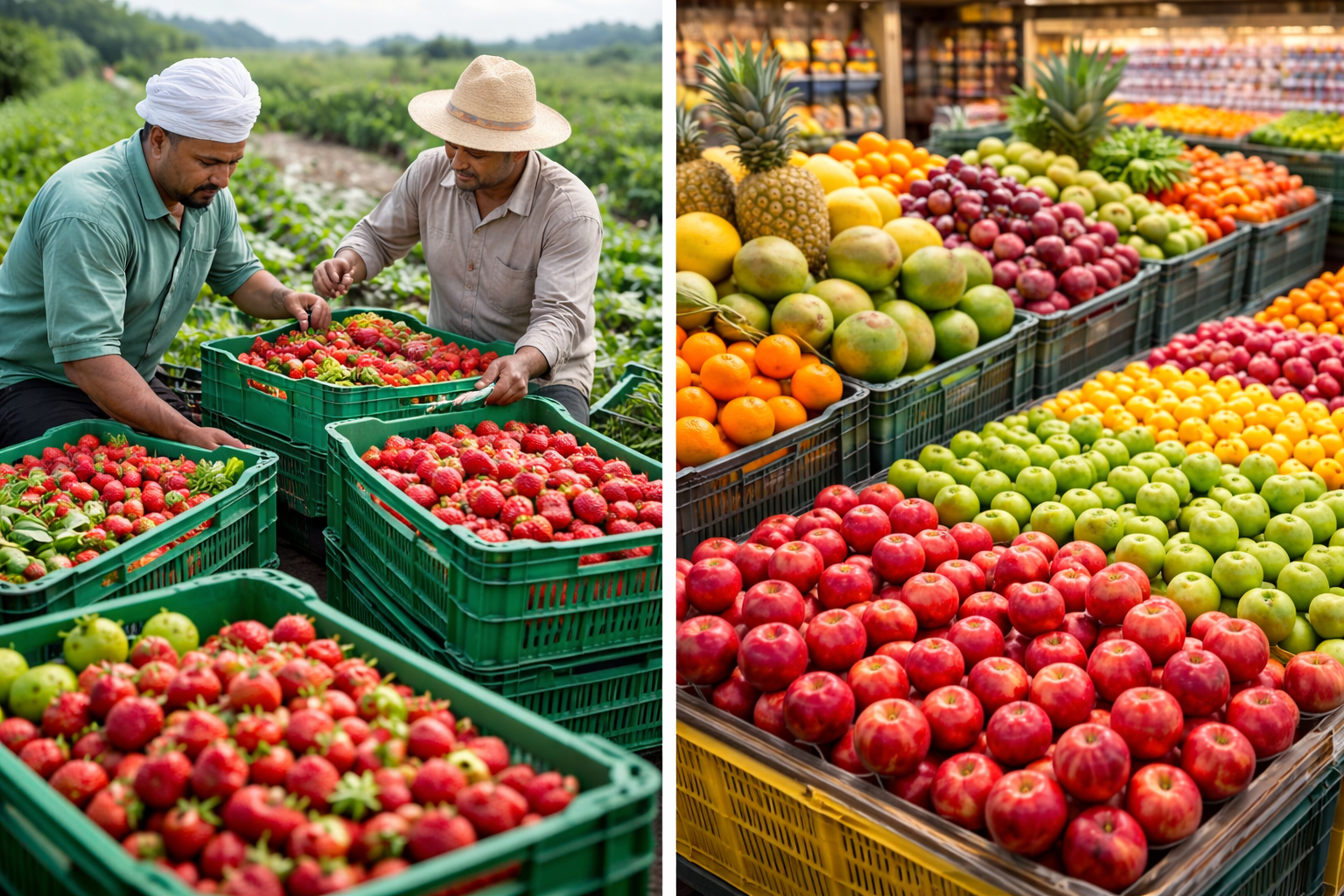
Modern agriculture cold chain management is not a single point of intervention - it is a series of connected steps, each of which has to perform optimally for the chain to provide maximum value.
Farm Harvest and Pre-Cooling Conditions
The cold chain management begins at the point of harvest. The most critical — and also the most neglected process is pre-cooling: rapidly lowering the accumulated field heat of freshly harvested produce before it’s shifted to storage or for transport. Pre-cooling techniques include forced air cooling, vacuum cooling, and hydrocooling. If this step is missed, it leads to loading warm product into a reefer vehicle and expecting its temperature to cool down after — a damaging practice that results in uneven temperature distribution, condensation features, and fast decay on the pallet’s outer layer.
Aggregation and Cold Storage
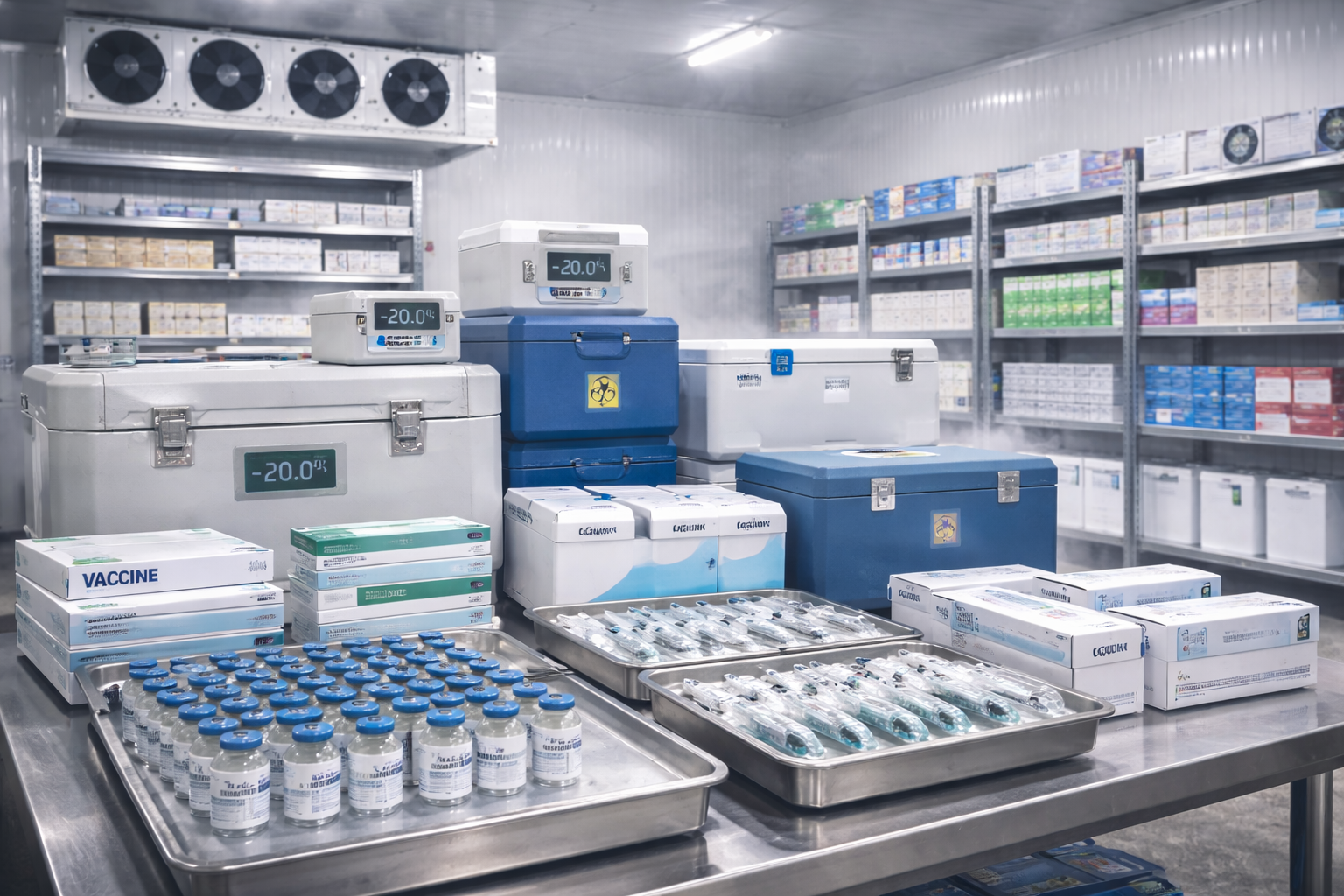
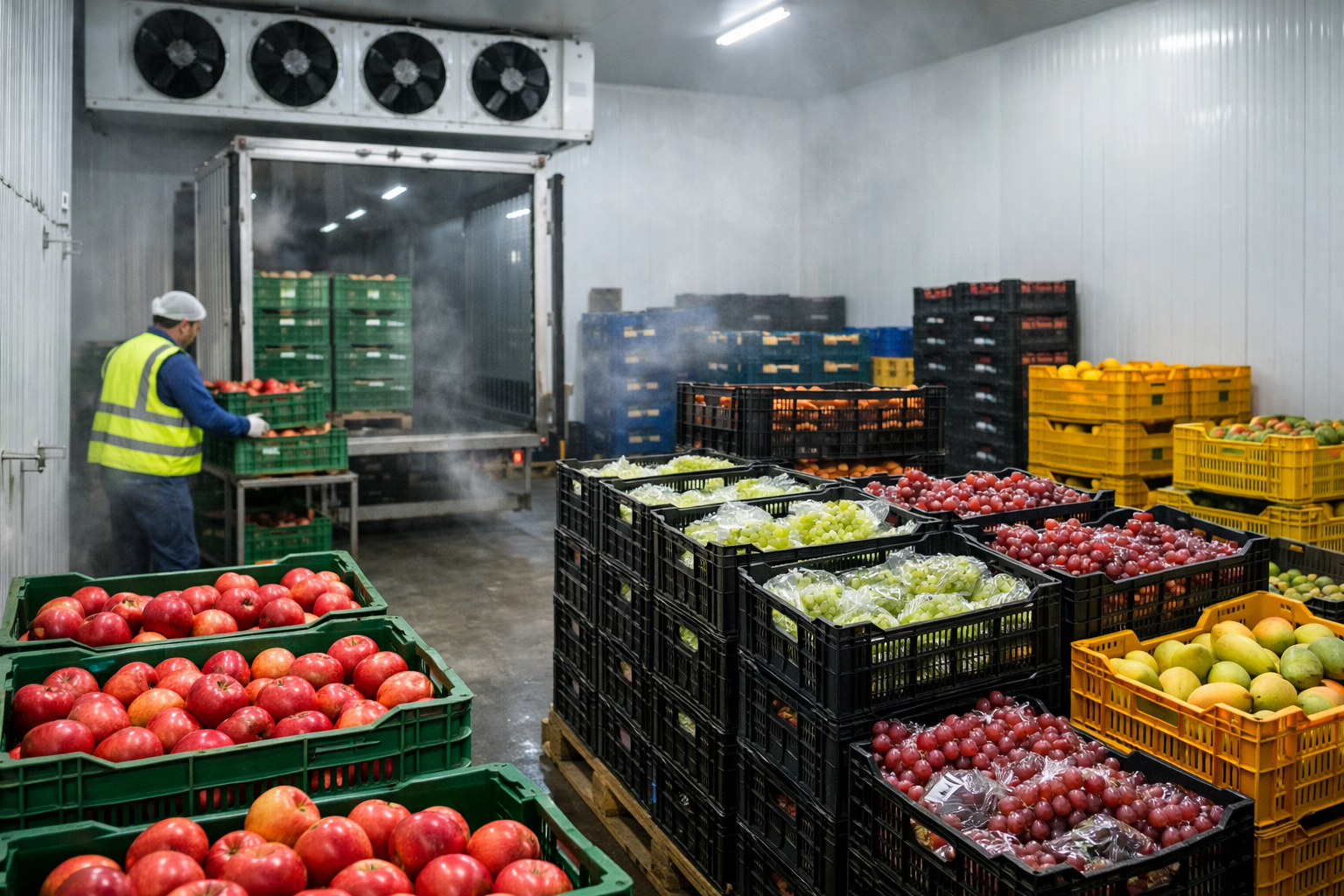
After pre-cooling, the produce is shifted to aggregation sites — Farmer Producer Organisations (FPOs), collection centres, or central mandis. This is the juncture at which the agri cold storage solutions become the main decisive factor. India currently has over 8,689 cold storage facilities with a total capacity of 39.6 million metric tonnes — but the estimated requirement is over 50 million metric tonnes. The capacity gap is significantly high, and more than 70% farmers lack access to convenient cold storage options, with large quantities of produce stored in ambient temperature conditions at open farms or left in the open mandis.
Temperature-Controlled Transportation
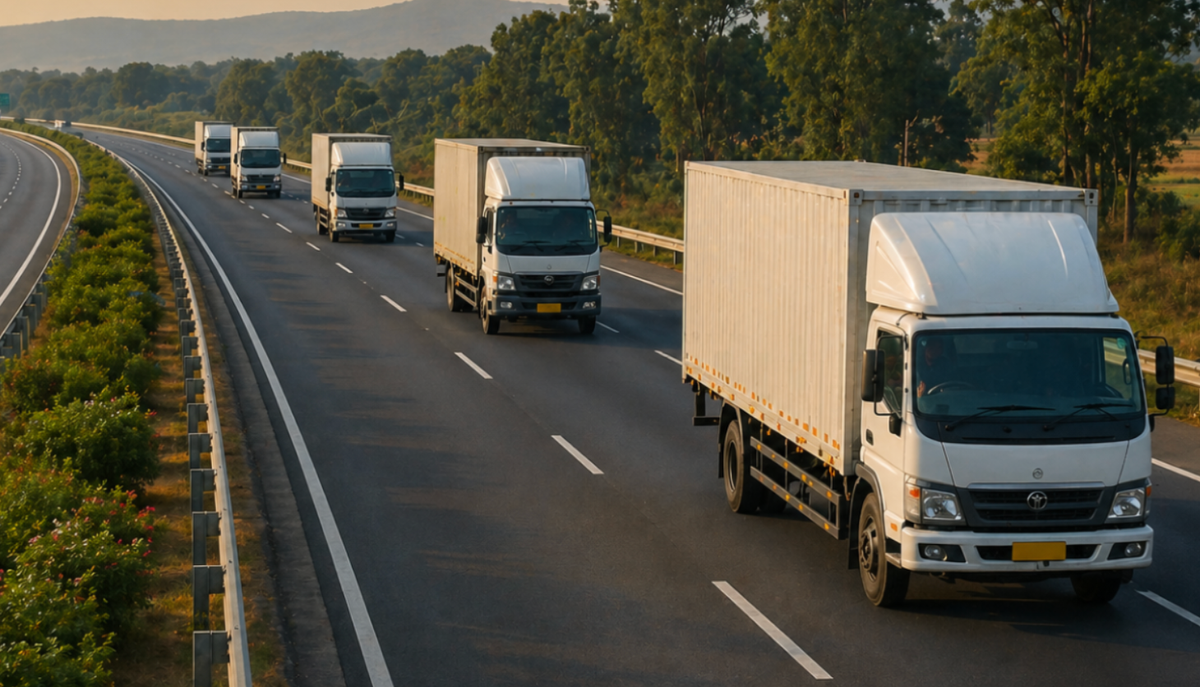
This is the point at which fruit and vegetable cold storage logistics connects most transparently with operations. Reefer trucks — refrigerated vehicles with active cooling units — are the primary levers of cold chain transport. Yet India's refrigerated transport fleet operates around just 10,000 vehicles, a critically inadequate figure for a country with India's agricultural scale and geographical area.
The temperature mandates are specific and absolutely essential. Banana transportation needs to be at 13–14°C to eliminate effects of chilling on one end and untimely ripening on the other. Leafy vegetables require 2–4°C and regulated humidity environments to prevent wilting. Tomatoes require 7–10°C. Any deviations — even a few hours in the Indian summer — leads to quality issues that cannot be reversed.
Practical cold chain monitoring systems enable fleet operators in tracking cabin temperature in real-time, receive alerts the moment temperature thresholds are tripped, and generate trip-wise compliance reports. This operational visibility is the difference between detecting a refrigeration unit failure mid-route and the spoiled cargo after it reaches the destination.
Ripening Control and Distribution
Fruit ripening control logistics is an additional layer on the basic temperature management. In this context, bananas are a well-recorded example: green bananas are moved at 13°C in reefer vehicles and then shifted to specific ripening compartments where the temperature is raised to 17°C and ethylene gas is used in a controlled manner. This initiates the ripening stage specifically to deal with retail requirement — a mechanism that makes it possible for banana distribution from the Karnataka or Tamil Nadu farms to retailers situated thousands of kilometres away without any damage.
The same concept — regulating the ripening environment instead of leaving it to circumstances — the same is applicable to mangoes, tomatoes, and avocados. In the absence of productive control mechanisms and temperature tracking at every point of handover, the variation in the ripeness stages becomes normal and rejection levels at retail expand.
 Sujata Dey
The Point of Highest Leakage in the Indian Agri Supply Chain
Understanding where the revenue losses are at the highest occurrence levels assists with the post-harvest loss reduction. The NABCONS data states:
- Guava holds the largest fruit-based loss at 15.05%, mainly because of fast ripening and insufficient cold chain presence in the key production zones.
- Tomato leakage reach 11.62%, based on its limp texture, limited shelf life, and price-based harvesting that overpowers mandis with over-ripe inventory.
Leafy vegetables such as spinach, coriander, and fenugreek are susceptible produce as well. Vegetable transport temperature management for leafy items is exceptionally taxing: at ambient Indian summers, hovering around 35–45°C, these vegetables might drop 30–40% of the water content and most of their marketable value within 12 hours of being harvested.
More than 90% of India's cold chain logistics sector is fragmented and private-owned, with no standardization in place. Reefer vehicles availability is inadequate and breakdowns are a common occurence. The issues make up a supply chain where refrigeration has become an exception instead of a mandate for most of the country's fruit and vegetable production.
How Effective Cold Chain Adoption Changes the Scenario
For agri businesses, exporters, and retail distributors who invest in structured fresh produce cold chain logistics, the business outcomes are fairly measurable:
Longer Shelf Life - Adequate temperature regulation from farm to shelf extends the marketable span of nearly all fruits and vegetables by 3–7 days, overhauling the mechanism of long-haul transport and export.
Lower Rates of Rejection - Cold chain-approved consignments reach retail or export destinations and meet the specifications well. Unregulated consignments reach with variable qualities, leading to partial or full dismissals that eat away the margins.
Higher Farmer Prices - NABARD data states that access to cold chain systems can improve farmer earnings by 15–20%. Such systems enable producers to store produce at optimal quality instead of panic-selling post-harvest.
Export Standard Compliance - India's fresh export items — mangoes to the Middle East, grapes to Europe, fresh vegetables to Southeast Asia, are regulated by phytosanitary and quality standards that need recorded temperature conformity. Fleet management platforms that provide trip-based temperature logs are increasingly an essential, not a differentiator anymore.
The Role of Technology: Monitoring, Optimizing Routes, and Ensuring Visibility
Current farm to market supply chain management for perishable items is based on three technology pillars:
Cold chain monitoring systems utilize IoT sensors within reefer vehicles and inside cold rooms to document temperature and humidity levels at periodic intervals. Any irregular deviation sets off an instant alert, enabling corrective action before a full load is damaged. Increasingly, integrated platforms such as Fleetx are bringing these data points into a single interface allowing businesses to monitor temperature, track routes, and analyse delays without relying on disconnected systems.
Route optimisation minimises travel time — critical, because every extra hour in transit at incorrect temperatures is a definite quality degradation. Smart routing also accounts for traffic, road conditions, and delivery spans that ensure the produce reaches the destination within its permissible temperature levels.
GPS-based fleet tracking provides logistics operators and agri businesses with real-time visibility into the vehicle locations, the stoppage durations, and whether the refrigeration unit is functional. For businesses that operate dedicated fleets across long-haul agri routes, this visibility changes exception management from reactive to proactive.
Time to Reinvent India’s Supply Chain is Now
The agricultural potential of India is huge but the harvested potential leaves a big gap. Every quintal of guava over-ripens in transit, every spinach cargo wilts before reaching the destination, and more such damages occur due to the untapped potential.
The losses keep compounding for the farmers who grew it, the businesses that transported it, and the consumer too. Closing this wide gap with technology solutions has become non-negotiable in a mature economy like India. The data on losses incurred is unambiguous and what remains to be done is the investment needs to spike in the end-to-end cold chain operations - because in perishable logistics, cold chain is not a value addition, it’s the bare minimum now.
FAQs
What is the primary reason behind post-harvest losses in the Indian fruits and vegetables market?
The absence of a well-regulated and effective cold chain system through the farm-to-market journey is the main reason for the sector’s compounding losses. Poor farming practices aren’t the root cause. The fruits and vegetables continue to emit ethylene, undergo respiration, and lose moisture in the absence of a regulated cold chain framework at every stage. Spoilage becomes the expected outcome instead of an exception due to the ambient temperature and climate conditions along the long-haul routes.
What is the role of the cold chain infrastructure in reducing agricultural spoilage?
Cold chain monitoring systems combine several technology features to control perishable item spoilage from a reactive to a proactive perspective: IoT-based temperature and humidity monitoring systems inside reefer vehicles and cold storage rooms, trigger alerts in case of excursions, route optimization tools reduce transit times to lower quality degradation, and GPS fleet tracking provide optimum visibility into the vehicle location and status of the refrigeration unit in real-time.
Is investing in cold chain infrastructure actually beneficial for farmers and agri-businesses?
Yes, it’s a productive proposition. Access to cold chain storage systems raise farmer earnings by eliminating the scope of panic-selling after harvest. Retail rejection rates are lowered significantly and the inventory shelf life gets extended by 3-7 days, often meeting the standards of international markets as well.