India's road freight industry moves over 65% of the country's goods - nearly 2,300 billion tonne-kilometres annually. Behind every successful transport operation are hundreds of moving parts: vehicles on highways, drivers managing tight schedules, fuel costs eating into margins, compliance paperwork piling up, and customers demanding real-time delivery updates.
For most Indian transporters, managing all of this has historically meant spreadsheets, phone calls, and gut instinct. That works when you run 5 trucks. It breaks down at 50, and completely falls apart at 500.
Fleet management software exists to bring order to this complexity. But not all platforms are built equal - and for Indian transporters specifically, the requirements are distinct. AIS 140 compliance, e-way bills, VAHAN integration, fuel adulteration, and India's highway network all create specific demands that generic global software simply doesn't address.
This guide covers every key component of a fleet management software - what each does, why it matters for Indian operations, and what to look for when evaluating a platform.
1. GPS Vehicle Tracking & Real-Time Visibility
The foundation of any fleet management system is knowing where your vehicles are at all times.
What it does
GPS tracking uses a network of satellites to pinpoint each vehicle's location, speed, heading, and movement history. A device installed in the vehicle transmits this data over a mobile network (4G/2G) to a cloud platform, where it's displayed on a live map.
At its most basic: you open the dashboard, see all your trucks on a map, and know which ones are moving, which are parked, and which have deviated from their planned route.
Why it matters for Indian transporters
India's highway network spans over 1.46 lakh kilometres of national highways, and trucks regularly cover routes from Punjab to Tamil Nadu, Gujarat to West Bengal. Without real-time tracking:
- You rely on drivers calling in their position - which is unreliable and disruptive
- Customer ETAs are guesses, not calculations
- Unauthorised route deviations go undetected
- Theft, hijacking, and vehicle misuse are discovered after the fact
With GPS tracking, a fleet manager in Delhi can monitor a truck leaving Mumbai, see it approach Pune, flag a three-hour halt at an unauthorised stop, and notify the customer with an accurate delivery estimate - all without a single phone call. Kataria Transport found this visibility transformational: before Fleetx, drivers were idling for hours with no accountability, and dispatchers were managing everything through phone calls. After deployment, Kataria achieved a 20% reduction in vehicle turnaround time, eliminated Excel sheets and WhatsApp as operational tools, and saw a 7% increase in vehicles actively running at any given time.
What to look for
- AIS 140 compliance: Mandatory for all commercial vehicles in India as per MoRTH guidelines. The device must include a panic button, two-way government VLT server communication, and tamper detection
- Update frequency: 30-second to 1-minute intervals for live tracking; less frequent = less useful
- 2G fallback: Large portions of Indian national and state highways still have patchy 4G coverage. Devices must buffer and sync data when connectivity drops
- Historical trip playback: The ability to replay any vehicle's route for any past date - essential for dispute resolution and driver performance review
- Geofencing: Virtual boundaries that trigger automatic alerts when vehicles enter or exit depots, customer sites, or restricted zones
2. Fuel Management & Theft Prevention
Fuel is typically the single largest operating cost for Indian fleet operators - accounting for 30 to 45% of total trip cost depending on vehicle type and route. It is also, unfortunately, where the most leakage occurs.
What it does
Fuel management systems track consumption, compare actuals against benchmarks, detect anomalies, and in advanced deployments, use integrated fuel sensors to monitor tank levels in real time.
The fuel leakage problem in Indian fleets
Fuel theft and misuse takes several forms in Indian transport operations:
- Short fuelling: The fuel station pumps less than the invoice amount, with the driver pocketing the difference
- Siphoning: Fuel is drained from the tank overnight or during long halts
- Mileage inflation: Drivers inflate trip distances to claim higher fuel reimbursements
- Idle burning: Vehicles left running at loading docks, weigh bridges, or border checkpoints waste significant fuel
Experienced fleet managers estimate that unmonitored fleets lose 8–15% of fuel spend to various forms of leakage. On a fleet spending ₹50 lakh/month on fuel, that's ₹4–7.5 lakh walking out the door monthly.

How fleet software addresses this
GPS-based mileage calculation eliminates inflated distance claims by recording actual kilometres travelled for every trip. Fuel consumption per kilometre is automatically benchmarked against each vehicle type and route profile.
Fuel sensor integration connects a calibrated probe in the fuel tank to the fleet management platform. Every fuelling event - pump location, volume added, time - is recorded automatically. A sudden drop in tank level while the vehicle is parked triggers an immediate siphoning alert.
Fuelling location control allows operators to approve specific fuel stations for each route. Fuelling at an unapproved location triggers an alert for investigation.
Driver behaviour monitoring tracks overspeeding and aggressive driving that increases fuel burn. A truck consistently travelling at 80 km/h instead of 60 km/h on the same route consumes 20–30% more fuel.
What to look for
- Integration with major fuel card providers for automated reconciliation
- Fuel fill detection accuracy (should detect fills as small as 20–30 litres)
- Route-wise fuel benchmark configuration (highway vs urban vs loaded vs empty)
- Anomaly detection alerts with configurable thresholds
3. Driver Management & Behaviour Monitoring
Vehicles don't move by themselves. The quality of your driver base determines safety outcomes, fuel efficiency, vehicle wear, and ultimately customer satisfaction.
What it does
Driver management software maintains profiles for every driver - licence details, medical fitness, training records, trip history - and monitors driving behaviour in real time using GPS and telematics data.
Key capabilities
Behaviour event detection uses GPS speed data and accelerometer readings to flag:
- Overspeeding (configurable thresholds by road type)
- Harsh braking events
- Harsh acceleration
- Sharp cornering
- Prolonged idling
Each event is logged against the driver's profile and aggregated into a driver score. Managers can rank drivers by safety performance, identify repeat offenders, and prioritise coaching.
Trip assignment allows dispatchers to assign specific drivers to specific trips within the platform, creating accountability and ensuring only authorised, licenced drivers operate each vehicle.
Document expiry tracking monitors licence validity, medical fitness certificates, and training certifications - automatically alerting managers when renewals are due, before a compliance issue becomes an operational problem.
Electronic Proof of Delivery (ePOD) replaces paper delivery receipts with digital confirmation. Drivers capture delivery photos, customer signatures, and timestamps through a mobile app. Disputes about whether a delivery was made - and when - are resolved with a timestamped digital record.
Why this matters specifically in India
India has one of the highest road accident rates in the world. Commercial vehicles are involved in a disproportionate share of fatal accidents, and a significant proportion involve overspeeding and driver fatigue on long-haul routes. Beyond the human cost, a single serious accident can expose a transport company to significant liability, insurance claims, and vehicle downtime.
Driver behaviour monitoring creates measurable safety improvement. Fleets that deploy behaviour monitoring and coaching consistently report 20–40% reductions in harsh event frequency within the first six months. Shivani Carriers, for instance, deployed Fleetx's live tracking and driver behaviour monitoring across their fleet and saw a 30% reduction in overspeeding events alongside a 20% improvement in overall fleet visibility - improvements that directly fed into both safety outcomes and fuel savings on their routes.
4. AI-Powered Video Telematics & Dashcams
This is the fastest-growing component of modern fleet management - and it's moving from nice-to-have to essential for safety-conscious operators.
What it does
AI dashcams combine forward-facing (road) and driver-facing (cabin) cameras with onboard AI processing. The AI continuously analyses the video feed and detects specific events in real time:
- Driver distraction: Eyes off road, phone use while driving
- Drowsiness and fatigue: Eye closure, head drooping, microsleeps
- Seatbelt non-compliance
- Smoking in the cabin
- Forward collision warning: Vehicle ahead braking suddenly
- Lane departure warning
- Tailgating and unsafe following distance
When an event is detected, the system can trigger an immediate in-cabin audio alert to the driver, send a real-time notification to the fleet manager, and save a short video clip to the cloud for review.
Beyond safety: operational and legal value
Video evidence from dashcams has significant value beyond accident prevention:
False insurance claims: India has a documented problem of deliberate vehicle-ramming and fake accident claims targeting commercial vehicles. Dashcam footage providing video evidence of what actually happened has saved fleet operators from fraudulent liability claims worth lakhs of rupees per incident.
Driver dispute resolution: When a driver claims a customer was abusive, a delivery was refused, or a road was blocked, video evidence removes subjectivity from the investigation.
Cargo security: Interior cameras in cargo vehicles provide documentation of cargo condition at loading and unloading, protecting against false damage claims.
The impact at scale can be dramatic. FlixBus India deployed AI-enabled dual-lens dashcams across all 200 buses with Fleetx - capturing both road and cabin simultaneously - and achieved a 65% reduction in breakdowns while establishing a 24×7 safety control tower that monitors driver behaviour and responds to incidents across their entire intercity network in real time. AbhiBus similarly deployed dashcam-centric solutions focused specifically on enhanced passenger safety - using AI event detection and real-time alerts to build accountability across their bus operations. For both operators, AI dashcams weren't a supplementary feature; they were the core of the safety programme.
 Fleetx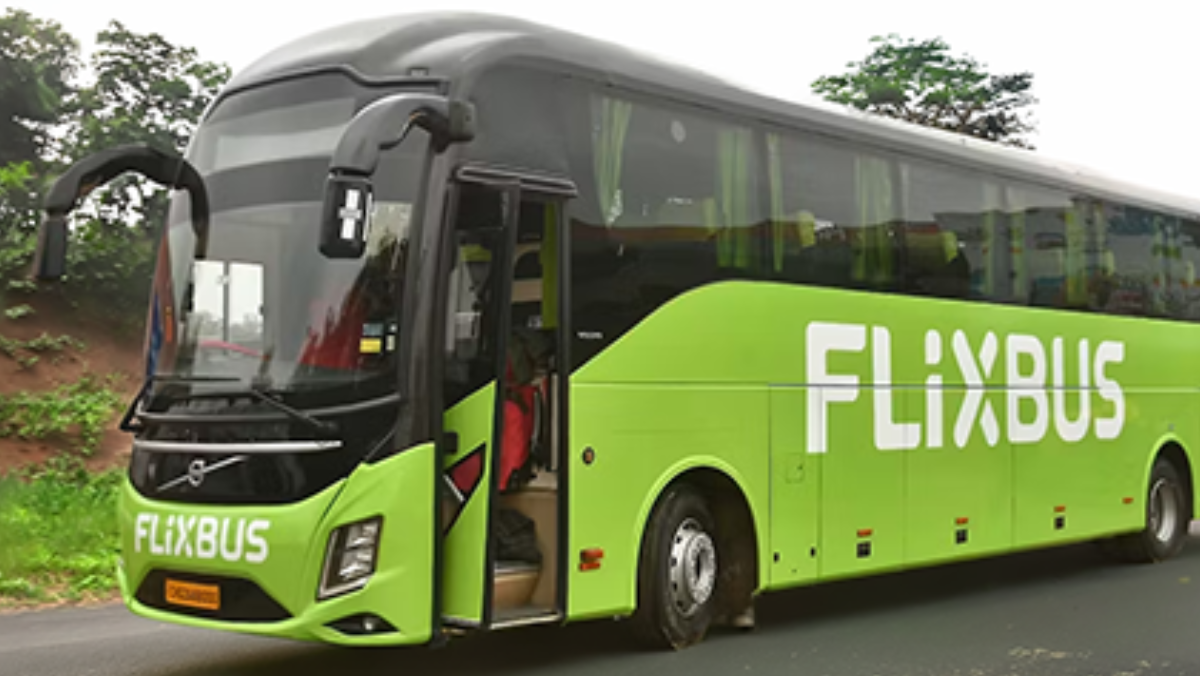
What to look for
- Edge AI processing (events detected on-device, not requiring constant cloud connectivity)
- 4G video upload capability for real-time clip review
- Night vision capability for long-haul overnight operations
- ADAS (Advanced Driver Assistance System) features: collision warning, lane departure
- Cloud storage with configurable retention period
5. Route Planning & Optimisation
Getting from A to B is easy. Getting from A to B via C, D, E, and F - with different time windows, vehicle capacity constraints, and traffic conditions - is an optimisation problem that humans solve poorly at scale.
What it does
Route planning software calculates the most efficient sequence and path for multi-stop delivery routes. It factors in:
- Vehicle capacity (weight and volume)
- Delivery time windows at each stop
- Driver working hours and mandatory rest breaks
- Traffic patterns and road conditions
- Toll costs
- Vehicle type restrictions (height, weight limits on specific roads)
The scale problem
A dispatcher manually planning routes for 20 vehicles making 5 deliveries each faces a combinatorial problem with billions of possible sequences. The best human planners solve it heuristically - roughly and inconsistently. Route optimisation software solves it mathematically, consistently, and in seconds.
The savings are real: most fleet operators implementing route optimisation report 10–20% reduction in total kilometres driven per day, directly translating to fuel savings and increased delivery capacity from the same vehicle fleet. ArcelorMittal Nippon Steel India faced a sharper version of this problem - nearly 10% of trips across their outbound logistics network were experiencing route deviations, creating material diversion risks and governance exposure. After deploying Fleetx with live route compliance monitoring and structured alert systems, deviation rates dropped from 10% to under 2%, and field-level accountability was established across the entire network.
Read full case study here: ArcelorMittal Nippon Steel India Cuts Route Deviation from 10% to Under 2% with Smarter Logistics
India-specific considerations
Toll optimisation: India's national highway network has extensive toll infrastructure. Route planning should factor in FASTag toll costs by route, allowing genuine cost-based route comparison.
Restricted entry zones: Many Indian cities have time-based commercial vehicle entry restrictions. Planning must account for which zones are accessible at which times for each vehicle type.
Real-time rerouting: Traffic congestion, road closures, and accidents are frequent on Indian highways and in urban areas. The system should be able to suggest reroutes dynamically when a vehicle is on the road.
6. E-Way Bill Management & Compliance Automation
For Indian transporters, compliance is not an optional feature - it's a daily operational necessity. And no compliance requirement has changed fleet operations as significantly as GST e-way bills.
What it is
An e-way bill is a mandatory electronic document required for movement of goods worth more than ₹50,000 across state borders (and in many states, within states as well). Every consignment requires a valid e-way bill, and transporters are jointly liable for compliance.
The compliance pain points
- E-way bills expire based on distance: typically 100 km per day of validity
- Bills must be extended if a vehicle is detained, experiences a breakdown, or encounters delays at state borders or ports
- Carrying goods with an expired e-way bill risks detention of vehicle and cargo, and penalties of ₹10,000 or the tax amount, whichever is higher
- Manual tracking of bill expiry across a large fleet is error-prone and time-consuming
How fleet software solves this
Automatic expiry monitoring tracks the validity of every e-way bill across the fleet and alerts dispatchers when bills are approaching expiry - at configurable intervals (say, 6 hours and 2 hours before expiry).
GPS-triggered extension: When a vehicle's GPS position shows it hasn't covered the expected distance (due to delays, diversions, or detention), the system can automatically flag the bill for extension before expiry.
Integrated generation: Advanced platforms integrate with the government e-way bill portal to generate bills directly within the fleet management system, eliminating double data entry.
Document digitisation: All trip documents - bilty, e-way bill, vehicle fitness certificate, driver licence, goods insurance - are stored digitally and accessible from any device, reducing the paperwork burden at checkpoints.
7. Vehicle Health & Maintenance Management
A truck that breaks down on NH-44 at 2 AM isn't just a maintenance problem - it's a missed delivery, a stranded driver, a customer service failure, and a recovery cost that could easily exceed ₹20,000–50,000 for a long-haul breakdown.
What it does
Fleet maintenance management tracks vehicle health, schedules preventive maintenance, monitors real-time diagnostic data from the vehicle's OBD (On-Board Diagnostics) port, and manages the full service history of every vehicle.
Preventive vs reactive maintenance
Most Indian fleet operators run reactive maintenance - fix it when it breaks. This is expensive. Preventive maintenance - service it before it breaks - reduces breakdown frequency, extends vehicle life, and keeps vehicles on the road.
Fleet software enables preventive maintenance by:
- Tracking service intervals by kilometres driven, engine hours, or calendar time
- Automatically scheduling service reminders before intervals are due
- Maintaining complete service history for each vehicle (critical for insurance claims and resale value)
- Tracking tyre mileage and flagging rotation and replacement schedules
OBD and telematics integration
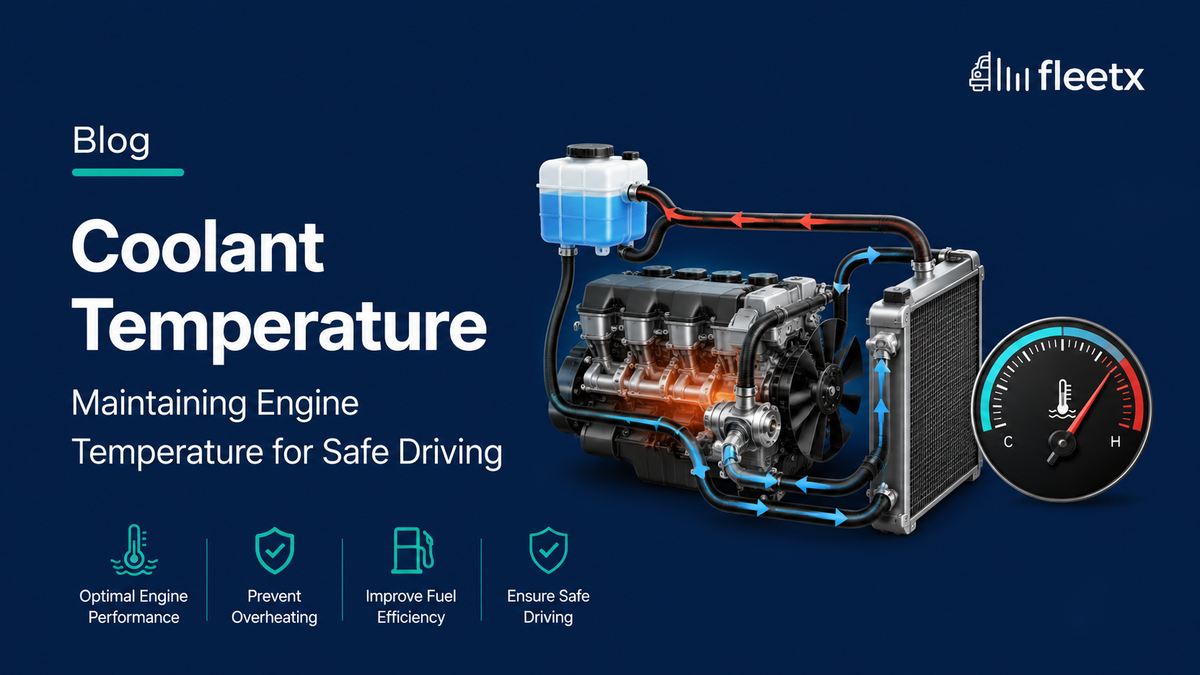
Modern commercial vehicles equipped with OBD ports allow the fleet management system to read real-time engine data: RPM, coolant temperature, battery voltage, fuel pressure, and - most valuably - active fault codes. When the engine management system detects an issue and throws a fault code, the fleet platform receives it immediately and can alert the maintenance team before a small problem becomes a roadside breakdown.
Tyre management
Tyres are one of the largest maintenance expenses in Indian fleet operations. Tyre management modules track:
- Fitment history (which tyre is on which axle position on which vehicle)
- Mileage accumulated on each tyre
- Retreading cycles
- Vendor-wise performance comparison
- Cost per kilometre by tyre brand and type
The ability to compare tyre performance across brands and routes gives procurement teams objective data for vendor negotiations. And for operations dependent on supply chain security - like Electrosteel Castings Limited (ECL), which runs a dedicated fleet for coal transportation - Fleetx's integrated VTS, E-Seal technology, and route intelligence delivered zero cargo theft over a three-year period alongside 100% fleet TAT visibility across their imported coal supply chain.
Read full case study here: How Electrosteel Castings Limited (ECL) Achieved Zero Theft Over 3 Years with End-to-End Supply Chain Intelligence from Fleetx
8. Transporter & Vendor Management
For shippers and logistics companies managing a panel of transporters, or for large fleet operators managing sub-contractors, the relationship between principal and transporter is itself a data management challenge.
What it does
Transporter management modules handle:
Rate contract management: Storing agreed freight rates by lane, vehicle type, and time period. When a new trip is created, the system automatically applies the correct contracted rate for billing.
Performance tracking: Monitoring each transporter's on-time performance, damage claims, and compliance record over time. Objective performance data replaces gut-feel vendor assessment.
RFQ and freight bidding: Digitising the process of inviting rate quotes from transporters for new lanes, collecting bids in a structured format, comparing them, and awarding contracts - all within the platform.
Invoice reconciliation: Matching transporter invoices against trip records, contracted rates, and advance payments. Disputes are resolved with data rather than phone arguments.
9. Control Tower & Analytics Dashboard
All the data in the world is useless without visibility and analysis. The control tower is the intelligence layer of a fleet management platform - turning raw operational data into insight that drives decisions.
What a good analytics dashboard provides
Fleet-level KPIs at a glance:
- Fleet utilisation rate (what % of vehicles are active vs idle)
- On-time delivery performance
- Average fuel efficiency by vehicle type and route
- Trip completion rates
- Total distance covered
Exception-based management: Rather than requiring managers to review every vehicle every day, the control tower surfaces only what needs attention - vehicles that are behind schedule, drivers with high harsh-event counts this week, bills expiring in the next two hours, vehicles with active fault codes.
Trend analysis: Fuel efficiency trends over time, driver score trends, maintenance cost trends. Identifying whether performance is improving or deteriorating requires historical comparison, not just today's snapshot.
Custom reporting: Operations managers, finance teams, and senior management have different reporting needs. A good platform allows custom report creation and automated scheduling - so the CFO receives a monthly fuel cost summary without anyone having to manually compile it. A leading cement manufacturer deployed this capability with Fleetx - getting automated, individualised job completion reports with customised metrics - and the visibility unlocked a 25% improvement in truck availability, which translated to a 39% increase in delivery frequency without adding a single vehicle.
10. Mobile Apps for Drivers & Field Teams
Fleet management software isn't just a desktop tool for managers. The people doing the work - drivers on the road, supervisors at yards - need mobile access to the platform.
Driver app capabilities
- Trip details and delivery instructions
- Navigation with route guidance
- ePOD: photo capture, digital signature collection, delivery confirmation
- Document upload: drivers can photograph and upload trip documents in the field
- Panic button / SOS for safety emergencies
- In-app communication with dispatch
Supervisor and field team apps
- Live fleet map view on mobile
- Alert notifications with one-tap acknowledgment
- Vehicle inspection checklists (pre-trip and post-trip)
- Fuelling approval workflows
The driver app is particularly important for ePOD adoption. If the app is slow, complicated, or requires constant connectivity, drivers won't use it consistently. Look for apps designed for low-literacy users, available in regional languages, and functional on low-end Android devices with intermittent connectivity.
How the Components Work Together: A Day in the Life
To understand why integration matters, consider a typical day for a fleet manager at a mid-sized transport company running 80 trucks:
6:00 AM: The control tower dashboard shows 12 trucks currently on the road from overnight departures. Two have e-way bills expiring in 4 hours - alerts were sent automatically at midnight.
7:30 AM: A GPS alert fires: Vehicle MH-12-AB-1234 has entered an unapproved geofence (a fuel station not on the approved list). The fuel sensor confirms a fill of 120 litres. Investigation initiated.
9:00 AM: Driver Suresh Kumar's AI dashcam detected two drowsiness events in the last hour on NH-48. An automatic in-cabin alert was triggered both times. The operations manager receives a notification and calls Suresh to check in.
11:00 AM: A route planning request comes in for 15 deliveries across Pune's industrial zones. The system calculates an optimised route sequence considering time windows and vehicle capacity, saving an estimated 85 km vs. the dispatcher's manual plan.
2:00 PM: The maintenance module flags that Vehicle TN-09-CD-5678 is due for a 40,000 km service in 800 km. A service appointment is scheduled for when the vehicle returns to depot.
5:00 PM: Monthly analytics report is auto-generated: fuel efficiency improved 4% vs. last month; three drivers have improvement scores; overall fleet utilisation at 78%.
None of this is possible with disconnected systems. The value of a fleet management platform is precisely the integration - data from GPS, telematics, sensors, documents, and driver apps flowing into a single system that gives operations teams the visibility to manage proactively rather than reactively.
Choosing the Right Fleet Management Software for Your Operation
Questions to ask before selecting a platform
1. Is the fleet management software built for India? Look for: AIS 140 certification, e-way bill integration, VAHAN integration, support for Indian regional languages, customer support in Indian time zones.
2. What hardware does it require? Some platforms are hardware-agnostic; others require proprietary devices. Understand the hardware cost, installation process, and what happens if a device fails.
3. How does it handle connectivity gaps? India's rural highway network has significant 2G-only zones. Devices must buffer data and sync reliably when connectivity is restored.
4. What does implementation look like? A fleet of 100 trucks requires coordinated device installation, platform configuration, and driver/manager training. Ask for a clear implementation plan and timeline.
5. What is the total cost of ownership? Factor in: hardware cost, monthly software subscription, installation costs, and any per-feature pricing. Compare cost per vehicle per month across options.
6. Who are their reference customers? Ask for references from fleets similar to yours in size, vehicle type, and industry. A platform that works well for cold chain logistics may have different strengths than one optimised for long-haul bulk transport.
Fleet management software is no longer a luxury for large operators - it's increasingly the operational baseline for any transport business that wants to compete on efficiency, safety, and service quality.
The components covered in this guide - GPS tracking, fuel management, driver monitoring, AI dashcams, route optimisation, compliance automation, maintenance management, transporter management, analytics, and mobile apps - each address a specific operational pain point. Together, they create a system where data replaces guesswork, exceptions are caught before they become crises, and every rupee spent on operations is accountable.
For Indian transporters navigating thin margins, rising fuel costs, growing compliance requirements, and increasingly demanding customers, the question is no longer whether to invest in fleet technology - it's which platform to choose, and where to start.
Most successful implementations begin with one clear priority - fuel cost reduction, or safety improvement, or compliance- and expand from there as the team builds confidence with the system. The important thing is to start.
```html id="fleetmanagementfaq"FAQs – Fleet Management for Indian Transporters: Key Components of a Fleet Management Software
What is fleet management software for transporters?
What are the key components of a fleet management system?
How does GPS tracking help Indian transport businesses?
Why is fuel management important in fleet operations?
How does fleet management software improve driver safety?
What role do real-time alerts play in fleet management?
Can fleet management software help reduce operational costs?
Why are Indian transporters adopting AI-based fleet management solutions?