Every vial of insulin for a diabetic patient, every vaccine to protect a child from contracting polio, every drug that gives a fighting chance to a cancer patient - all share a common requirement - a precise storage temperature across the drug’s lifecycle, from manufacture to final administration. Cold chain logistics for pharmaceuticals is the framework that defines the success or failure of the comprehensive process.
Understanding the nuances of pharma cold chain logistics is not just a matter of ensuring operational efficiency, but rather a regulatory and patient safety mandate - a metric that the industry cannot regard as secondary.
Significance of Cold Chain Logistics for Pharmaceuticals
The global pharma supply chain controls some of the most temperature-sensitive drugs in existence - biologics, mRNA vaccines, insulin, monoclonal antibodies, and others - demand strictly regulated environments. Even a minor temperature variation, of even a few minutes, outside the defined window can degrade the drug’s potency by altering the molecular composition that renders the product clinically ineffective or unsafe for usage.
The scale of dependency is extremely high - literally a matter of life and death. The World Health Organization (WHO) data estimates that up to 50% vaccines are wasted globally every year, with inaccurate temperature control mechanisms accounting for a major portion of the losses incurred. For healthcare providers and pharma distributors, this inadequacy leads to millions of dollars in product write-offs and, more critically, preventable failures in healthcare services for patients.
Thus, ensuring a sturdy pharma logistics network is the foundational argument for investing in this domain.
The End-to-End Lifecycle of the Pharma Cold Chain Logistics
An effective pharmaceutical cold chain management comprises the complete journey of a drug - from the moment of production to reaching the patient’s bedside. There are risks associated with each stage that demand specific environmental controls.
Manufacturing and Primary Packaging
Cold chain discipline is initiated at the point of manufacture. Temperature-sensitive formulations have to be swiftly transferred into regulatory packaging - insulated containers, cryogenic vessels, or other temperature-monitored units - before exiting the manufacturing facility. The drug’s stability report defines packaging specifications that have to be followed by the book.
At this stage, the cold chain audit trail starts, consisting of batch documentation, temperature mapping of storage sections, and quality assurance processes - documented records to be utilized by regulators in case of any compliance scrutiny.
Cold Storage Warehousing
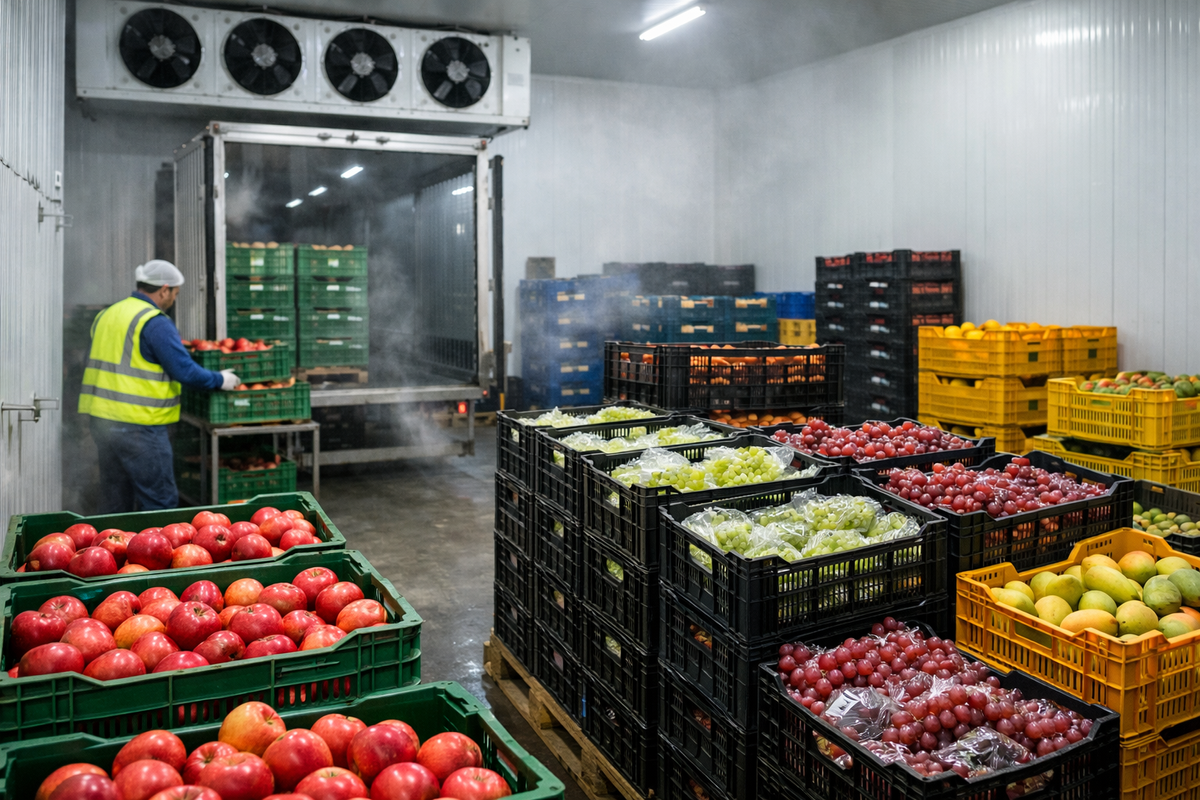
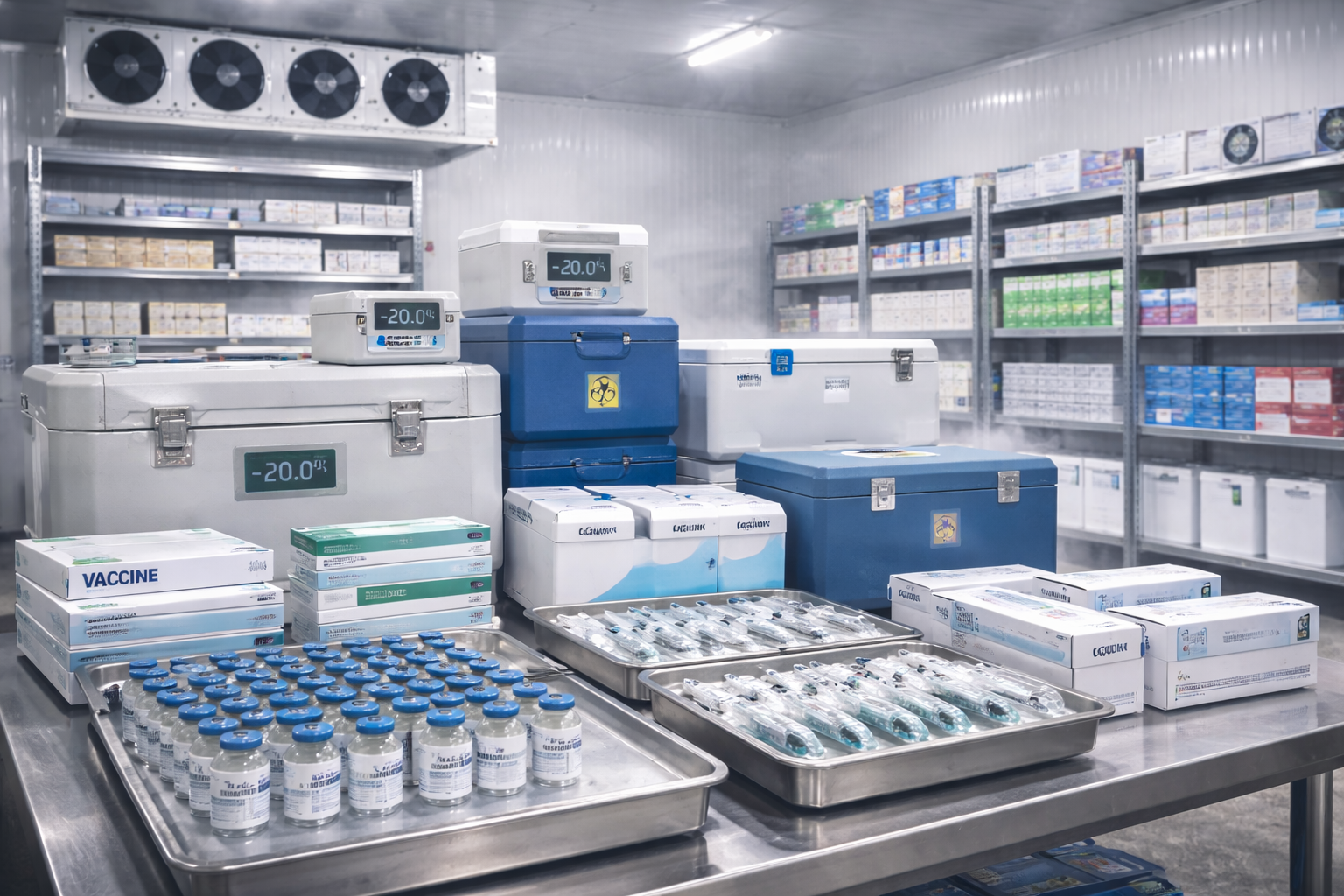
The pharmaceuticals are held in temperature-controlled warehouses during the period of storage between production and delivery, where the cargo has to be monitored consistently, and the Good Distribution Practice (GDP) guidelines have to be followed. The globally recognized standard for pharmaceutical distribution mandates constant temperature logging, data-backed alarm systems, equipment calibration logging, and documented staff training.
At this stage, drug distribution temperature control requires more than just functional refrigeration - redundant checks, power backup, and real-time temperature monitoring software to trigger automated alerts for every deviation detected. The compliance regulatory mandates include every temperature log, every access event, and each maintenance record form to streamline product release and audit-readiness.
Transport and Delivery
The most challenging phase of the drug temperature-controlled logistics process is the transit. Transportation options, such as reefer trucks, air freight containers, passive insulated shippers, and dry ice configurations, have to be determined based on lane-specific associated risks - ambient temperatures, transit time, scope of delays, and intermediate handling.
Vaccine cold chain transportation has played a critical role during several large-scale immunisation programs, the latest being the global COVID-19 vaccine rollout. Logistics disruptions, improper hub transfers, inadequate cold storage facilities, and unaccounted delays without temperature controls resulted in significant product loss.
Modern logistics service providers manage these risks with GPS-based reefer tracking and IoT-powered temperature sensors incorporated within the shipment packaging. Such automated systems log and transmit data continuously to cloud platforms, enabling quality teams to monitor transit conditions in real-time, respond to emergencies within minutes, and generate audit-ready exception reports - transforming actions from reactive to proactive.
Last-Mile Delivery
The most fragmented stage of delivery is also the hardest to manage. It might be a refrigerated insulin delivery van heading toward a rural pharmacy, or a delivery of specialty biologics to the oncology unit of a hospital, or a field worker distributing vaccines in a climate-averse region; the last-mile temperature-sensitive drugs transport requires the same discipline as in the case of bulk freight, only in more challenging and infrastructure-deficient scenarios. Smart insulated containers log temperatures through the journey and generate an auto delivery record on arrival, eliminating disputes over the product condition on arrival, feeding directly into the cold chain audit trail for compliance needs.
Regulatory Frameworks to Enforce Pharma Compliance
The pharma supply chain compliance environment is the most exacting. The key frameworks being -
EU Good Distribution Practice (GDP) Guidelines: Spans around continuous temperature logging, validated delivery specification, recording carrier and storage facilities’ qualifications, and comprehensive audit trails for every stage of shipment movement.
WHO Model Guidance for Temperature-Sensitive Pharmaceutical Products: These guidelines are implemented across global supply chains, specifically for monitoring vaccine storage temperature requirements and managing cold chain disruptions in low-resource setups.
IATA Perishable Cargo Regulations: The air transport of temperature-sensitive pharmaceutical products is governed by these norms, involving specific packaging standards, shipper qualifications, and documentation needs for international shipments.
FDA 21 CFR Part 211: Regulations that define the requirements that pharma manufacturers need to ensure for adequate control over the distribution process - temperature monitoring and documented procedures for managing out-of-specification scenarios.
Compliance solutions that incorporate audit-worthy documentation into the daily workflows instead of making it a periodic exercise become the key differentiator between organizations that pass the inspections and those that don’t.
Practical Scenario: Insulin Distribution and Vaccine Delivery
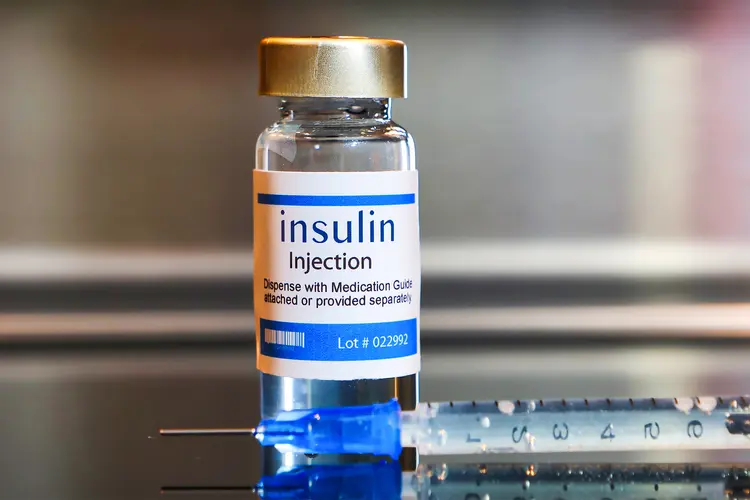
Insulin is the one temperature-sensitive drug that has the highest global distribution volume. It requires a consistent temperature ranging from 2°C to 8°C across the supply chain - a difficult ask in tropical regions with unreliable power infrastructure. Organizations that have deployed solar-powered cold storage facilities have experienced measurable reductions in insulin damage at the dispensing stage. In such cases, platforms like Fleetx can help monitor both vehicle movement and temperature conditions simultaneously, allowing faster intervention if a delay or deviation risks compromising drug stability.
The apt demonstration of a robust vaccine cold chain transportation was the global COVID-19 vaccine distribution. It showcased both the capacity and the fragility of the global pharma cold chain logistics at scale. The ordeal of pharmaceutical cold chain management involved tracking the shipments of ultra-cold vaccines around the globe, coordinating between health authorities and private shippers, and maintaining handoff documentation under conditions no campaign had faced before. The universal lesson from the operation: real-time visibility and digital audit trails are not premium requirements but are basic operational requirements.
The Consequences of a Cold Chain Breakdown
The failure in drug distribution temperature control not only leads to product wastage, but there are other associated losses, which include -
- Regulatory enforcement actions - warnings, penalties, ban on imports, or manufacturing facility shutdown
- Product recall carries financial loss and reputational damage
- For biologics and speciality medicines with limited manufacturing capacity, cold chain failures lead to uncontrollable patient crises
Building a Future-Ready Cold Chain Strategy
For pharmaceutical manufacturers, distributors, and quality teams operating in a complex and fragmented global supply chain, the brief is simple - a proactive pharmaceutical cold chain management setup. The strategic priorities being -
Deployment of Real-Time, End-to-End Monitoring: Temperature monitoring software, embedded with packaging sensors, warehouse management systems, and transit management systems, would replace periodic manual checks with automated and consistent visibility, facilitating both operational control and regulatory compliance.
Automatic Audit Trails: Creating a GDP-compliant documentation system that flags deviations automatically and maintains immutable data logs eliminates the compliance gap that is a byproduct of manual record-keeping.
Continuous Partner Performance Assessment: Every carrier, warehouse provider, and last-mile partner must be formally qualified against defined standards, with documented, centrally managed, and periodically updated records.
FAQs
What types of pharmaceutical products require cold chain logistics?
Temperature-sensitive products like biologics, mRNA vaccines, insulin, and monoclonal antibodies all require strictly regulated cold chain management. Even brief exposure outside their defined temperature window can alter their molecular composition, rendering them clinically ineffective or unsafe for patients.
What are the biggest challenges in pharmaceutical cold chain logistics?
The two most difficult stages are transit and last-mile delivery. During transport, risks include ambient temperature fluctuations, transit delays, and improper hub transfers. Last-mile delivery is further complicated by infrastructure-deficient environments — such as rural pharmacies or remote vaccination sites — where maintaining the same temperature discipline as bulk freight becomes significantly harder.
Which regulatory frameworks govern pharmaceutical cold chain compliance?
Several key frameworks apply globally, including EU GDP Guidelines, WHO Model Guidance for Temperature-Sensitive Pharmaceutical Products, IATA Perishable Cargo Regulations for air freight, and FDA 21 CFR Part 211 for manufacturers. Each mandates continuous temperature logging, validated packaging, qualified carriers, and comprehensive audit trails at every stage of the supply chain.
Which regulatory frameworks govern pharmaceutical cold chain compliance?
Several key frameworks apply globally, including EU GDP Guidelines, WHO Model Guidance for Temperature-Sensitive Pharmaceutical Products, IATA Perishable Cargo Regulations for air freight, and FDA 21 CFR Part 211 for manufacturers. Each mandates continuous temperature logging, validated packaging, qualified carriers, and comprehensive audit trails at every stage of the supply chain.
Which regulatory frameworks govern pharmaceutical cold chain compliance?
Several key frameworks apply globally, including EU GDP Guidelines, WHO Model Guidance for Temperature-Sensitive Pharmaceutical Products, IATA Perishable Cargo Regulations for air freight, and FDA 21 CFR Part 211 for manufacturers. Each mandates continuous temperature logging, validated packaging, qualified carriers, and comprehensive audit trails at every stage of the supply chain.
How does technology improve cold chain management and compliance?
Modern cold chain operations rely on IoT-powered temperature sensors, GPS-based reefer tracking, and cloud-connected monitoring software that transmit real-time data throughout transit and storage. These systems automate deviation alerts, generate audit-ready exception reports, and maintain immutable documentation logs — shifting quality teams from reactive responses to proactive risk management while satisfying GDP compliance requirements.