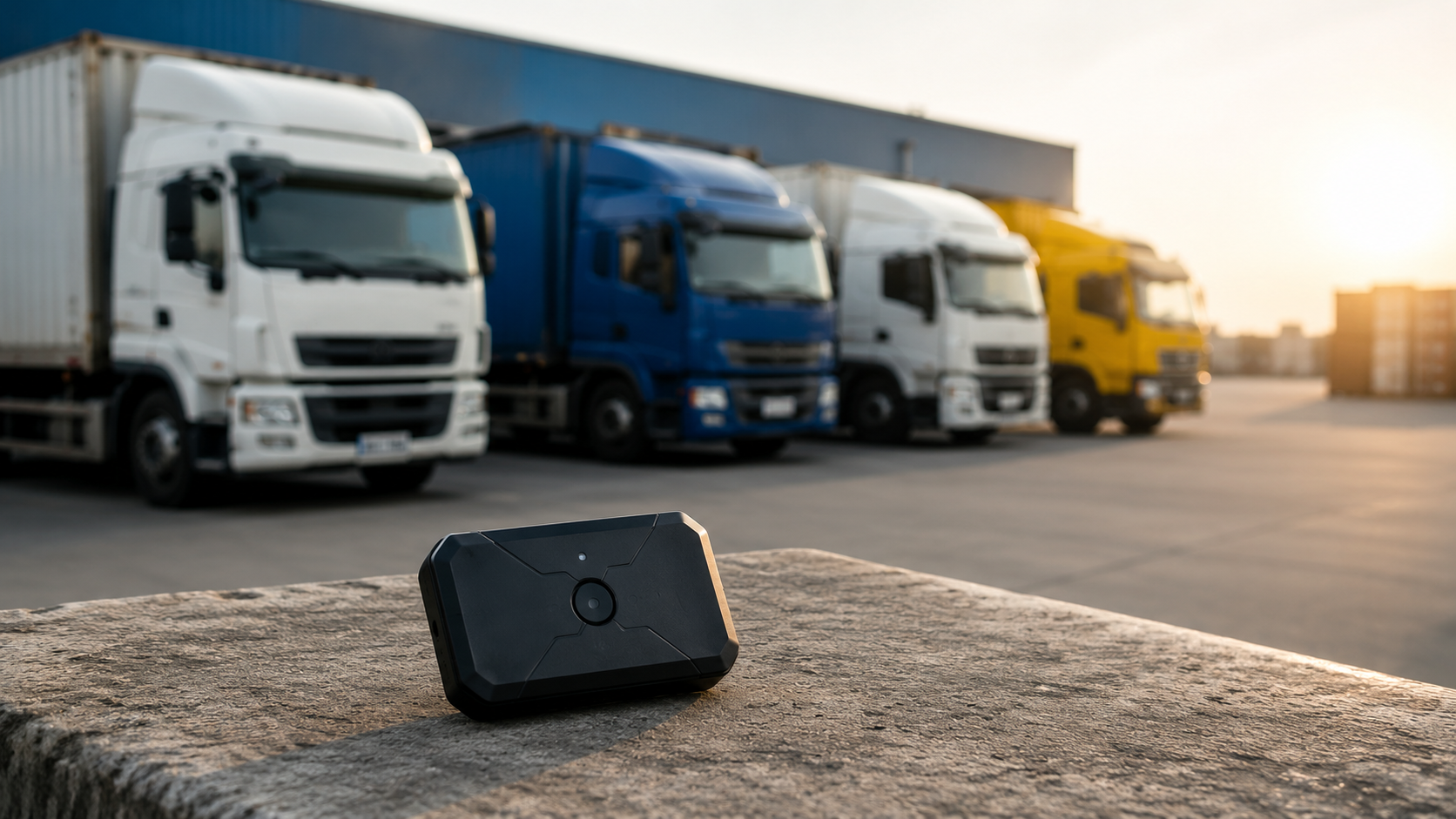
The Wiring Problem Nobody Wants to Talk About
You've just onboarded 15 hired trucks to handle a seasonal surge. Your operations team needs real-time visibility on every vehicle. But there's a problem — your GPS vendor says each vehicle needs 2–3 hours of hardwiring installation, a trained technician, and a booking lead time of five days per batch. By the time you're ready to track, your peak season is already slipping.
This is the reality hundreds of Indian fleet operators face every year. And it's exactly why wireless GPS trackers for fleet management have become one of the fastest-growing segments in commercial vehicle telematics.
Whether you're running a rental company, managing a logistics network with partner vehicles, operating a hired fleet for e-commerce peaks, or tracking construction equipment across project sites — a no installation GPS tracker for trucks changes the game entirely. No downtime. No technicians. No vehicle modifications. Just plug, place, or attach — and you're live.
This blog explains exactly how GPS trackers without wiring in India work, what types are available, when to use them, and how platforms like Fleetx turn them into powerful fleet management tools — even without a single wire touched.
What Is a Wireless GPS Tracker and How Does It Work?
A wireless GPS tracker for fleet vehicles is a self-contained tracking device that requires no connection to the vehicle's electrical system. It operates on its own internal power source — typically a rechargeable lithium-ion battery, replaceable cells, or an OBD-II port — and transmits location data over cellular (2G/4G GSM) or satellite networks to a central fleet management platform.
The core technology stack inside a wireless GPS tracker typically includes:
• GPS receiver module — acquires satellite signals to determine precise coordinates (latitude, longitude, altitude)
• Cellular modem (GSM/LTE) — transmits location data to the cloud platform via SIM card
• Accelerometer/motion sensor — detects movement, impacts, tilt, and stationary periods to optimise battery usage
• Internal battery — powers the device independently of the vehicle
• Microcontroller/firmware — manages data collection intervals, power states, and alert logic
• Optional sensors — temperature, humidity, door open/close, light detection for tamper awareness
The device wakes up at configurable intervals (every 10 seconds when moving, every few minutes when stationary), records GPS coordinates, bundles them with sensor data, and sends them over cellular to the fleet platform. Advanced devices use low-power GPS tracking technology that extends battery life dramatically by switching to deep sleep when the vehicle isn't moving.
Types of Wireless GPS Trackers for Fleet Vehicles
Not all wireless GPS trackers work the same way. Choosing the right type depends on your vehicle type, deployment duration, and operational requirements. Here are the main categories:
1. Magnetic Wireless GPS Trackers
The most popular type for hired and rental fleets. These devices have a powerful built-in magnet that attaches to any metallic surface on the vehicle — under the chassis, inside the wheel arch, on the frame, or beneath the dashboard — in seconds. They're the definition of a no installation GPS tracker for trucks.
• Attaches magnetically to metal surfaces — no tools, no drilling
• Weatherproof and ruggedised for under-chassis placement
• Battery life: 7–30 days depending on reporting frequency
• Ideal for: hired trucks, rental cars, temporary fleet additions
2. OBD-II Plug-In GPS Trackers
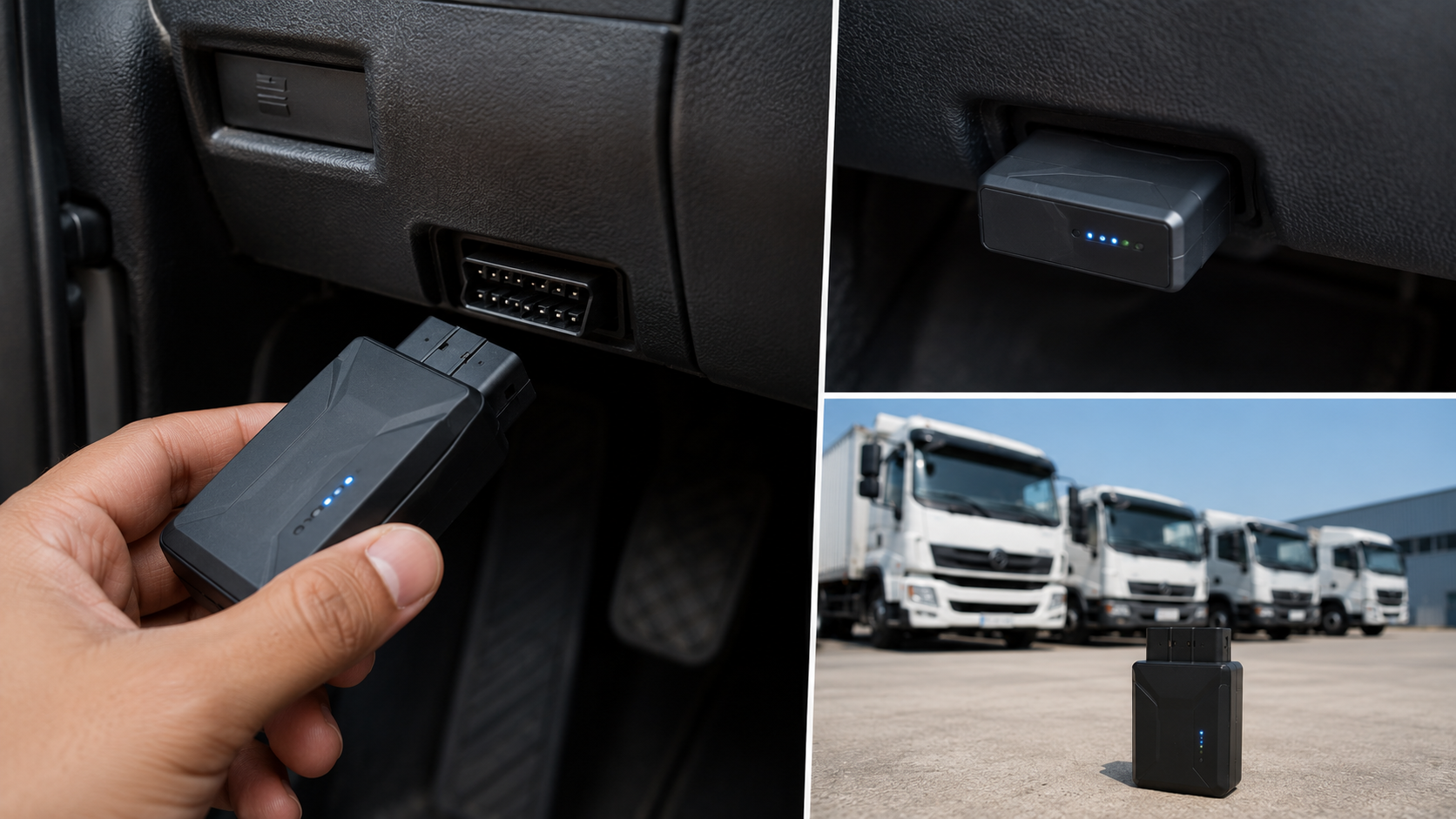
These devices plug directly into the vehicle's OBD-II diagnostic port (present in virtually all commercial vehicles manufactured after 2008). They draw power from the port — so battery life is unlimited — and also capture basic engine data like speed, RPM, and fault codes. A true plug-and-play GPS tracker for commercial vehicles.
• Plugs into the OBD-II port — takes under 10 seconds
• Powered by the vehicle — no battery charging needed
• Captures basic engine diagnostics alongside location
• Ideal for: rental cars, leased vehicles, short-term hired trucks
3. Battery-Powered Portable GPS Trackers
Larger form-factor devices with extended battery life — ranging from 60 days to 6 months — designed for longer deployments without recharging. Used extensively for asset tracking without hardwiring on trailers, containers, construction machinery, and agricultural equipment.
• Long battery life (60 days to 6 months)
• Compact, concealable design
• Often IP67/IP68 waterproof rated
• Ideal for: trailers, containers, heavy equipment, long-hire asset
4. Solar-Powered Wireless GPS Trackers
For assets that spend significant time outdoors, solar powered GPS tracker for fleet India devices use a small solar panel to continuously trickle-charge the battery — making them virtually maintenance-free. Increasingly popular for agricultural fleets, outdoor equipment hire, and long-haul trailer tracking.
• Self-sustaining in outdoor/daylight environments
• Near-zero maintenance once deployed
• Best for: tractors, trailers, outdoor machinery, farm equipment
5. SIM-Based GPS Trackers (Standalone Cellular)
These are compact GPS devices with a built-in SIM card that transmit via 4G LTE or 2G networks. Often used for hidden GPS tracker for hired vehicles India deployments where the operator wants discreet tracking without alerting the driver or third party.
• SIM card inside — no external wiring or port needed
• Can be hidden in seat pockets, bumpers, or under panels
• Battery life: 7–45 days depending on ping frequency
• Ideal for: vehicle recovery, covert asset monitoring, rental operators
Wireless GPS vs Wired GPS: Head-to-Head Comparison
Here's how the two approaches compare across the dimensions that matter most for hired and rented fleet operations:
|
Feature |
Wired GPS Tracker |
Wireless GPS Tracker |
|
Installation |
Requires
technician + 2–4 hrs |
Self-install in
under 5 minutes |
|
Vehicle
Downtime |
Yes — vehicle
off-road during install |
Zero downtime |
|
Works on
Rented/Hired Vehicles |
❌ Not practical |
✅ Yes — fully
portable |
|
Tamper Evidence |
Hard to remove
discreetly |
Depends on
placement + enclosure |
|
Power Source |
Vehicle battery
(always on) |
Internal
battery (rechargeable/replaceable) |
|
Battery Life |
Unlimited
(vehicle powered) |
7 days to 6
months (mode-dependent) |
|
Cost of
Deployment |
High (hardware
+ labour) |
Low (hardware
only) |
|
Scalability |
Slow — needs
scheduling per vehicle |
Fast — drop
ship and deploy same day |
|
Data Richness |
High (OBD,
fuel, CAN bus) |
Moderate-High
(location, motion, geofence) |
|
Best For |
Owned fleet,
long-term assets |
Hired fleet,
rental, temp vehicles |
Power Options for Wireless Fleet GPS Trackers: What Lasts How Long?
Battery life is the most critical operational variable for wireless GPS trackers for fleet vehicles. It determines how often devices need recharging, and therefore how much operational overhead your team carries. Here's a breakdown:
|
Power Type |
Battery Life |
Best Use Case |
Recharge Needed? |
|
Rechargeable
Li-ion |
7–30 days
(active mode) |
Short-term
rentals, daily fleet |
Yes — USB/dock |
|
Extended
Battery Pack |
60–90 days |
Monthly hired
vehicles |
Yes — periodic |
|
AA / D-cell
Battery |
3–6 months |
Assets,
trailers, equipment |
Replace
batteries |
|
OBD-II Port
Power |
Unlimited
(vehicle powered) |
Owned +
short-term rental cars |
No |
|
Solar Assist |
Effectively
unlimited |
Outdoor assets,
trailers |
No |
Pro tip: For short-hire vehicles (daily/weekly rentals), rechargeable Li-ion trackers on a docking station work best — charge overnight, deploy in the morning. For monthly or quarterly hires, extended battery packs or OBD-powered devices are more practical.
Why Hired & Rented Fleets Need Wireless GPS Specifically
Hired and rented vehicles present a unique tracking challenge that wired GPS simply isn't designed for. When you hire a truck or vehicle from a third party, you typically cannot — or should not — modify its electrical system. That means no wiring harness, no tapping into the fuse box, and no permanent installation.
This is where GPS tracker without wiring India solutions become not just convenient, but operationally essential.
The 5 Core Problems Wireless GPS Solves for Hired Fleets
• No vehicle modification — hired vehicles can be returned in original condition with no trace of installation
• Instant deployment — a fleet of 50 hired vehicles can be tracked within hours, not weeks
• Cost efficiency — zero labour cost for installation; devices move between vehicles as needed
• Flexibility — trackers can be swapped across vehicles as the hired fleet composition changes
• Full fleet visibility — hired vehicles are tracked on the same dashboard as owned fleet, giving a unified operational view
For logistics aggregators and platforms that rely on partner-owned or market-hired vehicles — a growing model in Indian logistics — portable GPS tracker for hired trucks India is the only practical way to achieve fleet-wide visibility without asking third-party vehicle owners to accept permanent hardware.
Industry Use Cases: Where Wireless GPS Transforms Hired Fleet Operations
|
Industry / Use Case |
Challenge |
Wireless GPS Solution |
|
Vehicle Rental
Companies |
Tracking rented
cars/trucks without modifying vehicles |
Magnetic
wireless tracker, OBD plug-in |
|
Construction
Equipment Hire |
No wiring
points on machinery |
Ruggedised
battery-powered GPS |
|
Last-Mile
Delivery (Temp Fleet) |
Seasonal hired
vehicles need tracking |
Quick deploy
OBD or magnetic tracker |
|
Logistics
Aggregators |
Partner
vehicles not owned by operator |
Portable
wireless tracker per vehicle |
|
Event Transport |
Short-duration
hired buses/cabs |
Pre-charged
tracker installed before trip |
|
Cold Chain
(3PL) |
Hired reefer
trucks, third-party assets |
Wireless
tracker with temp sensor |
|
Agricultural
Equipment |
Tractors/harvesters
without 12V wiring |
Solar-assist
GPS tracker |
How Fleetx Powers Wireless GPS Tracking for Hired Fleets
Hardware is only half the story. A wireless GPS tracker for fleet management is only as powerful as the platform interpreting its data. Fleetx takes wireless tracker data — location pings, motion events, geofence triggers — and transforms it into actionable fleet intelligence, whether the vehicle is owned, hired, or a mix of both.
|
Capability |
Generic Wireless Tracker |
Fleetx Wireless GPS Solution |
|
Real-time
tracking |
✅ Basic |
✅ Near
real-time (<10 sec) |
|
Geofencing
alerts |
⚠️ Limited |
✅ Multi-zone
custom geofences |
|
Platform
integration |
❌ Standalone
app only |
✅ Full TMS/ERP
API integration |
|
ePOD for hired
fleet |
❌ Not available |
✅ Digital proof
of delivery |
|
Driver app
support |
❌ Not available |
✅ Driver mobile
app (Hindi + English) |
|
Analytics &
reports |
⚠️ Basic trip
reports |
✅ Custom
dashboards + fleet intelligence |
|
AIS-140
compliance |
⚠️ Varies by
device |
✅ Certified
compliant |
|
Multi-vehicle
dashboard |
⚠️ Limited |
✅ Unified hired
+ owned fleet view |
|
Customer
support (India) |
⚠️ Email/chat
only |
✅ 24/7 Hindi +
regional support |
Fleetx's Unified Fleet View: Owned + Hired on One Dashboard
One of the most underrated challenges in mixed-fleet operations is managing owned vehicles and hired vehicles on separate platforms — or worse, spreadsheets. Fleetx's mixed fleet GPS management platform lets operators assign wireless trackers to hired vehicles and manage them alongside owned assets on a single dashboard, with the same alerts, reports, and analytics.
• Tag vehicles as 'owned' or 'hired' with hire dates and expiry
• Auto-alerts when hired vehicle deactivation date approaches
• Same geofencing, route adherence, and ePOD tools across all vehicles
• Driver app works on hired vehicles — no hardware dependency
Installation Guide: How to Deploy a Wireless GPS Tracker in Under 5 Minutes
One of the most compelling advantages of a no installation GPS tracker for trucks is just how fast deployment actually is. Here's a step-by-step guide for the most common wireless tracker types:
Magnetic Wireless Tracker — Deployment Steps
• Step 1 — Charge the device: Ensure the tracker is fully charged (3–4 hours via USB before first deployment)
• Step 2 — Insert SIM card: Insert the pre-activated SIM (or confirm embedded SIM is active)
• Step 3 — Power on: Press the power button until LED indicator confirms GPS lock
• Step 4 — Place on vehicle: Attach magnetically under the chassis, wheel arch, or metal frame — out of sight
• Step 5 — Register on platform: Add device IMEI to the Fleetx dashboard, assign to vehicle
• Step 6 — Verify live tracking: Confirm location appears on the Fleetx map within 2–3 minutes
OBD-II Plug-In Tracker — Deployment Steps
• Step 1 — Locate OBD port: Typically under the steering column, near the driver's footwell
• Step 2 — Plug in device: Firmly insert the OBD tracker into the port — it clicks into place
• Step 3 — Confirm power: LED light confirms device is powered by vehicle
• Step 4 — Activate on platform: Register IMEI on Fleetx, assign driver and vehicle profile
• Step 5 — Test drive: Short 2-minute drive confirms tracking, speed, and engine data flowing correctly
Total time per vehicle: under 5 minutes. A fleet of 20 hired vehicles can be fully live-tracked in under two hours — by your own operations staff, with zero technical training required.
Addressing the Key Concerns About Wireless GPS Trackers
Concern 1: Is battery life reliable enough for daily fleet operations?
For active daily use, rechargeable Li-ion trackers with 7–30 day battery life are entirely practical when paired with a daily/weekly charging routine — similar to how you'd manage driver mobile phones. For longer-hire vehicles, extended battery or OBD-powered devices eliminate the issue entirely. Fleetx's platform includes a low battery GPS alert for fleet vehicles that notifies managers before a device goes dark, so there's no unexpected loss of tracking.
Concern 2: How accurate is wireless GPS tracking compared to wired?
GPS accuracy is determined by satellite signal quality and the GPS chip inside the device — not by whether the device is wired or wireless. Premium wireless GPS tracker accuracy for trucks devices achieve the same 2–5 metre accuracy as wired counterparts. The main variable is data transmission frequency — wired devices can ping every 5–10 seconds, while battery-powered wireless devices may ping every 30–60 seconds to conserve power. For fleet operations, 30-second updates are more than sufficient.
Concern 3: Can wireless trackers be tampered with or removed?
Yes — this is a legitimate concern. Mitigation strategies include concealed placement (under chassis, inside panels), ruggedised tamper-detection sensors that trigger alerts on the Fleetx platform when the device is moved or shaken, and using multiple trackers per vehicle for high-value assets. Fleetx's tamper detection GPS tracker for hired trucks feature sends instant alerts when a device is potentially removed or repositioned.
Concern 4: Does it work in areas with poor cellular coverage?
Most commercial wireless GPS trackers use dual-SIM or multi-band LTE support to maintain connectivity across India's varied network landscape. In low-coverage areas, devices store location data locally and sync it as a batch when connectivity resumes — a feature known as store and forward GPS tracking India. This ensures no tracking gaps even in remote or rural routes.
Concern 5: Is it AIS-140 compliant for commercial vehicles in India?
AIS-140 compliance for commercial vehicle GPS in India primarily applies to the GPS device and data transmission format — not whether the device is wired or wireless. Several AIS-140 certified wireless GPS trackers India are available and certified under MoRTH's mandate. Fleetx only deploys compliant devices and manages the certification documentation for its fleet operator clients.
Wireless GPS Tracker Cost in India: What to Expect
One of the biggest advantages of wireless GPS tracker for fleet deployments is the lower total cost of ownership compared to wired installations — especially for hired and temporary fleets where installation cost per vehicle adds up fast.
• Basic magnetic wireless tracker (India): ₹2,000–₹5,000 one-time device cost + ₹400–₹800/month platform fee
• OBD-II plug-in tracker (India): ₹2,500–₹6,000 one-time + ₹500–₹1,000/month
• Extended battery asset tracker: ₹4,000–₹10,000 one-time + ₹600–₹1,200/month
• Wired GPS with installation (comparison): ₹3,000–₹8,000 device + ₹1,500–₹3,000 installation labour + platform fee
For a hired fleet of 20 vehicles, the savings on installation labour alone with a no installation GPS tracker for trucks approach can exceed ₹30,000–₹60,000 — not counting the value of zero vehicle downtime during deployment.
Your Hired Fleet Deserves Real-Time Visibility Too
The idea that GPS tracking requires a technician, a wiring harness, and days of vehicle downtime is outdated. Wireless GPS trackers for fleet vehicles — magnetic, OBD plug-in, battery-powered, and solar-assisted — have made it entirely possible to track every vehicle in your operation, regardless of whether you own it.
For hired and rented fleet operators in India, this is a fundamental operational unlock. You can scale visibility as fast as you scale your fleet. You can onboard 50 hired trucks during a Diwali peak and have all of them live-tracked by lunchtime. You can return vehicles at the end of a contract with no trace of modification. And you can manage hired and owned vehicles in one unified view — with the same alerts, reports, and ePOD tools — on Fleetx.
The question isn't whether you need GPS tracking without wiring India for your hired fleet. The question is how much visibility you've already lost by not having it.
Which is the best GPS Tracker for trucks in India?
The best choice depends on your use case. For daily hired trucks, a rechargeable magnetic tracker integrated with Fleetx is the most practical combination — offering real-time fleet tracking without wiring at a competitive cost. For longer-term assets and trailers, extended battery or solar-assist devices are more appropriate. Fleetx's hardware team recommends the right device for your specific fleet profile.
How do I track a rented vehicle's location in real time using GPS tracker for fleet vehicles?
Attach a portable GPS tracker for hired trucks India — either magnetically or via OBD-II port — register it on the Fleetx dashboard, and live location updates begin within 2–3 minutes. The Fleetx mobile app gives you real-time map view, geofence alerts, and speed monitoring from anywhere.
Will the best GPS tracker for trucks in India work if the vehicle goes into a covered parking area or tunnel?
GPS signals can weaken in covered areas, tunnels, or underground parking. Quality wireless GPS fleet tracking devices use a combination of GPS, GLONASS, and cell tower triangulation to maintain location accuracy even in GPS-challenged environments. The last confirmed location is retained and displayed until signal is reacquired.
Can wireless GPS trackers also provide driver behaviour data?
Accelerometer-equipped wireless trackers can detect harsh braking, rapid acceleration, sharp cornering, and impact events — providing basic driver behaviour monitoring without hardwiring. While they don't match the full depth of wired OBD-II systems for engine data, they provide sufficient behavioural data for safety scoring and coaching, especially when combined with the Fleetx driver app.