Every day, millions of trucks, buses, tankers, and delivery vehicles move across India's road network. Behind each of those vehicles, there is a dispatcher making routing decisions, a fleet manager watching fuel costs, a compliance officer tracking documents, and a business owner trying to make sense of it all. For decades, most of that work happened on paper, on spreadsheets, or through fragmented phone calls. Transport software changed that equation permanently.
This guide is written for logistics professionals, fleet managers, operations leaders, and business owners who want a clear-eyed view of what transport software actually does, how much it costs, what the best examples look like, and how the Indian market is evolving. We will go deep on each of these questions without the usual vendor-speak. By the end, you will have a solid framework for making a real purchasing or evaluation decision.
What Is Transport Software
Transport software is a category of business technology that digitizes, automates, and optimizes the operational, financial, and compliance processes involved in moving goods or people by road, rail, sea, or air. In practice, most businesses using the term typically refer to road freight and commercial fleet operations, where the software manages everything from vehicle tracking and driver management to invoicing, route planning, and ensuring government compliance.
The category overlaps with several adjacent terms you will encounter:
• Fleet Management Software (FMS): Focuses primarily on vehicle tracking, maintenance scheduling, fuel monitoring, and driver safety.
• Transportation Management System (TMS): Focuses on the logistics layer: load planning, carrier selection, freight billing, shipment visibility, and customer service.
• Transport ERP: A broader system that integrates transport operations with finance, HR, procurement, and inventory management.
• Logistics Management Software: Often used interchangeably with TMS, though it can extend to warehouse and supply chain operations.
Modern platforms increasingly blur these distinctions. A robust transport software solution today will handle both the vehicle-level telemetry that fleet management tools were built for and the operational planning that TMS platforms traditionally owned. The shift is toward unified platforms that eliminate the need to stitch together three or four-point solutions.
|
Simple definition for procurement teams: Transport software is any technology platform that helps
an organisation operate its transport function more efficiently, at lower
cost, with better compliance, and with greater visibility than manual or
spreadsheet-based methods. |
What Transport Software Is Not
It is worth drawing a boundary. Transport software is not simply a GPS tracking app. Knowing where your vehicles are is table stakes. The real value of modern transport software lies in what it does with that data: optimizing routes in real time, predicting maintenance needs before breakdowns happen, automatically reconciling fuel consumption against expected norms, and surfacing actionable intelligence that helps operations teams make better decisions faster.
Why Transport Software Matters
According to the Ministry of Ports, Shipping and Waterways and the National Logistics Policy, logistics costs in India account for approximately 13 to 14 percent of GDP, compared to 8 percent in developed economies. The government's stated goal is to bring this down to single digits by 2030, and digital infrastructure for transport and logistics is a central plank of that strategy.
For fleet operators and transport businesses, the pressure is immediate and business-specific. Fuel prices remain volatile. Driver attrition is a persistent challenge. Regulatory requirements around AIS-140, VLTD, e-Way bills, and vehicle fitness have grown more stringent. Shippers are demanding real-time visibility and digital proof of delivery. And margins in transport, always thin, are being squeezed further by rising toll costs, insurance premiums, and vehicle maintenance expenses.
Against this backdrop, transport software is no longer a nice-to-have. The operators who are gaining ground on their competitors in 2025 share a common trait: they have moved from reactive, paper-based operations to proactive, data-driven ones. Transport software is the infrastructure that makes that shift possible.
The Data Gap in Indian Transport
One of the most underappreciated problems in Indian fleet operations is the data gap. Most transport businesses generate enormous amounts of operational data every day, but very little of it is captured, structured, or acted upon. Drivers keep manual trip sheets. Fuel purchases are recorded in physical ledgers. Maintenance histories live in a foreman's memory. When something goes wrong, the root cause is nearly impossible to trace.
Transport software closes that data gap by making digital capture the default. Once data is flowing through a connected platform, patterns emerge that simply were not visible before: which routes consistently run over fuel budgets, which drivers show early signs of wear on brakes, and which customers create disproportionate detention costs. This visibility is where the ROI of transport software starts to compound.
Core Modules and Capabilities
A full-featured transport software platform is typically composed of several functional modules that can be used together or activated selectively depending on business needs.
Vehicle and Asset Tracking
Real-time GPS tracking is the entry point for most transport software deployments. Vehicles are fitted with hardware devices that transmit location, speed, and status data to a central platform. Modern systems go beyond simple location tracking:
• Ignition status and idle time
• Speed violations and harsh braking events
• Geofence entry and exit alerts
• Battery voltage and device health
• Engine diagnostics via OBD-II or CAN bus integration
Route Planning and Optimization
Route planning software within transport platforms uses algorithms to determine the most efficient routes for single or multiple vehicles, factoring in delivery time windows, vehicle capacity, road type, traffic conditions, and regulatory constraints. Advanced platforms use machine learning to improve route suggestions over time based on actual performance data.
Fuel Management
Fuel is typically the single largest operating cost for a transport business, often representing 35 to 45 percent of total vehicle operating expenses. Fuel management modules track:
• Fuel fills via RFID cards or integration with fuel station networks
• Consumption per kilometre benchmarked against vehicle type and load
• Anomalies that may indicate fuel theft or pilferage
• Driver behaviour patterns that waste fuel
Driver Management and Safety
Driver management tools handle everything from licence and document expiry tracking to real-time behaviour scoring. Telematics data is used to generate driver scorecards based on harsh braking, acceleration, cornering, and speed compliance. Some platforms integrate in-cab coaching tools that provide real-time audio alerts when unsafe behaviours are detected.
Compliance and Documentation
In India, commercial transport operations must comply with a growing set of regulatory requirements. Transport software handles:
• AIS-140 and VLTD compliance for government-mandated vehicle tracking
• e-Way bill generation and management
• Fitness certificate and permit renewal alerts
• Driver licence validity tracking
• Pollution Under Control (PUC) certificate management
Trip and Load Management
Trip management modules allow dispatchers to create, assign, and monitor trips from a single dashboard. They typically include:
• Load and consignment management linked to trips
• Driver assignment and communication
• Checkpoint-based tracking against planned route
• Delay detection and ETA recalculation
• Digital Proof of Delivery (ePOD) capture
Maintenance Management
Maintenance modules in transport software track:
• Scheduled service intervals by distance or time
• Part replacement histories
• Vendor and workshop management
• Predictive maintenance alerts based on sensor data
Finance and Billing
Higher-tier transport software platforms include freight billing, vendor payment tracking, trip cost accounting, and customer invoicing. Transport ERPs go further by integrating with accounts payable and receivable systems, enabling a complete view of profitability at the trip, vehicle, or customer level.
Analytics and Reporting
All of the above modules generate data. The analytics layer transforms that data into decision-useful reports and dashboards. Modern platforms offer customizable dashboards, scheduled reports, and AI-powered insights that surface anomalies and recommendations proactively rather than waiting for a manager to run a report.
Transport Software Examples: Real-World Platforms
The transport software market is populated by platforms that vary significantly in their scope, depth, geographic focus, and technology sophistication. Below are representative transport software examples drawn from different segments of the market.
Fleetx (India)
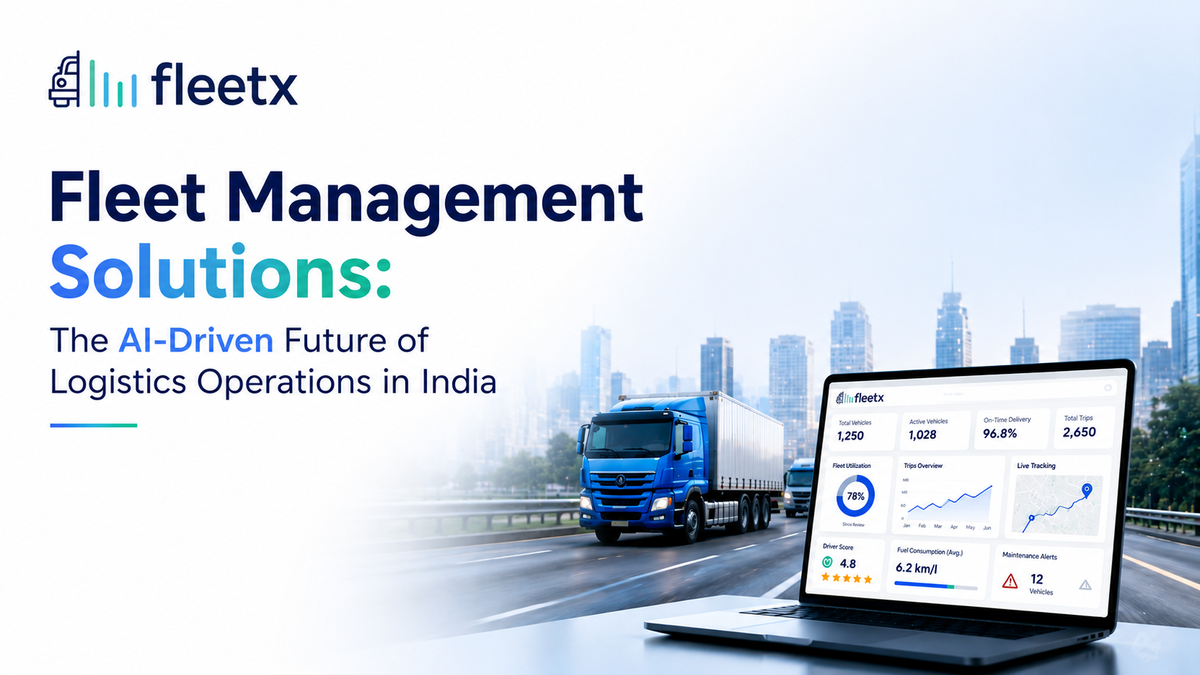
Fleetx is an AI-native fleet management and transport operations platform headquartered in Gurugram, India. It serves commercial transport operators across industries, including cement, FMCG, steel, oil and gas, and logistics aggregators. The platform covers vehicle tracking, fuel AI, driver behaviour, trip management, compliance, video telematics, and an Agentic TMS layer that uses AI to automate operational decisions rather than just report on them. Fleetx has a strong footprint across India and is expanding into Africa and other international markets.
SAP Transportation Management
SAP TM is an enterprise-grade transportation management system used by large manufacturers and 3PLs globally. It handles complex freight optimisation, carrier management, freight settlement, and integration with SAP's broader ERP ecosystem. It is not typically deployed by mid-market Indian transport companies due to its cost and implementation complexity, but it is the benchmark against which enterprise-scale TMS platforms are measured.
Oracle Transportation Management (OTM)
Oracle OTM is another enterprise TMS used by large shippers and logistics service providers. It offers strong support for multimodal freight, international trade compliance, and shipment visibility at scale. Like SAP TM, it is primarily deployed in large enterprise environments.
Trimble TMS
Trimble offers a suite of transportation software products aimed at trucking fleets in North America and Europe. Its solutions cover dispatch, driver management, telematics, and freight management. Trimble is well-regarded for its depth in trucking-specific workflows but has limited penetration in the Indian market.
LocoNav (India)
LocoNav is an Indian fleet management and telematics platform that serves small to mid-sized fleets. It covers GPS tracking, fuel monitoring, driver behaviour, and compliance, with a relatively accessible price point that has made it popular among owner-operators and smaller fleet businesses.
Samsara (US/Global)
Samsara is a leading IoT and fleet management platform based in the United States. It is known for its hardware-software integration, dash cam and AI vision capabilities, and a strong analytics layer. While it has limited direct presence in India, it represents a global benchmark for the integration of AI, video, and telematics in transport software.
|
Key takeaway on transport software examples: The right example to benchmark against depends on your
fleet size, industry vertical, operational complexity, and geography. A
20-truck transporter in India has very different needs from a 2,000-truck
3PL. Match the platform to the operational reality, not to the most
feature-rich option available. |
Types of Transport Software
Transport software is not a monolithic category. Different platforms are built around different operational problems, and understanding the distinctions helps you avoid buying a system that solves the wrong set of problems.
|
Software Type |
Primary Focus |
Best Suited For |
Key Limitation |
|
Fleet Management Software (FMS) |
Vehicle tracking, fuel, maintenance, driver behaviour |
Fleets that own and operate vehicles |
Limited freight/logistics workflow support |
|
Transportation Management System (TMS) |
Load planning, carrier management, freight billing,
shipment visibility |
Shippers, 3PLs, logistics service providers |
Often lacks real-time telematics depth |
|
Transport ERP |
Full operational and financial integration across
transport, HR, finance |
Large transport enterprises needing end-to-end visibility |
Expensive and complex to implement |
|
Last-Mile Delivery Software |
Last-mile route optimisation, delivery tracking, customer
notifications |
E-commerce logistics, courier companies, urban delivery
fleets |
Not designed for long-haul or bulk freight |
|
Freight Marketplace Platforms |
Connecting shippers to available truck capacity |
Spot freight procurement, load aggregation |
Limited value for captive/in-house fleets |
|
AI-Native Transport Platforms |
Intelligent automation across fleet operations, TMS, and
analytics |
Mid to large fleets seeking operational intelligence
beyond tracking |
Requires data maturity to unlock full value |
The practical reality is that many businesses end up deploying more than one type of system because legacy vendors built siloed products. The current generation of AI-native transport platforms is explicitly designed to collapse these silos, offering FMS-depth telematics alongside TMS-grade logistics workflows in a single unified interface.
Transport Software in India: Market Context and Use Cases
India's commercial transport sector is one of the most complex in the world. The country has over 15 million registered commercial vehicles, a road network spanning more than 6 million kilometres, and a freight market that the National Logistics Policy estimates at approximately USD 215 billion annually. Yet digital adoption across transport operations remains highly uneven.
Regulatory Drivers of Adoption
Government mandates have been a significant driver of transport software adoption in India. The AIS-140 standard, which requires certified Vehicle Location Tracking (VLT) devices on all new commercial vehicles, has effectively made GPS hardware installation non-negotiable. The Ministry of Road Transport and Highways has progressively tightened enforcement, and operators who were slow to comply have faced registration and permit consequences.
The e-Way bill system under GST, managed by the GST Council and GSTN, has similarly pushed transport businesses toward digital documentation workflows. Transport software that integrates e-Way bill generation directly into the trip dispatch process eliminates a significant compliance burden and reduces the risk of consignment seizures at checkposts.
Industry-Specific Use Cases in India
Cement and Building Materials: Large cement manufacturers operate captive fleets and contracted transporters for plant-to-depot and depot-to-dealer distribution. Key use cases include trip-based freight cost management, overloading detection, and plant gate-out to delivery confirmation tracking.
Oil, Gas, and Chemicals: Tanker fleet operators in petroleum and chemical logistics prioritise safety monitoring, hazmat compliance, and seal-to-seal delivery verification. Video telematics is increasingly mandated by major petroleum companies for contracted transporters.
FMCG and Consumer Goods: Primary distribution from factories to distribution centres requires high utilisation and tight scheduling. Secondary distribution to retail involves complex multi-drop routing. Transport software manages both layers, often with customer integration for automated delivery confirmations.
Steel and Mining: Heavy haulage operations in steel and mining involve oversize loads, weigh bridge integration, and trip-based costing tied to tonnage. Predictive maintenance is a high-priority use case given the cost of breakdown-related delays.
E-commerce and 3PL: India's rapid e-commerce growth has created demand for last-mile delivery software with customer notifications, real-time tracking links, and digital signature capture for proof of delivery.
Adoption Challenges in the Indian Market
• Fragmented fleet ownership: A large proportion of India's truck capacity is owned by small operators with one to five vehicles. These operators may lack the bandwidth or technical capability to deploy and manage software.
• Data connectivity in remote areas: Long-haul routes through low-connectivity regions create gaps in real-time tracking data that must be handled gracefully by the software.
• Trust and change management: Drivers and transporters who have operated through informal, relationship-based systems sometimes resist digital monitoring. Platform adoption requires careful change management alongside the technology rollout.
• Integration with legacy systems: Larger operators often have existing ERP or accounting systems that transport software needs to integrate with, creating technical complexity in procurement decisions.
Comparing Transport Software Platforms
Choosing between transport software platforms requires comparing them across multiple dimensions. The table below compares platforms across several evaluation criteria relevant to Indian enterprise and mid-market operators.
|
Platform |
Primary Market |
Fleet Size Sweet Spot |
AI/Automation Depth |
India Compliance |
TMS Capability |
|
Fleetx |
India, Africa |
50 to 5,000+ vehicles |
High (AI-native) |
Full (AIS-140, e-Way, VLTD) |
Agentic TMS layer |
|
SAP TM |
Global enterprise |
1,000+ (enterprise) |
Medium |
Partial (customisation needed) |
Deep TMS functionality |
|
Oracle OTM |
Global enterprise |
1,000+ (enterprise) |
Medium |
Partial |
Deep TMS functionality |
|
LocoNav |
India |
5 to 500 vehicles |
Low to Medium |
Full |
Limited |
|
Samsara |
US, Europe |
50 to 10,000+ vehicles |
High (AI vision) |
No |
Moderate |
|
Trimble TMS |
US, Europe |
100 to 5,000 vehicles |
Medium |
No |
Deep TMS functionality |
|
WheelsEye |
India |
5 to 200 vehicles |
Low |
Full |
Limited |
Indian-Native vs. Global Enterprise Platforms
|
Criteria |
Indian-Native Platforms |
Global Enterprise Platforms |
|
India regulatory compliance |
Built-in, continuously updated |
Requires customisation or partner support |
|
Local language support |
Hindi, regional languages available |
Limited or none |
|
Total cost of ownership |
Lower (SaaS, no major infra spend) |
Higher (licensing + SI + infra) |
|
Implementation timelines |
Weeks to months |
Months to years |
|
Hardware availability |
Local sourcing, quick deployment |
Import dependency or local partners |
|
Support responsiveness |
Local teams, IST timezone |
Often offshore or time-zone lagged |
Transport Software Price: What You Should Expect to Pay
Transport software price is one of the questions we hear most frequently, and also one of the most poorly answered in the industry. Most vendors either do not publish pricing publicly or publish ranges so wide as to be meaningless. Here is a structured framework for understanding how transport software is typically priced and what determines the final number.
Pricing Models
• Per vehicle per month: The most common model for fleet management software in India. A per-vehicle fee covers the software subscription; hardware is either bundled, sold separately, or leased.
• Per user per month: More common for TMS-type platforms where the primary user is a dispatcher, planner, or logistics manager rather than a vehicle.
• Enterprise licensing: Flat annual or multi-year licence for unlimited vehicles or users within agreed parameters. Typically seen in large enterprise deployments.
• Transaction-based pricing: Some last-mile delivery and freight marketplace platforms charge per trip or per consignment rather than per vehicle.
• Modular pricing: Base platform plus add-on pricing for specific modules such as video telematics, fuel management AI, and advanced analytics.
Transport Software Price Ranges in India
|
Platform Tier |
Per-Vehicle Per-Month Cost
(INR) |
Hardware Cost (Approx.) |
What Is Included |
|
Basic GPS tracking only |
Rs. 200 to Rs. 600 |
Rs. 2,000 to Rs. 5,000 one-time |
Location tracking, basic alerts, mobile app |
|
Mid-tier FMS platform |
Rs. 600 to Rs. 1,500 |
Rs. 4,000 to Rs. 8,000 one-time |
Tracking + fuel, driver behaviour, compliance, trip
management |
|
Advanced FMS with AI |
Rs. 1,200 to Rs. 3,000 |
Rs. 6,000 to Rs. 15,000 |
All of the above + AI fuel anomaly, predictive
maintenance, video telematics |
|
AI-Native Transport Platform (FMS + TMS) |
Rs. 2,500 to Rs. 6,000+ |
Rs. 8,000 to Rs. 20,000+ |
Full fleet management + TMS + analytics + agentic
automation |
|
Enterprise TMS (SAP, Oracle) |
Custom (USD 50,000 to USD 500,000+ annually) |
Separate |
Freight management, carrier management, global compliance,
ERP integration |
Hidden Costs to Account For
• Hardware installation costs: Technician charges for device fitting, which can range from Rs. 300 to Rs. 1,000 per vehicle depending on complexity.
• Data SIM and connectivity: Most tracking devices require a SIM for data transmission. Some vendors bundle this; others charge separately.
• Implementation and onboarding fees: Larger deployments often carry one-time professional services charges for data migration, user training, and system configuration.
• Integration costs: If the transport software needs to connect to an existing ERP or accounting system, API integration work may require additional investment.
• Annual maintenance contracts (AMC): For hardware, some vendors charge separate AMC fees after the warranty period.
How to Negotiate Transport Software Pricing
Transport software pricing is generally negotiable, particularly for fleet sizes above 50 vehicles. Key negotiation levers include:
• Contract length: Multi-year commitments typically unlock discounts of 10 to 25 percent over monthly rates.
• Fleet size: Per-vehicle fees usually step down with scale.
• Module selection: If you genuinely do not need all modules at launch, negotiate a phased activation structure.
• Hardware bundling: Some vendors will include hardware at reduced cost in exchange for longer software commitments.
The Rise of AI-Native Transport Software
The term "AI" is attached to so many software products today that it has become almost meaningless as a differentiator. But in transport software, the distinction between AI-enabled and AI-native platforms is real and consequential.
AI-enabled transport software is a traditional platform that has added machine learning features on top of an existing architecture. These features might include an anomaly detection alert on fuel consumption, a predictive maintenance model that flags vehicles for service, or a route optimisation engine that uses historical traffic data. These are genuinely useful additions, but the underlying platform was not designed with AI at its core.
AI-native transport software is built from the ground up with the assumption that intelligence is not an add-on but the primary mechanism through which the platform delivers value. In a truly AI-native platform:
• Data pipelines are designed to feed continuous model training, not just reporting dashboards.
• Recommendations are surfaced proactively, before problems occur rather than after.
• Automation handles routine decisions without requiring human intervention.
• The system learns from operator behaviour and improves its recommendations over time.
Agentic TMS: The Next Frontier
The most significant development in transport software in 2025 is the emergence of Agentic TMS. An Agentic TMS uses AI agents, which are autonomous software entities that can take actions, gather information, and make decisions within defined parameters, to automate complex logistics workflows that previously required skilled human operators.
Examples of what an Agentic TMS can do that a traditional TMS cannot:
• Automatically reassign a delayed trip to an alternate vehicle when it detects that ETA will be missed, without waiting for a dispatcher to notice the delay.
• Negotiate rate confirmations with contracted carriers based on predefined rules and current market signals.
• Generate and send customer delay notifications with updated ETAs and reason codes without human intervention.
• Reconcile freight bills against contracted rates and flag exceptions for human review rather than requiring manual reconciliation.
How to Evaluate and Select Transport Software
Selecting transport software is a consequential decision. A deployment that goes wrong creates disruption that takes months to unwind. A deployment that goes right compounds its benefits over years. Here is a structured approach to the evaluation process.
Step 1: Define Your Operational Problem Statement
Before you look at any vendor, spend time articulating the specific problems you are trying to solve. Generic answers like "improve efficiency" or "reduce costs" are not useful. Specificity matters. Examples of good problem statements:
• "We are losing an estimated Rs. 80 lakh per month to fuel pilferage across our 200-vehicle fleet, and we cannot identify which vehicles or routes are most affected."
• "Our fleet managers spend 4 hours per day on compliance documentation that we believe can be automated."
• "We have 15 percent of trips arriving late, and we have no early warning system that allows us to proactively communicate with customers."
Step 2: Map Requirements Against Platform Capabilities
Once the problem statement is clear, map each problem to specific software capabilities. This becomes your requirements matrix. Categorise requirements into:
• Must-have: Without these, the platform cannot solve your core problems.
• Important but not critical: These add significant value but are not deal-breakers.
• Nice-to-have: Useful if available, but not worth paying a premium for.
Step 3: Evaluate Integration Requirements
One of the most under-evaluated dimensions of transport software selection is how the new platform will integrate with your existing technology stack. Key questions to answer:
• Do you have an existing ERP (SAP, Oracle, Microsoft Dynamics, Tally) that the transport software needs to exchange data with?
• Do your customers require integration with their TMS or tracking portals?
• Do you use FASTag, e-Way bill, or other government APIs that the transport software should connect to?
• Do you have a data warehouse or BI tool that needs a data feed from the transport platform?
Step 4: Run a Structured Proof of Concept
For deployments of significant scale, a structured Proof of Concept (POC) is almost always worthwhile. A good POC:
• Runs for a minimum of 4 to 6 weeks on a representative subset of your fleet.
• Tests specific scenarios that reflect your highest-priority use cases, not just a general demo of all features.
• Includes an assessment of data quality from the hardware and connectivity layer, not just the software UI.
• Involves the actual end-users (fleet managers, dispatchers, finance team) who will use the platform day-to-day.
Step 5: Evaluate the Vendor as a Partner
Transport software is not a one-time purchase. You are entering into an ongoing relationship with the vendor. Assess:
• Support quality: How quickly does the vendor respond to tickets? Do they have on-ground support in your operating geography?
• Product roadmap: Is the vendor investing in the capabilities that will matter to your operation in 2 to 3 years?
• Customer references: Can they connect you with customers of similar size and operational complexity who have been on the platform for 2+ years?
• Financial stability: Is the vendor funded and stable enough to be a long-term partner?
Common Evaluation Mistakes
|
Mistake |
Why It Happens |
Consequence |
|
Evaluating on demo performance rather than live deployment |
Vendor demos are scripted and optimised |
Platform underperforms in real-world conditions |
|
Over-weighting feature count |
Long feature lists feel comprehensive |
Buys breadth at the cost of depth in critical areas |
|
Ignoring data quality and hardware reliability |
Evaluation focuses on software UI |
Poor hardware generates bad data that undermines all
software value |
|
Underestimating change management |
IT-led evaluation process misses operations team needs |
Low user adoption post-deployment |
|
Choosing on price alone |
Pressure to minimise cost |
Saves on software spend, loses multiple times on
operational inefficiency |
Implementation: What a Typical Rollout Looks Like
Understanding what a transport software rollout actually involves helps set realistic expectations and avoids surprises. The timeline and complexity vary significantly by fleet size and platform type, but a broadly representative deployment for a 100 to 500 vehicle fleet follows this arc.
Phase 1: Discovery and Configuration (Weeks 1 to 3)
The vendor's implementation team spends time understanding your fleet structure, operational workflows, and configuration requirements. This includes:
• Mapping vehicle types, depots, and operational zones
• Configuring geofences, alert thresholds, and compliance rules
• Setting up user roles and access permissions
• Confirming integration requirements with existing systems
Phase 2: Hardware Deployment (Weeks 2 to 6)
Tracking devices are installed on vehicles. For a large fleet, this is often the critical path item. A well-organised rollout installs hardware in batches, validates data transmission from each device, and troubleshoots connectivity issues before moving to the next batch.
Phase 3: Pilot and Validation (Weeks 4 to 8)
The first group of live vehicles runs on the platform for 2 to 4 weeks. This is when data quality issues surface, when alert thresholds get refined, and when initial user feedback shapes the final configuration. Do not skip this phase; it prevents problems from being discovered across the full fleet simultaneously.
Phase 4: Full Fleet Rollout (Weeks 6 to 16)
Remaining vehicles are brought onto the platform in batches. User training is conducted in parallel. The operations team starts running parallel reporting (old method alongside new platform) for a defined period to build confidence before cutting over entirely.
Phase 5: Optimisation (Months 3 to 6)
The real value of transport software often does not become apparent until 2 to 3 months into deployment, when enough data has accumulated to surface meaningful patterns. This is when fuel savings start to materialise, when maintenance predictions become reliable, and when operations teams start using the analytics layer to make strategic decisions.
Measuring ROI from Transport Software
Every transport software deployment should be anchored to measurable business outcomes. The most common areas where ROI is realised are described below.
Fuel Cost Reduction
Fuel management and driver behaviour optimization are among the highest-impact use cases. Fleets that actively use AI-driven fuel monitoring typically see:
• 5 to 15 percent reduction in fuel consumption through driver behaviour coaching
• Detection and reduction of fuel theft, which in some Indian fleet operations accounts for 3 to 8 percent of total fuel spend
• Reduction in idle time, which can represent 10 to 20 percent of urban fleet fuel consumption
Maintenance Cost Reduction
Predictive and preventive maintenance enabled by transport software typically results in:
• 20 to 35 percent reduction in unplanned breakdown frequency
• 10 to 20 percent reduction in total maintenance spend through better-timed interventions
• Improvement in vehicle uptime, which directly impacts revenue-generating trip capacity
Operational Efficiency Gains
• Reduction in dispatch time per trip through automated assignment and digital communication
• Reduction in detention time at customer locations through better ETA communication
• Reduction in compliance-related downtime through automated permit and document renewal alerts
• Reduction in administrative overhead for trip reconciliation, billing, and reporting
A Simple ROI Calculation Framework
|
Cost/Saving Category |
How to Quantify |
Typical Annual Saving (Per
Vehicle) |
|
Fuel saving (behaviour + theft prevention) |
Current fuel spend x estimated saving % |
Rs. 25,000 to Rs. 80,000 |
|
Maintenance saving |
Current maintenance spend x improvement % |
Rs. 8,000 to Rs. 25,000 |
|
Compliance penalty avoidance |
Historical penalty costs x reduction % |
Rs. 3,000 to Rs. 15,000 |
|
Productivity improvement |
Fleet manager FTE cost x time saved % |
Variable |
|
Total typical saving per vehicle |
|
Rs. 40,000 to Rs. 1,20,000 annually |
Against an annual software cost of Rs. 14,000 to Rs. 36,000 per vehicle (at the mid-to-advanced tier), the ROI math for a well-implemented transport software deployment is typically compelling within 4 to 8 months.
The Road Ahead: Where Transport Software Is Going
The trajectory of transport software over the next three to five years is being shaped by several converging forces. Understanding these trends helps operators make technology investments that remain relevant rather than becoming obsolete.
Convergence of FMS and TMS into Unified Platforms
The traditional division between fleet management software and transportation management systems is dissolving. The next generation of transport platforms will be unified systems that manage the vehicle, the driver, the load, the customer, and the finances in a single data model. This convergence eliminates the integration overhead and data duplication that plague multi-vendor environments.
AI Agents Replacing Transactional Workflows
The most significant shift in transport software over the next few years will be the replacement of transactional human workflows with AI agent-driven automation. Dispatchers who today spend most of their time on execution tasks will increasingly manage fleets of AI agents doing those tasks autonomously, redirecting their attention to judgment-intensive work like managing exceptions, building carrier relationships, and strategic planning.
Video Telematics as Standard
In-cab and external cameras are moving from an optional add-on to a standard component of transport software deployments. AI-powered video analysis enables real-time detection of driver fatigue, distraction, mobile phone use, and near-miss incidents. In high-value cargo and passenger transport operations, video telematics is already becoming a contractual requirement imposed by large shippers.
Electric Vehicle Fleet Management
As commercial EV adoption accelerates in India, transport software platforms will need to add capabilities specific to electric fleets: state of charge monitoring, charging station management, range optimisation under varying load and weather conditions, and battery health tracking.
Sustainability and Carbon Reporting
Corporate sustainability reporting requirements are pushing large shippers and logistics providers to measure and reduce the carbon footprint of their transport operations. Transport software will increasingly be expected to track Scope 1 emissions per vehicle, per route, and per customer shipment, and to support carbon reduction planning through route optimisation and load consolidation insights.
Deeper Government Integration
India's government digital infrastructure for transport, including VAHAN for vehicle registration, Sarathi for driver licences, FASTag for toll management, and the e-Way bill system under GST, is becoming more interoperable. Transport software platforms that offer deep, real-time API integration with these government systems will reduce compliance friction significantly for operators.
Conclusion
Transport software is one of the most consequential technology investments a logistics business or fleet operator can make in 2025. The market has matured significantly from the basic GPS tracking tools that defined the category a decade ago. Today's leading platforms offer deep operational intelligence, AI-driven automation, compliance management, and unified visibility across vehicles, loads, drivers, and finances.
For Indian transport businesses, the combination of regulatory pressure, rising operating costs, and competitive intensity from better-capitalised logistics players makes digital transformation through transport software not a strategic option but an operational necessity. The businesses gaining ground in this environment share a common characteristic: they have made the shift from reactive tracking to proactive, AI-powered operations management.
The right transport software choice depends on your fleet size, industry vertical, operational complexity, and where you are in your digital maturity journey. Whether you are a 50-truck cement transporter looking to bring fuel costs under control, or a 1,000-vehicle 3PL building the infrastructure for enterprise customer SLAs, there is a platform architecture and price point that fits your situation.
The key is to start with a clear problem statement, evaluate platforms against that problem rather than against generic feature lists, run a structured POC before committing, and treat the vendor relationship as a partnership rather than a procurement transaction. Transport software that is well-chosen and well-implemented pays for itself in months and creates compounding operational advantages over the years.
This article is part of Fleetx's ongoing series on transport technology, fleet operations, and AI-native logistics for Indian and global operators. For platform-specific information on Fleetx's capabilities and pricing, visit fleetx.io.
Transport software is a digital platform that helps fleet operators and logistics businesses manage their vehicles, drivers, trips, compliance, and costs from a single system. It replaces manual processes like paper trip sheets, physical logbooks, and phone-based dispatching with automated, data-driven workflows. Core functions include real-time GPS tracking, fuel monitoring, driver behaviour analysis, route planning, e-Way bill compliance, and vehicle maintenance scheduling. In India, transport software has become especially critical due to AIS-140 mandates, rising fuel costs, and growing shipper demands for real-time visibility. Platforms like Fleetx go further by using AI to surface insights automatically, helping operations teams reduce costs and prevent breakdowns before they happen. Whether you run 10 trucks out of a depot in Gurgaon or 2,000 vehicles across India, the goal of transport software remains the same: turn unstructured operational data into decisions that save money and improve service.
Transport software is a broad term covering any technology that helps manage transport operations, including vehicle tracking, driver management, fuel monitoring, and compliance. A Transportation Management System (TMS) is a specific type of transport software focused on the logistics layer: planning and optimising loads, selecting carriers, managing freight contracts, tracking shipments, and handling freight billing and settlement. The difference matters in practice. A fleet management platform (FMS) tells you where your vehicles are and how your drivers are behaving. A TMS tells you how to plan and execute shipments efficiently, negotiate with carriers, and settle freight invoices. Many Indian transport operators need both capabilities. The current generation of AI-native transport platforms like Fleetx is closing this gap by combining FMS-depth telematics with TMS-grade logistics workflows in a single system, often referred to as an Agentic TMS, where AI agents automate routine dispatch and logistics decisions entirely.
AI-native transport software is built from the ground up with artificial intelligence as its core operating mechanism, rather than as an add-on feature layer bolted onto a traditional tracking platform. The distinction is meaningful in practice. A conventional transport platform collects data and displays it in dashboards for human managers to interpret and act on. An AI-native platform like Fleetx actively analyses that data in real time, surfaces anomalies before they become problems, generates recommendations without being asked, and in advanced deployments uses AI agents to automate routine operational decisions entirely. Examples include automatic fuel theft detection without a manager running a report, predictive maintenance alerts based on vehicle sensor patterns days before a breakdown would have occurred, and automated trip reassignment when a vehicle is running late. For large Indian fleet operations processing hundreds of trips per day, the compounding efficiency gains from AI automation are substantial, typically translating into 10 to 20 percent reductions in operational cost over a full year of deployment.
Transport software price in India typically ranges from Rs. 200 to Rs. 6,000 per vehicle per month depending on the platform tier and modules included. Basic GPS tracking plans start at Rs. 200 to Rs. 600 per vehicle per month, with hardware costing Rs. 2,000 to Rs. 5,000 as a one-time expense. Mid-tier platforms with fuel management, driver behaviour, and compliance modules are priced between Rs. 600 and Rs. 1,500 per vehicle per month. Advanced AI-powered platforms covering video telematics, predictive maintenance, and TMS workflows range from Rs. 2,500 to Rs. 6,000 per vehicle per month. Enterprise deployments using global platforms like SAP TM or Oracle OTM are priced on custom annual contracts, often running into several lakhs per year. Hidden costs to account for include SIM charges of Rs. 100 to Rs. 250 per vehicle per month, device installation fees of Rs. 300 to Rs. 1,000 per vehicle, and one-time onboarding or integration charges for complex deployments.
For a small fleet of 10 to 20 trucks in India, total transport software costs are very manageable. At the basic tracking tier, monthly software spend would be Rs. 2,000 to Rs. 12,000 per month for the entire fleet, with a one-time hardware cost of Rs. 20,000 to Rs. 1,00,000 depending on device quality. At the mid-tier level with fuel management, driver behaviour, and compliance modules, monthly software costs would be Rs. 6,000 to Rs. 30,000 for a 20-vehicle fleet. Annual all-in cost at this tier, including hardware, SIM charges, and installation, would typically fall between Rs. 1.2 lakh and Rs. 4.5 lakh for 20 vehicles. Most platforms offer month-to-month or annual plans at this scale, and several vendors bundle hardware cost into a slightly higher monthly subscription to reduce the upfront capital requirement. For small fleet operators in India, the payback period from fuel savings alone is typically 3 to 5 months, making the investment financially compelling even at the smallest scale.
Yes, fuel cost reduction is one of the most quantifiable and immediate benefits of transport software. In Indian fleet operations, fuel typically accounts for 35 to 45 percent of total vehicle operating costs, and a meaningful portion of that spend is wasted or lost to theft. Transport software delivers fuel savings through several mechanisms. Driver behaviour monitoring identifies drivers who over-speed, idle excessively, or accelerate harshly, all of which inflate fuel consumption, and AI-powered coaching reduces these behaviours over time. Fuel fill monitoring through RFID cards or fuel station integrations detects discrepancies between recorded fills and actual consumption, surfacing pilferage that can account for 3 to 8 percent of total fuel spend in unmonitored fleets. Route optimisation reduces dead kilometres and unnecessary diversions. Fleets that actively use AI-driven fuel management modules typically report 8 to 15 percent reductions in fuel cost per kilometre within the first 3 to 6 months of deployment, delivering payback on the software investment well within the first year.
The best transport software in India depends on fleet size, industry, and operational complexity. For enterprise and mid-market fleets ranging from 50 to 5,000+ vehicles, Fleetx is widely regarded as a top-tier AI-native platform, covering fleet management, video telematics, fuel AI, driver safety, TMS, and India-specific compliance including AIS-140 and e-Way bill integration. For smaller fleets and owner-operators, LocoNav and WheelsEye offer accessible entry-level solutions with a simpler onboarding experience. BlackBuck is strong for operators in the spot freight and load aggregation space. For large manufacturing companies needing deep ERP integration, SAP TM and Oracle OTM are the enterprise benchmarks, though they require significant customisation for Indian regulatory compliance and have a much higher total cost of ownership. When evaluating the best option, prioritise platforms with proven India compliance support, local hardware partners, IST-timezone customer service, and a product roadmap aligned to your operational scale and industry vertical.
In Delhi and Gurgaon, fleet operators range from large FMCG and manufacturing companies running captive fleets to mid-sized transporters serving the NCR industrial corridor. Fleetx, headquartered in Gurugram, is one of the most widely deployed transport software platforms across the Delhi-NCR region, with strong enterprise penetration in industries like cement, FMCG, steel, and oil and gas. Its local headquarters means faster on-ground hardware support, IST-aligned customer service, and deep familiarity with NCR-specific operational challenges like Delhi entry restrictions for heavy vehicles, night driving bans, and pollution-related permit compliance. LocoNav, also based in Delhi-NCR, is popular among smaller transporters. For operators based in Udyog Vihar, Manesar, IMT Faridabad, or the Kundli-Manesar-Palwal corridor, platforms with strong AIS-140 certification, e-Way bill integration, and FASTag management are the most operationally relevant. Software pricing across Delhi-NCR follows national rates: Rs. 200 to Rs. 6,000 per vehicle per month.
Mumbai is India's largest freight hub, with heavy port logistics traffic at JNPT and Nhava Sheva, a dense urban delivery network, and significant FMCG and pharmaceutical distribution operations. For enterprise fleet operators and 3PLs in Mumbai, Fleetx offers end-to-end fleet management with support for port-area geofencing, multi-drop urban routing, and real-time tracking suited to high-congestion environments. Its AI-powered fuel and driver modules are particularly relevant for urban Mumbai fleets where idling in traffic and harsh braking are major cost drivers. Last-mile delivery companies in Mumbai often complement fleet software with dedicated delivery platforms that support hyperlocal routing and customer SMS and WhatsApp notifications. Pricing for transport software in Mumbai follows national rates: Rs. 200 to Rs. 6,000 per vehicle per month depending on the tier. Local hardware installation partners are available across Andheri, Navi Mumbai, Thane, and Bhiwandi, enabling quick fleet onboarding without long lead times for device procurement.
Large companies in India across sectors like cement, FMCG, steel, oil and gas, and 3PL logistics use a mix of Indian-native and global transport software platforms. Fleetx is deployed by several large Indian enterprises in the manufacturing and logistics sectors, covering end-to-end fleet management, fuel AI, video telematics, and TMS workflows. Companies with SAP or Oracle ERP environments sometimes deploy SAP TM or Oracle OTM for the freight management layer, often alongside a telematics platform for the vehicle tracking layer, with combined annual software costs running into several crores. Some large FMCG and pharmaceutical companies use a combination of a fleet management platform for primary distribution and a last-mile delivery tool for secondary distribution. In the 3PL and logistics aggregator space, homegrown platforms with deep India-specific compliance support tend to be preferred over global alternatives. The trend among large Indian enterprises is firmly toward unified platforms that reduce the complexity and cost of managing multiple siloed vendor contracts.
The top features to prioritise in transport software depend on your biggest operational pain points, but a well-rounded platform for Indian fleet operators should include: real-time GPS tracking with geofencing and alert management; AI-powered fuel monitoring that detects consumption anomalies and pilferage; driver behaviour scoring with in-cab coaching for harsh braking, speeding, and idling; AIS-140 and VLTD compliance support; e-Way bill integration for paperless consignment management; trip and load management with digital proof of delivery (ePOD); vehicle maintenance scheduling with document expiry alerts for fitness certificates, permits, PUC, and driver licences; video telematics with dashcam integration for high-value cargo or safety-critical operations; and a mobile app for drivers and field supervisors. For mid to large fleets, also look for a TMS layer handling freight billing, carrier management, and customer delivery communication. Advanced platforms like Fleetx add AI-driven anomaly detection and predictive insights on top of all these core features.
AIS-140 mandates the installation of certified Vehicle Location Tracking (VLT) devices on all new commercial vehicles in India, which means GPS hardware is now a legal requirement for new trucks, buses, taxis, and goods carriers. However, AIS-140 compliance is specifically about the hardware device and its certification, not about subscribing to a full transport software platform. That said, the VLT device generates real-time location data that needs a software platform to be operationally useful, and most AIS-140 certified devices are sold bundled with SaaS subscriptions. The Ministry of Road Transport and Highways (MoRTH) has been progressively enforcing AIS-140 requirements, and vehicles without compliant devices can face fitness certificate rejections and registration complications. Practically speaking, any commercial fleet operator in India that installs AIS-140 hardware and subscribes to a platform to use that data is effectively using transport software, even if the subscription remains basic in scope.
e-Way bill compliance is a critical requirement for any commercial goods movement above Rs. 50,000 in value under India's GST framework. Transport software platforms with e-Way bill integration allow fleet operators and shippers to generate, update, and manage e-Way bills directly within the trip management workflow, eliminating the need to log into the GST portal separately for every consignment. Key compliance features include automatic e-Way bill generation linked to trip creation, bulk generation for high-volume dispatch operations, Part B updates when a consignment is transshipped to a different vehicle, expiry alerts when an e-Way bill validity period is approaching based on the remaining distance to destination, and digital storage of all e-Way bills linked to each trip record for audit purposes. Platforms that integrate e-Way bill management directly into the dispatch workflow significantly reduce the risk of checkpost seizures due to missing or expired documents, which remain a significant operational and financial risk for Indian transport companies.
Yes, modern transport software is designed to handle both owned (captive) fleets and contracted or market transporters within the same platform. For owned fleets, the software manages the full asset lifecycle: GPS tracking, fuel monitoring, maintenance scheduling, driver management, compliance documentation, and trip management. For contracted transporters, the platform can extend tracking and visibility to third-party vehicles through either hardware installation by the platform vendor or driver mobile app-based tracking where hardware installation is not feasible or economical. This is particularly relevant for large Indian manufacturers and shippers who operate a mix of owned vehicles for regular lanes and contracted market trucks for seasonal or spot freight requirements. The ability to see owned and contracted fleet movements in a single dashboard, with consistent trip management and delivery confirmation workflows, is one of the key requirements for enterprise transport software buyers in India today.
Implementation timelines for transport software in India vary by fleet size and platform complexity. For a small fleet of 10 to 30 vehicles using a mid-tier platform, deployment is typically complete in 1 to 3 weeks: hardware installation, SIM activation, platform configuration, and basic user training can all be completed quickly when the vendor has a local hardware partner network. For a mid-sized fleet of 100 to 500 vehicles, a phased rollout typically takes 6 to 12 weeks, with hardware deployment, pilot validation, and full fleet onboarding happening in sequential batches. For large enterprise deployments involving 1,000+ vehicles, ERP integration, and multi-depot operations across cities like Delhi, Mumbai, Pune, Bengaluru, and Chennai, timelines range from 3 to 6 months. Vendors with strong ground presence in major transport hubs across India can accelerate hardware installation significantly. The software configuration and go-live typically happen faster than the hardware rollout for large fleets.