You've decided your fleet needs GPS tracking. Smart move. But then comes the real question, do you invest in a basic GPS tracker for trucks, or do you go all-in on an advanced telematics platform? The answer isn't always obvious, and making the wrong choice can cost your business far more than the price difference between the two options.
Let’s discuss what separates basic GPS from advanced GPS for fleet vehicles, what features actually move the needle for your business, and how to make the right call depending on your fleet size, industry, and growth plans.
Whether you're a transport company running 5 trucks or a logistics enterprise managing 500, this guide will help you choose the best GPS tracker for commercial vehicles in India — without paying for features you don't need, or missing the ones you absolutely do.
What Is a Basic GPS Tracker for Trucks?
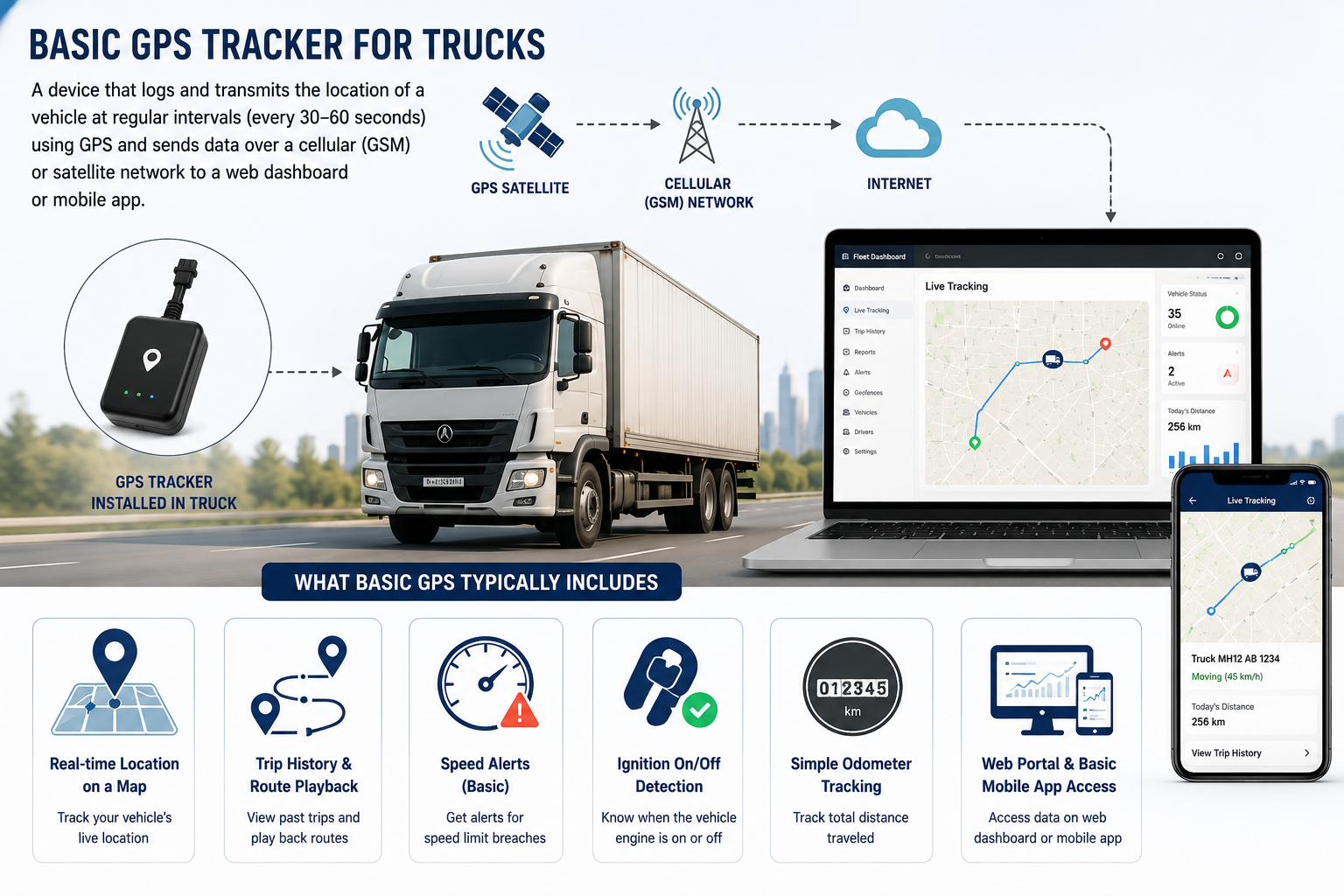
A basic GPS tracker for trucks is a device that logs and transmits the location of a vehicle at regular intervals, typically every 30 to 60 seconds. It uses the Global Positioning System (GPS) to triangulate coordinates and sends data over a cellular (GSM) or satellite network to a web dashboard or mobile app.
What Basic GPS Typically Includes:
• Real-time location on a map
• Trip history and route playback
• Speed alerts (basic threshold-based)
• Ignition on/off detection
• Web portal and basic mobile app access
Basic trackers are popular among small fleet GPS tracking India operators — auto rickshaw fleets, individual truck owners, local courier companies — primarily because of their low upfront cost and simple installation. You get what you pay for: location visibility, and not much else.
What Is Advanced GPS for Fleet Management?
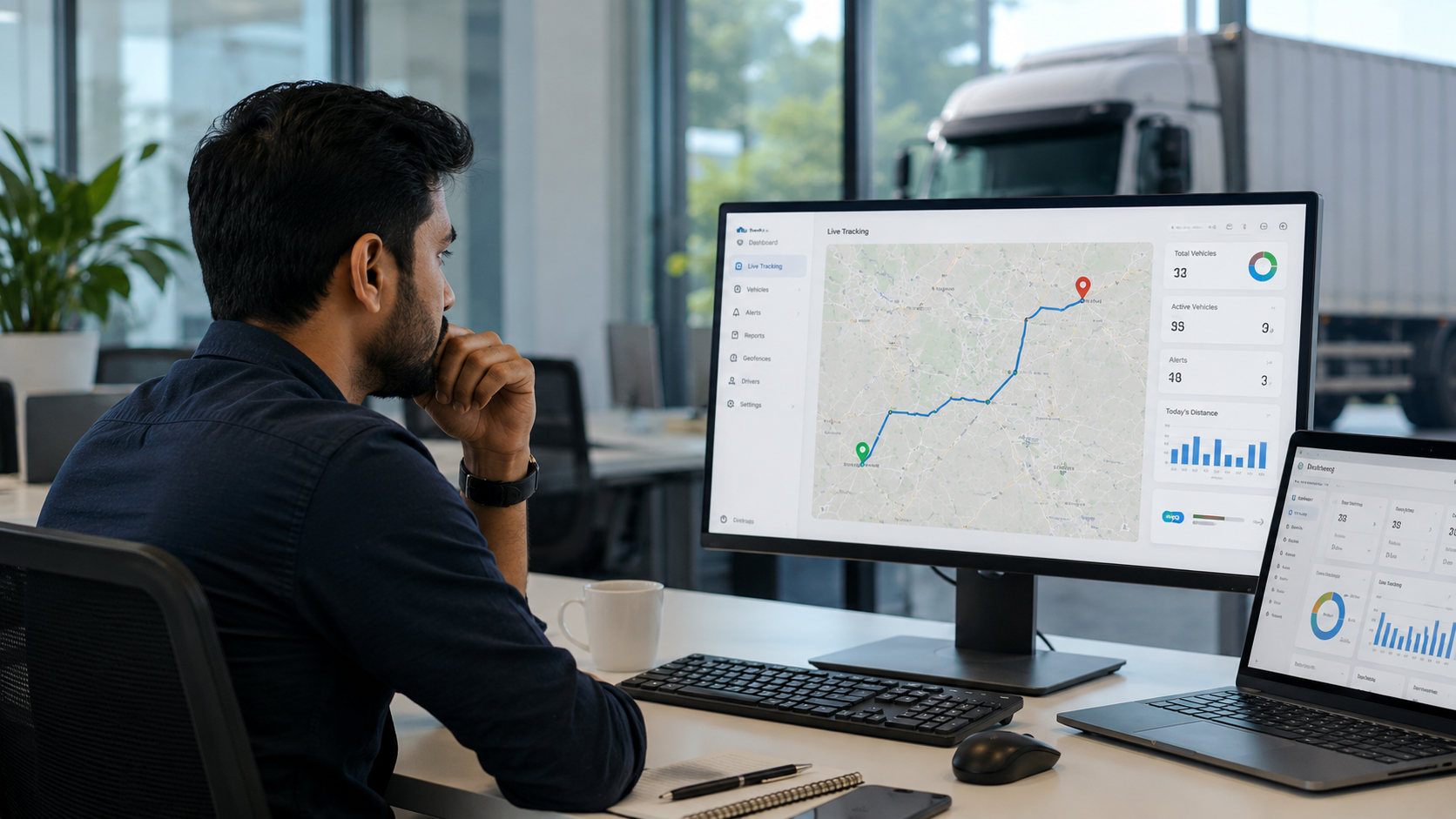
Advanced GPS — often referred to as fleet telematics or a fleet management system (FMS) — is a complete operational intelligence platform built on top of GPS. It doesn't just tell you where your truck is. It tells you how your truck is performing, how your driver is behaving, whether your fuel is leaking, and whether your delivery was completed with verified proof.
Platforms like Fleetx combine GPS hardware with deep software layers, AI-powered analytics, and integration capabilities that transform raw location data into actionable business intelligence.
What Advanced GPS Typically Includes:
• Real-time tracking with sub-10 second refresh rates
• Driver behaviour monitoring — harsh braking, acceleration, cornering, overspeeding, fatigue
• Fuel monitoring system for trucks — consumption, theft detection, level alerts
• ePOD (Electronic Proof of Delivery) — photo, signature, timestamp, GPS location
• Predictive maintenance alerts — service reminders, engine diagnostics (OBD-II)
• Geofencing for commercial trucks — custom zone alerts, entry/exit notifications
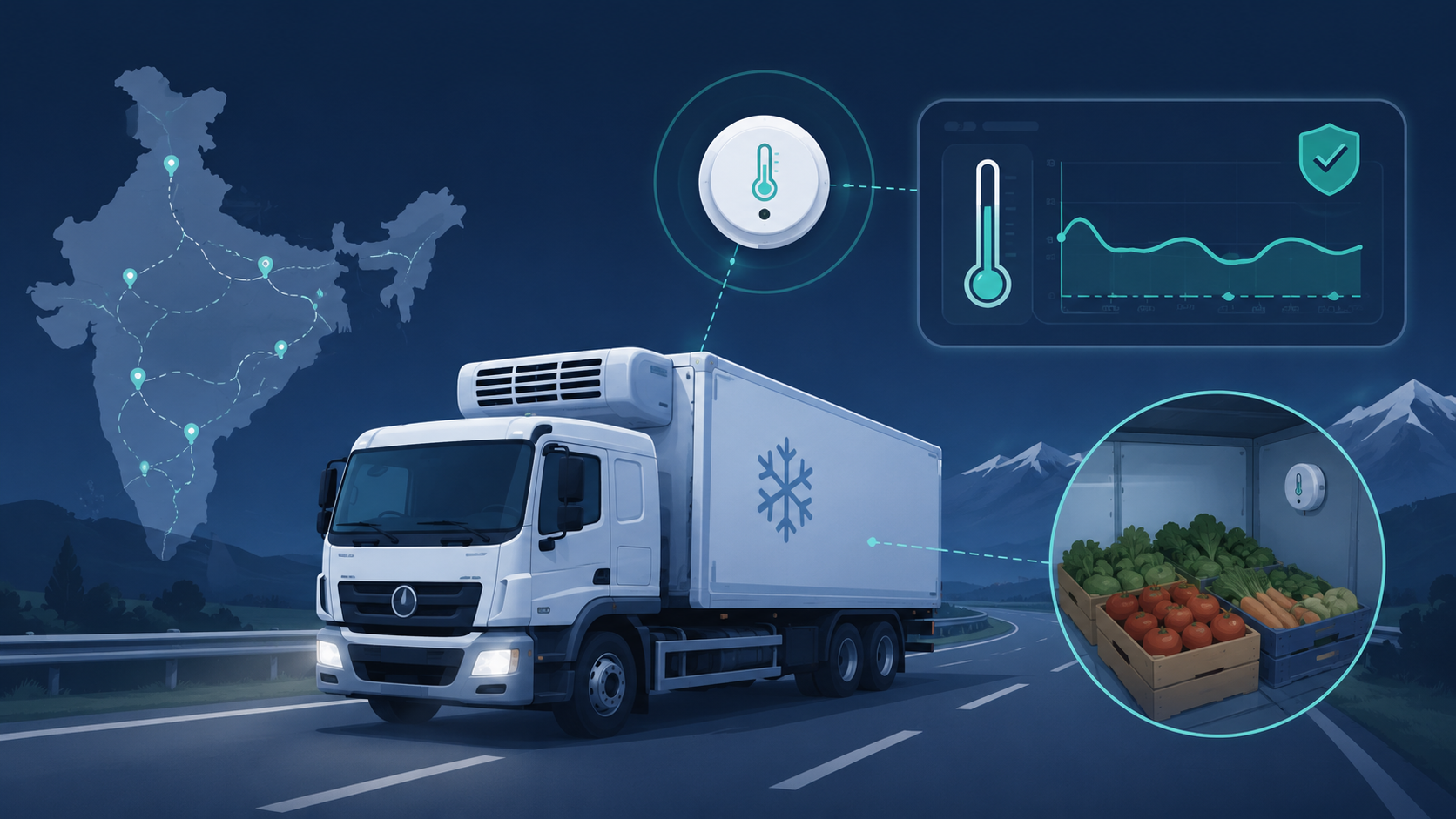
• Temperature monitoring for cold-chain and reefer vehicles
• Route optimisation and trip scheduling tools
• Custom reports, dashboards, and performance analytics
• API integration with ERP, TMS, WMS platforms
• Vehicle health monitoring GPS — tyre pressure, battery, engine codes
Basic GPS vs Advanced GPS for Fleet: Head-to-Head Comparison
Use this comparison table to quickly assess which solution fits your operational needs:
5 Key Differences That Actually Matter for Fleet Operations
1. Driver Behaviour: The Hidden Cost You're Ignoring
Basic GPS tells you a driver hit 80 km/h on a 60 km/h road. Advanced GPS tells you the driver has a consistent pattern of harsh braking, late-night overspeeding, and frequent idling that's costing you ₹4,000 per month in extra fuel alone. With platforms like Fleetx, driver scorecard GPS tracking assigns a safety and efficiency score to each driver, enabling targeted coaching, incentive programmes, and accident prevention.
2. Fuel: The Biggest Controllable Cost in Your Fleet
Fuel typically accounts for 35–45% of total fleet operating costs in India. A basic GPS tracker for trucks has zero visibility into fuel consumption. Advanced GPS with fuel monitoring for fleet vehicles integrates with fuel sensors to detect siphoning, pilferage, idling wastage, and route inefficiency —often saving fleets 12–18% on fuel bills within the first three months (based on Fleetx customer data across active deployments, 2024–25).
3. Proof of Delivery: The Dispute Eliminator
Basic GPS can confirm a truck was near a location at a certain time. It cannot prove a delivery was completed. Advanced GPS fleet management with ePOD captures a photo of the delivered goods, a customer signature, GPS coordinates of the delivery point, and a timestamp — creating an irrefutable digital record. For e-commerce, FMCG, and B2B logistics, this alone justifies the upgrade.
4. Maintenance: Reactive vs Predictive
Basic GPS: your truck breaks down, you get it fixed. Advanced GPS with predictive fleet maintenance GPS, you receive an alert three weeks before your truck's engine coolant sensor throws a critical code — before it causes a breakdown on a highway. Unplanned breakdowns cost Indian fleets an average of ₹18,000–₹35,000 per incident including downtime, towing, and expedited repairs.
5. Compliance & Insurance: The Long-Term Play
India's commercial vehicle regulations are tightening. The Ministry of Road Transport and Highways (MoRTH) mandates AIS-140 compliant GPS devices for certain commercial vehicles. Advanced GPS platforms stay ahead of GPS compliance for commercial vehicles India requirements and also provide telematics data that insurers use to offer premium discounts of 10–20% for well-monitored fleets.
Who Should Choose Basic GPS?
Basic GPS trackers are a legitimate, cost-effective choice in certain scenarios. You're likely a good fit if:
• Fleet size is 1–5 vehicles and operations are primarily local or intracity
• You're an owner-operator who mainly wants to track a single asset
• Budget is highly constrained and you need bare-minimum tracking to comply with a client requirement
• Your industry has low compliance risk and delivery disputes are rare
• You're in the early stages of building a fleet and want to test the waters
Even then, consider this: many affordable GPS tracker commercial trucks India offerings from advanced platforms now start at competitive price points — making the cost gap smaller than it used to be, especially when ROI is factored in.
Who Should Choose an Advanced GPS?
Advanced GPS is the clear choice when your fleet is a meaningful business asset. With Fleetx, you get a unified platform purpose-built for Indian fleet operators. It's the right solution if:
• Your fleet runs 6+ vehicles across multiple routes or geographies
• You operate in e-commerce, FMCG, pharma, or cold chain — industries where ePOD and compliance are non-negotiable
• Fuel cost management is a priority (it always should be)
• You're dealing with delivery disputes, customer complaints about ETAs, or ghost deliveries
• Your drivers need to be managed, coached, or monitored for safety
• You manage long-haul routes and need real-time visibility for operations teams
• You want to integrate GPS data with your existing TMS, ERP, or WMS
• You're scaling and need a platform that grows with you
Choosing the Right GPS Solution: Fleet Type vs Recommendation
The Real Cost Comparison: What Advanced GPS Actually Saves You
The most common objection to upgrading from basic GPS tracker for trucks to an advanced platform is cost. But this comparison usually looks at the wrong number — the monthly subscription fee — rather than total operational cost impact.
Here's what the numbers actually look like for a mid-sized fleet of 20 trucks in India:
For a 20-truck fleet, the total monthly savings from advanced GPS can easily range from ₹1.5 lakh to ₹4 lakh — against an additional platform cost of ₹30,000–₹50,000 per month over basic GPS (figures based on average operational data across 500+ Fleetx-managed vehicles, 2024–25). The ROI math isn't even close.
Advanced GPS for Fleet Management in India: The Local Advantage
Finding the best GPS tracker for commercial vehicles in India means looking beyond global platforms and choosing a solution built for Indian road conditions, regulatory requirements, and fleet operations realities.
Fleetx is designed ground-up for the Indian market, with features that specifically address:
• AIS-140 compliance — Fleetx devices are certified under India's vehicle tracking norms for commercial vehicles
• Hindi and regional language support on the driver app — critical for fleet operators with diverse driver profiles
• Indian road and map data — accurate routing on state highways, toll routes, and rural roads
• FASTag and toll integration — automatic toll tracking for long-haul fleets
• WhatsApp-based driver communication — because email isn't how Indian truckers communicate
• GST and e-way bill integration — compliance-ready for logistics operators
• 24/7 Hindi support — local customer success teams who understand your operations
For logistics companies looking for a GPS fleet management system built for India — one that balances operational depth with day-to-day usability — Fleetx is trusted by fleet operators across segments, from last-mile delivery startups to large transport corporations like JK Lakshmi Cement, Srinivasa Road Transport, and others managing 100+ vehicles.
Conclusion: Stop Tracking Trucks. Start Managing Them.
The question isn't really basic GPS vs advanced GPS for fleet — it's whether you want to track your trucks or actually manage your fleet. Basic GPS gives you a dot on a map. Advanced GPS gives you control over your operations, your costs, and your customer experience.
If your business depends on trucks — for delivery, distribution, logistics, or field service — the data you're missing with a basic GPS tracker for trucks is costing you money every single day. Fuel leaking through the cracks. Deliveries disputed without proof. Drivers burning tyres on unoptimised routes. Maintenance ignored until a breakdown halts your operations.
Fleetx is built to close every one of those gaps. As India's leading fleet management GPS platform, it combines hardware reliability with software depth — giving fleet operators across transport, e-commerce, FMCG, pharma, and construction the visibility they need to run a leaner, safer, more profitable operation. Most Fleetx customers recover the full platform cost within 6–8 weeks. The question isn't whether to upgrade — it's how much longer you can afford not to.
Is a basic GPS tracker enough for AIS-140 compliance in India?
Most basic GPS trackers are AIS-140 certified for location transmission requirements. However, AIS-140 GPS compliance India also mandates emergency buttons, SOS features, and panic alerts — which some entry-level devices may not support. Always verify certification before purchasing.
Can I upgrade from basic to advanced GPS without replacing hardware?
In most cases, upgrading requires replacing the GPS device since advanced telematics relies on newer hardware capable of capturing OBD data, fuel sensor inputs, and supporting higher-frequency data transmission. However, some advanced platforms offer hardware-agnostic software that can connect with third-party devices.
What is the best GPS tracker for trucks in India under a budget?
For budget-conscious operators, affordable GPS tracker for trucks India options start around ₹500–₹800/month for basic tracking. For operators who want advanced features without enterprise pricing, Fleetx offers scalable packages that bring down per-vehicle cost significantly for larger fleets for clients like Srinivasa Road Transport Pvt Ltd — often making it more affordable than expected once ROI is factored in.
How does GPS fleet tracking help reduce accidents?
Advanced GPS platforms with driver behaviour monitoring GPS trucks track harsh events in real time and generate safety scores per driver. Fleets using driver coaching programmes based on telematics data report a 25–40% reduction in road incidents within six months of deployment (Fleetx customer data, 2024–25).
Is real-time fuel monitoring GPS accurate?
Yes — when integrated with calibrated fuel level sensors or the vehicle's CAN bus, real-time fuel monitoring GPS trucks can achieve 95–98% accuracy in fuel consumption reporting (Fleetx internal benchmarks, sensor-calibrated deployments, 2024). This is significantly more reliable than manual dip readings or driver-reported fuel logs.