“The more specific and measurable your goal, the more quickly you will be able to identify, locate, create, and implement the use of the necessary resources for its achievement.”
Similarly, transport businesses need quantifiable data for streamlined fleet management. Every time a vehicle is on the road, it generates a large amount of data. If this data is recorded and utilized adequately, transporters can gain valuable visibility into several aspects of the fleet’s operations, ranging from the vehicles’ speed to sudden braking tendencies to acceleration frequency.
This is where IoT and automation come into play, with an AI-powered transport management system that facilitates efficient driver behavior analysis.
• Cost: ₹1,500–₹4,500/vehicle/month for AI-powered monitoring;
basic GPS scoring from ₹800–₹1,500/month
• Key metrics scored: harsh braking, overspeeding, idling, route
deviation, distracted driving, fatigue, seatbelt adherence
• Industries with highest ROI: FMCG, mining logistics, cement,
pharmaceuticals, cold-chain, e-commerce
• Fleetx AI analytics draws on 8+ years of Indian fleet data across
Delhi-NCR, Mumbai, Bengaluru, and Pune corridors
Why Is AI-Powered Driver Behaviour Management Crucial for Fleets?
AI assists fleet managers with insights into driver conduct, facilitating informed decisions that save costs.
Accident & Liability Prevention
Fleet-related accidents are most often caused by irresponsible driving, and implementing a driver monitoring mechanism identifies the high-risk patterns, aiding fleet managers in taking necessary corrective/preventive actions. Lesser accidents translate into fewer injuries, lower repair costs, and lower overall business liability.
Lower Insurance Premiums
Several insurance providers set lower premium amounts for transport businesses using the driver behavior monitoring system. Wondering why? The reason lies in using safety tools such as dashcams and telematics. Fleets using such technological advancements are statistically less likely to get into accidents.
Driver Training & Coaching Mechanism
Driver monitoring isn’t only about identifying problems in driving patterns, but its use in driver coaching and development can also be used by fleet managers to:
- Strengthen safe driving habits
- Allocate driver scores according to the safety levels, followed by drivers
- Provide performance-based driver training
Boosts Company Reputation
Fleets with dashcams and other telematics-based monitoring systems demonstrate a strong commitment to road safety and corporate accountability, showcasing the company’s risk management initiatives.
📊 AI-Powered Driver Behavior Management in India: Key Statistics
- India records over 4.6 lakh road accidents annually, with driver behavior being one of the leading causes.
- AI-based fleet monitoring systems can reduce risky driving events such as harsh braking, over-speeding, and distracted driving by 30–40%.
- Indian logistics fleets using telematics and AI-powered driver scoring report up to 15% fuel savings through reduced idling and optimized driving behavior.
- Video telematics and driver monitoring systems help transport companies lower accident-related operational costs by nearly 20–25%.
- According to NITI Aayog and MoRTH data, road accidents cost India approximately 3–5% of its GDP annually, making predictive fleet safety technology a growing priority for enterprises.
Sources: Ministry of Road Transport & Highways (MoRTH), NITI Aayog, Deloitte India, and NASSCOM mobility & telematics industry reports.
What Are the Key Features of a Trip Scoring System?
Trip scoring relies on data analytics to streamline the process of driver monitoring, and the software features that play a pivotal role in collecting and calculating the driver scores include:
Data Collection
By combining AI-powered dashcams, GPS devices, and telematics systems, the vehicle’s driving pattern is mapped, and the data includes:
- Speed relative to the posted limit
- Acceleration and braking patterns
- Lane change and steering style
- Monitoring in-cabin recklessness, such as phone usage or distracted driving
- Seatbelt usage adherence and detecting fatigue
Incident Alerts
Advanced driver assistance systems (ADAS) and driver monitoring systems (DMS) calculate and detect unsafe behavior in real time to send alerts to the driver and the fleet manager. Such alerts facilitate corrective actions and prevent incidents.
Video Footage
Upon risky behavior detection, the AI-powered dashcams capture video evidence before and after the event, offering critical visual context. The captured footage becomes valuable coaching material and investigative evidence.
Driver Score Generation
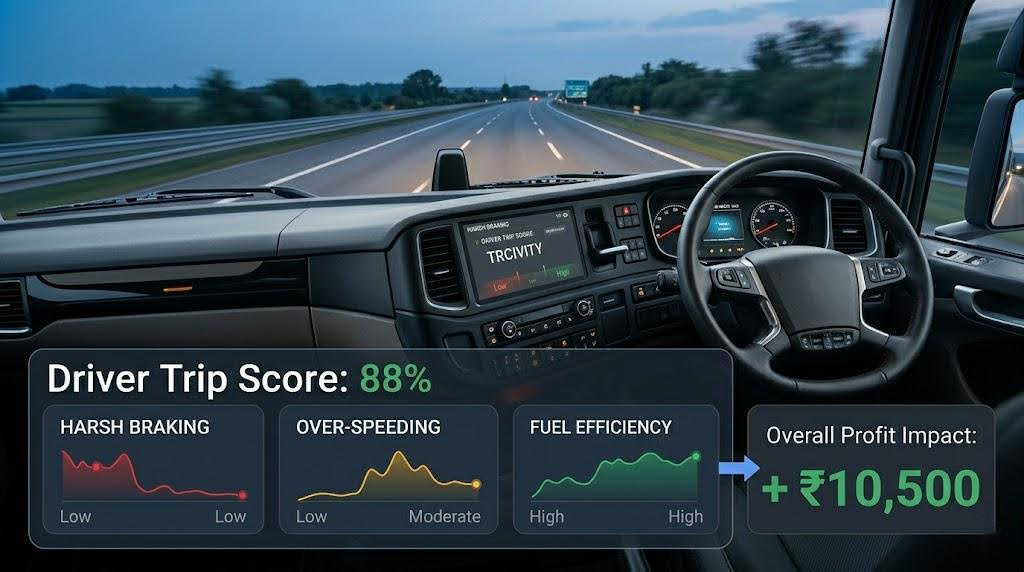
AI calculates drivers’ performance against predefined parameters to assign individual scores. Fleet managers utilize these scores to identify which drivers require more training and subsequently reward the high performers. An automated scoring mechanism fosters a healthy, competitive environment.
Geofencing
Geofence is a crucial feature of any driver monitoring system, as it assists fleet managers in detecting if and how much the drivers are deviating and whether there has been any unauthorized vehicle usage. Smart geofencing marks the areas the driver frequently stops by.
Predictive Analytics
Fleet management software detects trends and patterns in erratic driver behavior. By examining data on vehicle aspects such as fuel consumption, route deviation, and driving behavior, fleet managers can take corrective actions.
How Does Fleetx Driver Behaviour Analytics Improve Fleet Profitability?
Now, an industry experience of more than 8 years has aided Fleetx with the necessary expertise in creating a driver behavior monitoring tool that encompasses the features mentioned above, meeting the expectations of several clients. The significant benefits of using AI in driver behavior analysis, which translate to higher profits, include:
Enhanced Fleet Safety
Automation assists fleet managers in detecting risky driving and taking corrective actions. Reviewing the data on sudden braking, speeding, and distracted driving facilitates focused training programs and driver feedback. Such proactive steps help in accident risk reduction and improve both the driver’s and vehicle’s safety.
Higher Efficiency
Transporters can identify inefficiencies in terms of fuel usage, route deviations, and risky driving to improve the overall fleet efficiency. AI helps in identifying drivers who undertake fuel-wasting activities that include excess idling or rough acceleration and assists them in addressing the issues.
Improved Customer Service
Safe and efficient driving improves customer service. On-time delivery and higher customer satisfaction rates are direct outcomes of following optimized routes that minimize delivery durations. This data-backed approach offers a competitive upper hand, leading to higher customer loyalty and retention.
Lower Maintenance Costs
Data on driver behavior and vehicle performance facilitates a vehicle’s predictive and preventive maintenance, assisting fleet owners in identifying and addressing concerns before these become a cost center.
🚛 Monitor drivers live, reduce accidents, and improve fleet safety with AI-powered video telematics.
Explore Now →How Can Fleet Operators Get Started With Driver Trip Score Monitoring?
Based on the scores, transporters can incentivize or penalize drivers to encourage healthier driving habits. A downward trend in driver scores could indicate underlying management issue/s that need to be dealt with.
Using highly sophisticated technologies and a data-based approach, the fleet management system from Fleetx analyzes large amounts of data. The analysis identifies trends and patterns that might not be open for general interpretation, enabling better decisions, improved safety, and ultimately saving lives on the road.