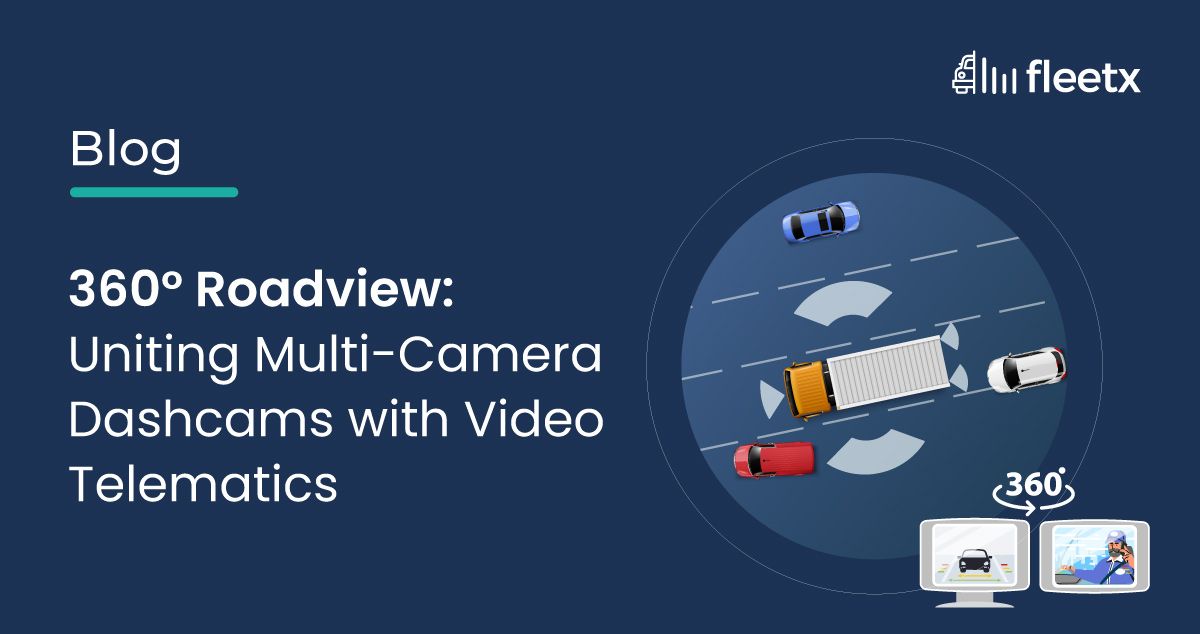
Combination of 4-way dashcams and video telematics is an outstanding example of innovation in the rapidly changing field of vehicle safety, revolutionizing the way we think about road safety and vehicle management. It is more important than ever to have thorough vehicle surveillance and data-driven insights as we drive on more and more congested roads. In addition to providing an unmatched 360-degree vision of a vehicle, this combination of advancements makes driving safer, more efficient, and secure.
Let's explore why adopting this advanced safety solution is not just a wise choice but a necessary step towards future-proofing our journeys on the road.
Why Are 4-Way Dashcams Essential for Fleet Vehicle Safety in India?
The evolution of dashcams from simple recording devices to sophisticated safety systems reflects our society's growing emphasis on road safety and accountability. With over 1.35 million people dying on roadways worldwide each year, according to the World Health Organization, the importance of advanced safety measures cannot be overstated. 4-way dashcams, offering an all-around view, ensure that every angle is covered, significantly reducing blind spots and capturing crucial details that could be missed by traditional single-view dashcams.
India recorded over 1.68 lakh road accident deaths in 2022 (MoRTH data),
with commercial vehicles involved in a disproportionate share. For fleet
operators in Delhi, Mumbai, and Bengaluru, dashcam footage has become
critical evidence in insurance claims and legal disputes. Dashcam systems
with 4-way coverage typically reduce fleet accident-related costs by
30–45% within the first year of deployment.
What Does an In-Cabin Camera Monitor in Commercial Vehicles?
The in-cabin camera serves as an unblinking guardian, monitoring the vehicle's interior to ensure the driver's focus remains on the road and passengers' safety is maintained. This is particularly vital in commercial vehicles, where driver behavior directly impacts business reputation and customer satisfaction. Moreover, in the age of ride-sharing, an in-cabin view provides peace of mind for both drivers and passengers, serving as a deterrent against misconduct and a source of evidence if disputes arise.
How Does a Front-Facing Road Camera Protect Fleet Drivers?
The front-facing camera captures every moment of your journey, making it an indispensable tool for proving fault in accidents and protecting against fraudulent claims. In the United States alone, crash-related costs for drivers exceed $380 million annually, as reported by the National Highway Traffic Safety Administration. The clarity and reliability of footage from a road view dashcam can be the difference between a straightforward insurance claim and a prolonged legal battle.
How Do Side View Cameras Reduce Blind Spot Accidents for Trucks?
Side view cameras extend the eyes of the driver, covering the flanks of the vehicle to prevent side-swipe accidents and collisions during lane changes. This feature is crucial for larger vehicles, where the driver's direct line of sight cannot cover all angles. By providing real-time visuals of the vehicle's sides, these cameras enhance the driver's situational awareness, significantly reducing the risk of accidents.
Why Is Cargo and Rear Camera Monitoring Critical for Logistics Fleets?
For vehicles carrying goods, the cargo or backside camera is essential for monitoring the integrity and security of the load. This perspective is invaluable not only for deterring theft but also for assisting with reversing and maneuvering in tight spaces. When combined with video telematics, which can alert drivers to changes in cargo status or potential security breaches, this technology becomes a powerful tool for logistics and transportation businesses.
How Does Video Telematics Transform Fleet Management?
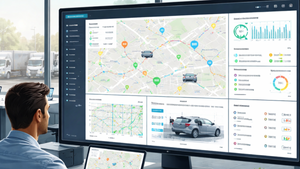
When 4-way dashcams are integrated with video telematics, the result is a dynamic system that not only records video but also analyzes and interprets data. This combination offers real-time insights into driver behavior, vehicle performance, and road conditions, enabling proactive safety measures and operational efficiencies. The power of video telematics lies in its ability to transform raw data into actionable intelligence, making it a critical component of modern fleet management and personal vehicle operation.
For Indian fleet operators, video telematics systems from platforms like
Fleetx integrate with AIS-140 certified GPS hardware, providing combined
location tracking and driver behaviour video in a single system. Fleets
in Delhi-NCR report 20–35% reductions in harsh braking and over-speeding
within 60 days of deploying driver-facing camera monitoring with automated
coaching alerts.
Conclusion: A Call to Action for Safer Roads
The fusion of 4-way dashcams and video telematics represents the future of vehicle safety and efficiency. By providing comprehensive coverage around the vehicle and enriching this information with data-driven insights, this technology offers a holistic approach to road safety. Whether for personal security, fleet management, or enhancing the safety of commercial transportation, the time to embrace this innovative solution is now. Let's take a decisive step towards safer, more secure, and efficient roads by adopting 4-way dashcams integrated with video telematics. Together, we can pave the way for a future where road accidents are significantly reduced, and the driving experience is transformed for the better.
FAQs
What is the best dashcam system for fleet trucks in India?
The best dashcam system for fleet trucks in India is one that combines 4-way camera coverage with video telematics integration, AIS-140 certified GPS, AI-based driver alert features, and a cloud-connected fleet management platform. For operators in Delhi, Mumbai, and Bengaluru managing 10–500 trucks, platforms like Fleetx offer integrated systems that include front, rear, side, and in-cabin cameras alongside GPS tracking, fuel monitoring, and driver behaviour scoring. Key features to evaluate: recording resolution (1080p minimum), local storage capacity (minimum 64GB), live streaming capability, automatic incident clipping, and compatibility with your existing fleet management software.
Does AIS-140 require dashcams for commercial vehicles in India?
AIS-140, India's MoRTH-mandated standard for commercial vehicle GPS tracking, does not currently require dashcams. However, AIS-140 certified GPS devices can be integrated with dashcam and video telematics systems from platforms like Fleetx, combining mandatory location tracking with optional video surveillance in a single hardware installation. Several state governments and fleet operators have moved ahead of regulation by deploying voluntary dashcam systems, particularly for passenger transport, school buses, and high-value cargo fleets. AIS-140 certified hardware with dashcam integration is available across India.
Can video telematics help reduce insurance costs for truck fleets in India?
Yes. Several insurance providers in India now offer premium discounts of 10–20% for commercial fleets that deploy dashcam and video telematics systems, because video evidence significantly reduces disputed claims and fraud. Fleet operators with documented dashcam footage resolve insurance claims faster and with lower legal costs. Additionally, video telematics data on driver behaviour — hard braking frequency, speeding incidents, fatigue alerts — demonstrates a proactive safety culture that insurers reward with lower risk ratings. For large fleets of 50+ trucks, annual insurance savings from video telematics deployment can exceed ₹15–₹30 lakh.
How do side-view cameras reduce accidents for heavy-duty trucks?
Heavy-duty trucks have large blind spots on both sides — areas that mirrors cannot cover, especially during lane changes and turns. Side-view cameras provide real-time visuals of these zones on the driver's monitor, significantly reducing side-swipe collisions and pedestrian incidents at intersections. In Indian cities with dense mixed traffic — motorcycles, auto-rickshaws, and cyclists — side cameras are particularly valuable. Fleet operators in Delhi-NCR, Pune, and Chennai report 25–40% reductions in side-impact incidents within the first year of deploying side-view camera systems on heavy trucks and tankers.
Why is an in-cabin camera important for commercial fleet vehicles?
An in-cabin driver-facing camera monitors driver behaviour in real time — detecting drowsiness, distraction, mobile phone use, and seatbelt violations. For Indian fleet operators, driver fatigue is a leading cause of highway accidents, particularly on long-haul routes between Delhi, Mumbai, and Hyderabad. In-cabin camera systems with AI-based fatigue detection alert drivers and notify fleet managers before incidents occur. They also provide video evidence in accident disputes, protect drivers against false passenger complaints in passenger transport applications, and are increasingly required by insurance companies for premium discounts.
How much does a dashcam with video telematics cost for trucks in India?
In India, a 4-way dashcam system with video telematics integration typically costs ₹15,000–₹45,000 per vehicle for hardware, depending on camera resolution (1080p vs 4K), storage capacity, and whether the system includes AI-based driver alert features. Monthly platform subscription fees for video telematics software run ₹500–₹1,500 per vehicle. Installation at authorised service centres in Delhi-NCR, Mumbai, and Bengaluru adds ₹2,000–₹4,000. Most fleet operators recover deployment costs within 4–8 months through reduced accident claims, lower insurance premiums, and improved driver accountability.
What is video telematics and how does it differ from standard GPS tracking?
Standard GPS tracking shows vehicle location, speed, and route history. Video telematics adds live or recorded camera feeds to this data, providing visual context for every fleet event. When a harsh braking alert fires, video telematics shows the dashcam footage from that moment — enabling fleet managers to assess whether it was an emergency stop or driver error. For Indian fleet operators, video telematics platforms like Fleetx integrate with AIS-140 certified GPS hardware, combining mandatory location tracking and driver behaviour video in a single unit to simplify installation and reduce hardware costs.
What is a 4-way dashcam system for commercial trucks in India?
A 4-way dashcam system installs four cameras on a commercial truck — front-facing (road view), driver-facing (in-cabin), side-facing (blind spot), and rear-facing (cargo or reverse view). Together these cameras provide 360° coverage of the vehicle, eliminating blind spots and recording all incident angles simultaneously. In India, 4-way dashcam systems are increasingly standard for fleet operators managing trucks in high-density corridors like Delhi-Mumbai, Bengaluru-Hyderabad, and Mumbai-Pune. Hardware costs typically range from ₹15,000–₹45,000 per vehicle depending on camera resolution and recording storage.