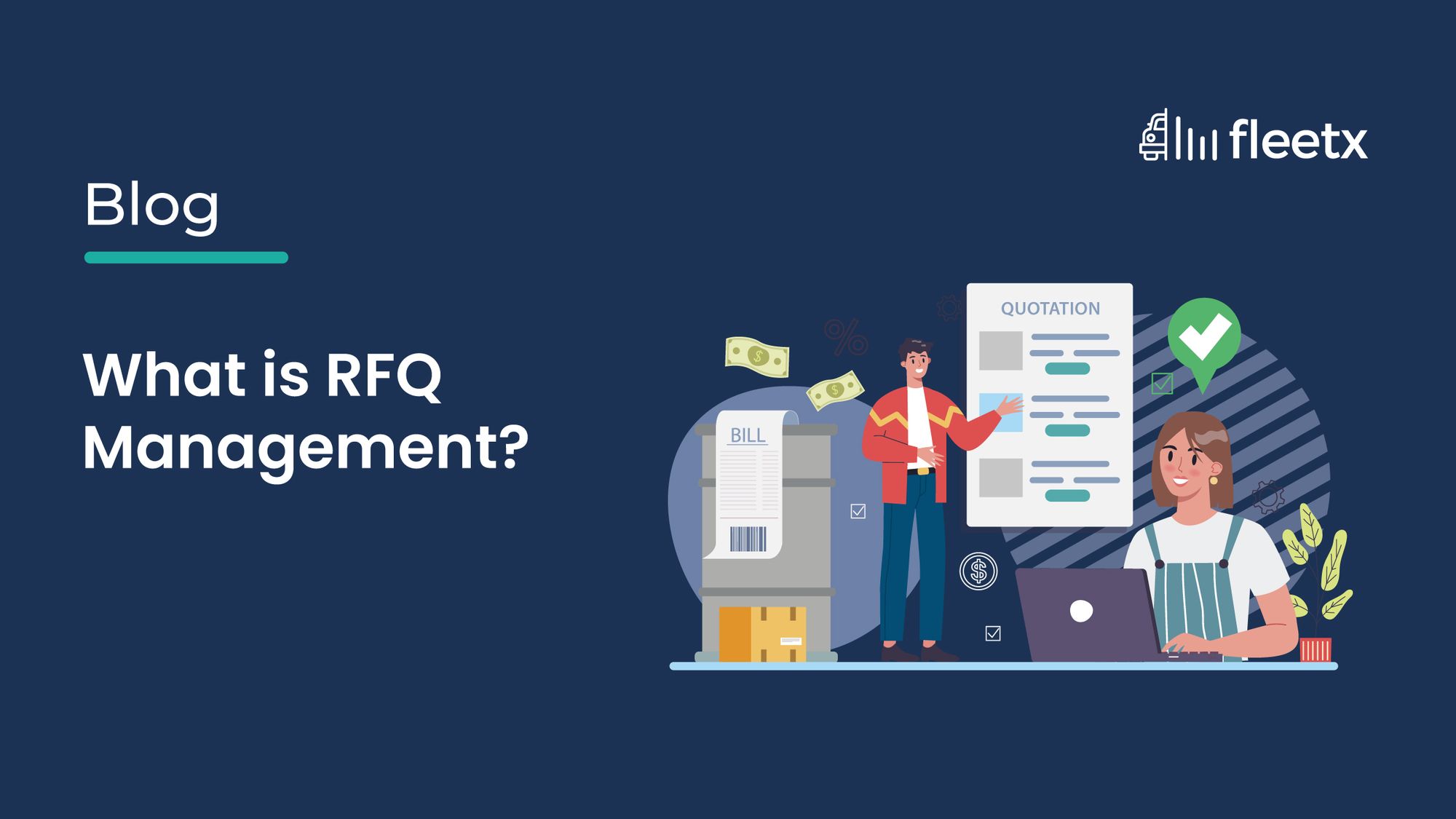
Effective supply chain and procurement process management is essential in the context of logistical operations. In these operations, the administration of Requests for Quotations (RFQs) is essential as it allows suppliers to be sourced and competitive bidding to occur. Through this procedure, logistics organizations may be confident they're getting the greatest deals and services possible for their demands related to distribution, warehousing, and shipping. Understanding RFQ management is essential for Indian logistics companies looking to streamline their processes and cut expenses. This article provides a thorough explanation of RFQ management and explains how the Indian logistics industry may use it to its advantage.
Simplify RFQ Management with AI-Powered TMS
Managing transport RFQs manually across emails, spreadsheets, and phone calls slows procurement teams down and creates visibility gaps.
Fleetx RFQ Management helps logistics and supply chain teams automate quotation workflows, compare transporter bids faster, and improve freight procurement efficiency through a centralized digital platform.
Built for the complexities of Indian logistics operations, Fleetx enables businesses to streamline vendor participation, reduce turnaround time, improve pricing transparency, and make faster transport allocation decisions using intelligent automation.
Automated RFQ creation and transporter onboarding
Centralized quotation comparison and bid evaluation
Real-time visibility into freight procurement workflows
Faster transporter finalization with reduced manual coordination
Integrated transport management and freight operations
RFQ management in logistics involves the systematic process of inviting, receiving, and evaluating quotations from suppliers for providing specific services or goods. It is particularly critical in logistics where services such as shipping, warehousing, and handling have significant impacts on operational efficiency and costs.
Detailed Requirements Analysis
The first step in RFQ management is conducting a thorough analysis of the logistics needs. This should clearly define the scope of services required, such as delivery speeds, volume handling capacities, geographical coverage, and technology integration (like real-time tracking). Accurately defining these parameters ensures that the RFQ attracts suppliers who are genuinely capable of meeting the company’s logistics demands.
What are the Essentials While Drafting an RFQ Document
Creating a detailed and clear RFQ document is crucial. This document serves as the foundation of the procurement process and should include:
A comprehensive description of the services required.
Criteria for submission, including deadlines, formats, and any required documentation.
Evaluation criteria for assessing bids.
Terms and conditions of the contract.
Contact details for queries and clarifications.
This document is the primary interface between the logistics company and potential suppliers, hence clarity and completeness are vital.
How Do Supplier Identification and Invitation Make a Difference
Identifying potential suppliers who can meet the specified requirements is a critical next step. In the Indian context, this could involve looking at local as well as national providers, depending on the scale of operations. Once identified, these suppliers are invited to participate in the RFQ process, ensuring a broad base of potential bids to select from.
Quotation Collection and Evaluation
As quotations come in, RFQ management involves a systematic approach to evaluate each proposal against the predefined criteria. This often extends beyond price to consider factors such as service quality, supplier reliability, past performance, and compliance with service level agreements (SLAs). This holistic evaluation helps in selecting a supplier who offers the best value, not just the lowest price.
Negotiation and Contract Awarding
Once a preferred supplier is identified, the next step in RFQ management is to negotiate terms that are favorable yet fair to both parties. This may involve price negotiations, service terms, penalty clauses for non-compliance, and other operational details. After successful negotiations, the contract is formally awarded to the selected supplier.
Why is Monitoring and Compliance Critical for Success
After awarding the contract, ongoing management involves monitoring the supplier’s performance to ensure compliance with the terms set out in the RFQ. Regular assessments and feedback sessions help maintain service standards and adapt to any changes in operational requirements.
Review and Continuous Improvement
Effective RFQ management does not end with the awarding of a contract but continues with reviewing the entire process. This helps identify any inefficiencies or challenges, enabling continuous improvement in future RFQ cycles.
For Indian logistics, effective RFQ management is not just about choosing the lowest bidder but finding the right partner who can contribute to seamless operational flow and enhanced service delivery. By refining the RFQ process, companies can achieve greater operational efficiencies, reduce costs, and improve service offerings in the highly competitive logistics sector.
Frequently Asked Questions About RFQ Management
RFQ management in logistics refers to the process of creating, sending, collecting, comparing, and finalizing quotations from transporters or vendors for freight movement and supply chain services. For Indian businesses operating in cities like Delhi, Gurgaon, Mumbai, Pune, Chennai, and Bengaluru, RFQ management has become critical due to rising freight costs, vendor fragmentation, and increasing operational complexity. Many companies still depend on spreadsheets, calls, WhatsApp groups, and manual transporter coordination, which slows procurement and creates pricing inefficiencies. A structured RFQ process helps procurement teams compare transporter rates transparently, improve vendor accountability, reduce freight leakages, and accelerate load allocation decisions. Modern AI-powered transport management systems now automate RFQ workflows, helping enterprises achieve faster procurement cycles and improved logistics visibility across India.
RFQ (Request for Quotation), RFP (Request for Proposal), and RFI (Request for Information) are different procurement processes used in logistics and transportation management. RFQ is primarily used when companies want competitive pricing for clearly defined logistics services such as transportation, warehousing, or freight movement. RFP is broader and focuses on evaluating operational capabilities, service quality, technology, and long-term partnerships. RFI is an exploratory process used to gather information before formal procurement begins. In India’s logistics sector, RFQs are commonly used by manufacturing companies, FMCG brands, and transport-intensive industries to identify the best transporter rates. Large enterprises in Gurgaon, Mumbai, and Delhi NCR increasingly use digital RFQ management platforms to automate quotation comparison and vendor selection while improving procurement efficiency.
RFQ management software is especially beneficial for industries with high transportation dependency and complex procurement operations. In India, sectors like FMCG, manufacturing, cement, steel, automotive, e-commerce, retail, pharmaceuticals, and cold chain logistics heavily rely on RFQ automation to streamline transporter selection and freight procurement. Businesses operating across large logistics hubs such as Mumbai, Gurgaon, Delhi NCR, Ahmedabad, and Hyderabad often manage hundreds of freight quotations daily. Manual processes become inefficient and difficult to scale. RFQ management systems help these companies reduce quotation turnaround time, standardize procurement workflows, improve rate negotiation, and eliminate pricing discrepancies. AI-powered logistics platforms further enhance decision-making by providing data-backed transporter comparisons, performance tracking, and centralized procurement visibility for enterprise logistics teams.
The cost of RFQ management software in India depends on factors such as company size, logistics complexity, number of users, integration requirements, and automation capabilities. Basic RFQ tools for small businesses may start around ₹15,000 to ₹40,000 per month. Mid-sized enterprises handling larger transporter networks often spend between ₹50,000 and ₹2 lakh monthly for advanced logistics procurement solutions. Enterprise-grade transport management platforms with AI automation, analytics, ERP integration, and centralized freight procurement workflows can cost significantly more depending on customization needs. Companies in Delhi, Gurgaon, Mumbai, and Bengaluru increasingly prefer cloud-based RFQ management systems because they reduce manual coordination costs, improve vendor transparency, and deliver faster procurement decisions while supporting large-scale transport operations across India.
The best RFQ management software for Indian logistics companies depends on operational scale, automation requirements, and integration needs. Businesses typically look for features such as transporter onboarding, quotation comparison dashboards, automated bid management, freight allocation visibility, and analytics-driven procurement insights. Enterprise logistics companies in Gurgaon, Mumbai, Delhi NCR, and Pune increasingly prefer AI-powered transport management systems that combine RFQ workflows with fleet tracking, dispatch planning, and freight analytics. Platforms like Fleetx help logistics teams centralize procurement activities while reducing manual communication and improving vendor coordination. The best solutions are those that simplify complex freight procurement workflows, support regional transporter ecosystems, and provide scalable automation for growing logistics operations across India’s highly fragmented transportation market.
RFQ automation significantly improves transporter selection by digitizing the quotation process and reducing manual coordination. Instead of managing multiple calls, emails, and spreadsheets, procurement teams can send RFQs to multiple transporters simultaneously through a centralized platform. The system automatically collects, organizes, and compares bids based on pricing, transit timelines, vehicle availability, and vendor performance. This improves transparency and speeds up freight procurement decisions. Indian enterprises operating in logistics-heavy regions such as Mumbai, Delhi, Gurgaon, and Chennai use RFQ automation to reduce procurement delays and eliminate pricing inconsistencies. AI-powered systems also help identify reliable transporters using historical data, enabling companies to reduce freight costs, improve operational efficiency, and optimize logistics planning across supply chain networks.
Yes, small and medium businesses across India increasingly use RFQ management platforms to simplify freight procurement and transporter coordination. Earlier, advanced logistics procurement tools were primarily adopted by large enterprises, but cloud-based SaaS platforms have made RFQ automation affordable for SMEs as well. Businesses in cities like Delhi, Gurgaon, Jaipur, Surat, and Indore use these systems to improve quotation transparency, compare transporter rates faster, and reduce manual operational workload. SMEs especially benefit from automated workflows because they usually operate with lean logistics teams. Modern RFQ platforms help them scale procurement operations without increasing manpower. Many providers also offer modular pricing models, making RFQ management software accessible for growing businesses with limited budgets and expanding transportation requirements.
Gurgaon and Mumbai have emerged as major centers for digital logistics procurement and transport automation because they host a large concentration of enterprises, logistics providers, manufacturers, and technology startups. Gurgaon, in particular, has become a major hub for SaaS-based logistics technology companies focused on AI-driven fleet management, freight procurement, and transport visibility solutions. Mumbai continues to dominate freight movement due to its ports, warehousing ecosystem, and massive industrial activity. Companies operating in these cities face intense pressure to improve procurement speed, reduce freight costs, and manage transporter networks more efficiently. As a result, RFQ management platforms are increasingly adopted to digitize vendor bidding, improve operational visibility, and streamline freight procurement across highly competitive logistics environments.