
Gap in visibility and information - the dominant issue plaguing the Indian trucking operations. Every stakeholder is aware of this uncomfortable truth and is on the constant lookout for a reliable solution.
Once a loaded trailer rolls out of the yard, phone calls and texts become the primary source of fleet information, and over time, drivers have also devised ways to bypass these checks. This zone of vacuum between “the truck is supposed to be somewhere near Raipur” and “this is the truck’s exact location, ETA, driving pattern, etc., in real-time” is where fleet owners lose money.
Modern fleet tracking solutions have been able to plug the leaks with GPS truck tracking and other telematics solutions - gradually transforming these into regular components of a fleet’s infrastructure and not just fancy gadgets.
Truck tracking systems are GPS and AI-powered fleet management solutions that help logistics businesses monitor vehicle locations, fuel consumption, driver behavior, delivery timelines, and operational efficiency in real time.
GPS Truck Tracking: Beyond the Tech Marketing Noise
The fundamental principle guiding truck tracking is simple - a telematics device placed inside the vehicle relays inputs such as location, speed, engine status, fuel specifics, and other sensor data - to a centralized platform for easy control and fleet optimization in real time.
A combination enabling tracking typically includes:
Truck Hardware-
- AIS-140 compliant GPS device
- Core vehicle data sensors - SIM, eSIM, IoT
- Optional devices - fuel sensors for tracking fuel levels, temperature, door status, OBD/CAN diagnostics, etc.
Truck Tracking Platform Features-
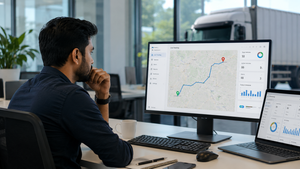
- Live fleet tracking dashboard
- Trip playback and location history
- Alert generation for anomalies while in motion
- Driver scorecards and trip analysis
- Integrated TMS, ERP, Mparivahan, or other portals
- BI tools integration for detailed analytics
Why is Implementing Automated Tracking No Longer Optional - The Benefits
By functionality, tracking and telematics accounted for 34.8% of the Indian fleet management software market share in 2024; analytics and reporting are estimated to grow at a 14.7% CAGR through 2030. The upward trend is observed due to several advantages associated with automation, including-
Enhanced Fleet Efficiency
Truck damages, repairs, and sudden incidents cost fleet operations heavily. GPS-enabled fleet tracking aids in minimizing these expenses and levels out on-field operations by tracking vehicle performance, route updates, driver behavior, and maintenance optimization accordingly.
Route Optimization for Faster Deliveries
GPS truck tracking enables fleet managers to plan truck routes accurately and increase the frequency of daily customer deliveries. Additionally, this also facilitates reducing unnecessary trip time - minimizing fuel consumption and advancing on-time deliveries, keeping labor and fuel costs under control.
Higher Driver Safety & Compliance
GPS fleet tracking traces the driver’s real-time location, enabling prompt response in case of any emergencies, accidents, or vehicle damage. Moreover, fleet operators receive real-time speeding alerts through integrated fleet management systems and can plan training programs for drivers, improving regulatory compliance standards.
Theft Prevention
Fleet businesses have to track the fleet vehicles, cargo, and driver movements to monitor the fleet operations effectively. Geofencing facilities incorporated in the GPS fleet tracking devices notify fleet managers when the vehicles overstep the authorized zones - providing updates on the cargo and driver movement as well.
Customer Service & Satisfaction
Fleet managers can achieve their routing and on-field monitoring goals by using a robust GPS tracking system, strengthening customer deliveries, ETAs, and thus creating a lasting impact in the minds of the customers.
Fleet Management Industry Statistics
- The global fleet management market continues to grow rapidly due to increasing logistics digitization.
- GPS tracking systems help reduce fuel costs and improve route efficiency.
- AI-powered telematics solutions are increasingly adopted across transport operations.
Must-Have Features of a Modern Tracking Software
The automated tracking system has to deliver certain non-negotiable outcomes, which include:
- Real-Time Visibility
- To track every vehicle’s location
- To determine its status - running, idle, detained, etc.
- To ascertain if it's exposed to any risks
- Trip-Level Supervision
- Planned vs. actual route monitoring
- Instant alerts for deviations
- Automated geofencing for gates, tolls, borders, mining zones, and more
- Driver Behavior Monitoring
- Overspeeding
- Harsh braking/acceleration
- Fatigue detection
- Fuel Monitoring Function
- Fuel level data
- Pilferage detection
- GPS-linked immobilisation
- Tampering alerts
- Safety & Regulatory Compliance
- AIS-140 hardware installation
- Digital logs of several vehicle performance parameters
- Timestamped delay and delivery logs
Evolving Tracking Features in the Indian Trucking Landscape
Both tech advancements and regulatory requirements are accelerating faster than most operators can keep up with. A few examples include -
Intensifying AIS-140/ VLTD Enforcement
GPS and SOS panic button implementation is now mandatory in commercial fleets and in certain states, for instance - Uttar Pradesh, non-compliance is treated as illegal, especially in mining fleets. From 1st October 2026, it would be mandatory as per regulation to install VLTD and event data recorders in haulage tractors.
Growing Role of AI & Telematics in Vehicle Tracking
The interplay between AI and telematics is on the rise, aiding fleet operators in predicting failures, scheduling maintenance, and minimizing breakdowns through proactive measures. The upcoming advancements are expected to provide futuristic data, such as which driver intentionally damages tyres as an excuse for delays or which truck will consume extra fuel in the upcoming week.
Integration - The New Normal
Top fleet management platforms, including Fleetx, are offering features that ease inter-departmental communication by utilizing open APIs, automated event webhooks, plug-ins for FASTag, routing, dock scheduling, etc. This trend is only going to develop further.
Selection Criteria for the Right Truck Tracking Partner
A few evaluation parameters that enable the selection of an appropriate technology partner are -
- Compliance: AIS-140 certification and platform compatibility with state monitoring systems.
- Platform Features: Evaluate the real-time tracking accuracy, routing authority, driver behavioral intelligence, and reporting depth on the dashboard.
- Scope of Integration: Functionality of the APIs, compatibility with your ERP, the FASTag portal, maintenance updates, and TMS interaction should be assessed before the final selection.
- Data Ownership & Security: The data ownership status, storage duration, cybersecurity standards, etc., are some critical aspects to be verified adequately.
- Future-Readiness: Ensure that the service provider’s roadmap includes predictive maintenance, AI applications, and control tower automation.
Bottom Line: Turning Visibility Into Infrastructure
GPS truck tracking is an effective tool that enhances transport business workflows, ensures fleet and driver safety, and improves the overall fleet performance by applying advanced technologies such as AI support, IoT integrations, and autonomous vehicle monitoring features.
Modern regulations are mandating GPS tracking, and customers expect live visibility. Getting the foundation right is the need of the hour, and the tools making it possible are reliable hardware, an efficient platform, and compact integrations.
Data-driven trucking isn’t a thing of the future anymore; it’s here! The only question left for you to ask - “Is your fleet in the advanced league yet - or still dependent on legacy systems?”
Key Takeaways
- GPS tracking improves fleet visibility.
- Telematics helps optimize logistics operations.
- Fleet automation reduces operational inefficiencies.
- AI-powered fleet systems improve decision-making.
FAQs
FAQs About Fleet GPS Tracking & Logistics Management
What is a fleet GPS tracking system?
How does GPS tracking improve logistics operations?
Why is telematics important for fleet management?
Can fleet management software reduce fuel costs?
How does AI improve fleet management systems?
What industries use fleet GPS tracking solutions?
How does fleet tracking improve vehicle safety?
Why do logistics companies need transport management systems?