Fuel theft costs Indian truck fleet operators an estimated 8% of
total diesel consumed — a silent P&L drain that compounds across every
vehicle and every trip. For a 50-truck fleet consuming 500 litres per
trip, that's ₹3,000–₹5,000 per trip in stolen fuel alone. This guide
explains how fuel theft happens, what it costs your business, and the
5 most effective prevention tactics used by fleet operators across
Delhi-NCR, Mumbai, and Bengaluru.
Ever-rising fuel prices account for much of the expenses logistics companies bear. Fuel thefts by drivers add to the cost burden. Reports indicate that approximately 8% of the diesel filled in trucks get stolen during transit. Commercial fleets are targeted more due to the higher capacity of fuel tanks and lack of preventive checks. Such actions not only cause financial loss but can damage the vehicle too.
Fleet managers have a hard time anticipating the newer techniques that can be used to steal fuel from the vehicle. Shifting from manual supervisory tactics and introducing technology is a foolproof way to provide actionable insights into what happens within and outside the vehicle, especially the fuel tank activities.
How to Recognize Instances of Fuel Theft?
It’s not always transparent for businesses to know how fuel theft is occurring. Several signs that raise suspicions about fuel being stolen include:
- Mysteriously high fuel expenses
- Physical tampering in the fuel tanks or cap locks
- Unusual fuel consumption levels
- Unauthorized vehicle route diversion, and more
How Does Fuel Theft Work?
It is important to understand the several techniques used to steal fuel from the trucks.
Direct Draining from the Vehicle
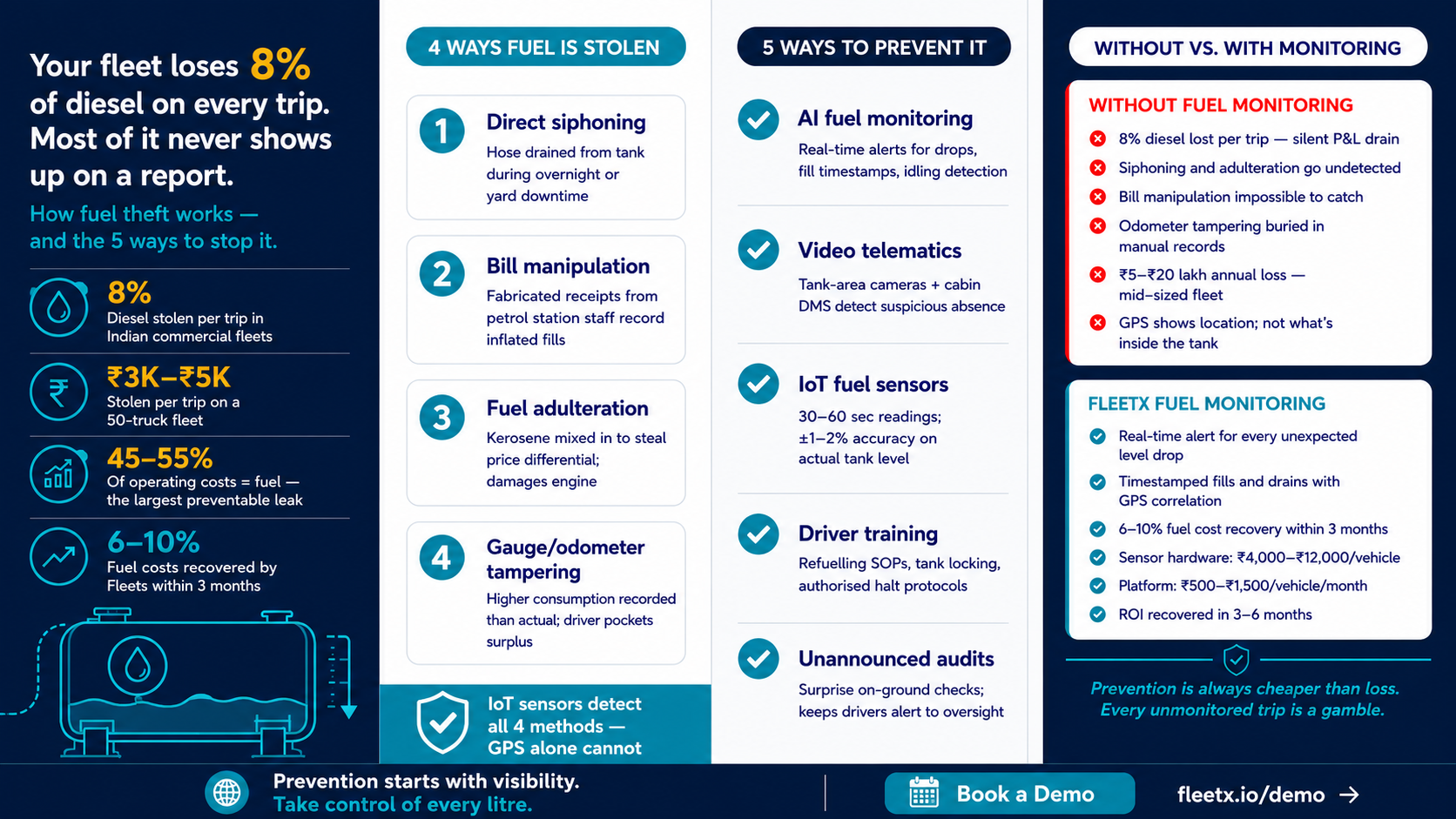
One of the most common ways of theft involves siphoning the fuel directly from the fuel tanks using a hose or any other device to drain fuel into containers. Such activities usually occur when the vehicle is in a non-operational state, during nighttime, or on holidays.
Fuel Bill Manipulation
Drivers often get into internal arrangements with the fuel station personnel to receive fabricated receipts that impact business record-keeping, leading to accounting inconsistency.
Fuel Adulteration
Several drivers resort to contaminating the fuel with low-grade substances such as kerosene or acetylene to lower the pure fuel levels and steal the differential amount. This becomes a serious threat to the vehicle engine and tank’s conditions.
Tampering Fuel Gauge or Odometer
Certain truck drivers alter or damage the vehicle’s fuel gauge settings to record higher levels of fuel consumption than the actual readings, making it convenient for them to steal the excess. Moreover, truck odometers are often manipulated to make it harder to record the total vehicle distance covered and the actual fuel consumption.
How Does Fuel Theft Affect Transport Business Costs in India?
Fuel theft affects the business health through several means and is not limited to only the economic consequences. The avenues include:
Financial Effect
Incurring business loss is the primary disadvantage arising from truck fuel being stolen.
According to the Indian Foundation of Transport Research and Training
(IFTRT), fuel accounts for 45–55% of total operating costs for Indian
long-haul truck operators — making fuel theft the single largest
preventable cost leak in commercial fleet operations. For a fleet of
100 trucks, even a 5% reduction in fuel losses through monitoring
technology translates to ₹15–₹25 lakh in annual savings."
Operational Hurdles
Fuel theft leads to unexpected operations halt. Such hindrances lead to delays and vehicle downtime, defaming the company’s reputation and service standards.
Increasing Fleet Maintenance Charges
With the vehicle’s physical condition compromised, damages occur easily, leading to expensive repairs.
Risking Overall Vehicle Safety
The manipulation of vehicle parts, especially the fueling systems, poses a bigger risk – endangered safety. Drivers assigned other trips on the manipulated vehicle may be unaware of its actual deficiencies, risking the lives and cargo within it.
Harming the Environment
With the truck’s fuel system compromised, its pollution levels increase while operating. Also, the stolen fuel can be mishandled, causing spills and soil or water contamination.
What Are the Best Ways to Prevent Fuel Theft in Truck Fleets?
The leading ways of theft prevention include:
How to Monitor Fuel Consumption - Fuel Monitoring System
A fuel monitoring system based on artificial intelligence (AI) provides valuable real-time fuel insights covering:
- Timestamps of fuel fills or sharp falls
- Fuel transaction costs
- Real-time alerts for managers
- Detection of vehicle idling locations
The above data captured is utilized to analyze various vehicle-related parameters and take responsive actions.
How Do Dashcams and Video Telematics Detect Fuel Theft?
AI-powered multicamera vehicle dashcams have become popular tools enabling managers to supervise fleets. These can be installed around the fuel tank or vehicle surroundings to record video footage of any suspicious activity in the zone.
Driver monitoring systems detect any unusual in-cabin absence, during which time they may be involved in stealing and/or trading vehicle fuel. Choosing video telematics over regular dashcams assists in detecting possible thefts and taking relevant actions.
How Fuel Sensors Work
Investing in an advanced fuel sensor for the vehicle enables receiving real-time notifications of the fuel levels inside the tank and aids in easing fleet management for the managers. Any fluctuation, productive or unproductive, gets the attention of the manager instantly and assists in blocking any theft attempts.
Adequate Driver Training
Truck drivers should be given clear guidelines for refueling protocols. Proper guidance and training in the fuel monitoring system educate them on the SOPs of the mechanism, ensuring the truck’s and fuel tank's safety. Moreover, drivers should be trained in optimum night parking and fuel tank locking techniques.
Frequent Unannounced Audits
Conducting sudden audits assists managers in getting practical on-ground insights about the vehicle’s overall performance, including valuable fuel data. Such checks also keep the drivers alert.
How Does Fleetx Help Indian Fleet Operators Prevent Fuel Theft?
Prevention is always better than cure! With the assistance of a leading logistics automation company, such as Fleetx, transporters can proactively protect vehicle resources such as fuel. Several clients have been able to mitigate losses by ensuring the optimal usage of truck fuel through Fleetx solutions.
Having complete authority over the vehicle’s upkeep and routes offers insightful data and empowers fleet managers or operators to make decisions faster and cost-effectively. Learn more about the advanced technology offerings from Fleetx.
FAQs
How much fuel is typically stolen from truck fleets in India?
Reports indicate approximately 8% of diesel filled in commercial trucks is stolen during transit in India. For a 50-truck fleet consuming 500 litres per trip at ₹90–₹95/litre, this represents ₹3,600–₹4,750 per trip in stolen fuel — compounding to ₹5–₹20 lakh in annual losses for a moderately-sized fleet. Commercial vehicles are targeted more than passenger vehicles due to larger fuel tank capacity (400–600 litres for long-haul trucks) and reduced oversight during overnight parking and multi-day trips across Delhi-NCR, Mumbai, and Hyderabad freight corridors.
What are the most common methods of fuel theft from trucks?
The four most common fuel theft methods in Indian truck fleets are: direct siphoning from the fuel tank using a hose during overnight parking or yard downtime; fuel bill manipulation where drivers arrange fabricated receipts with petrol station staff to record inflated fill amounts; fuel adulteration by mixing kerosene or lower-grade substances to steal the price differential (also damaging engine components); and tampering with the fuel gauge or odometer to record higher consumption than actual, enabling drivers to pocket the difference. IoT fuel sensors detect all four methods through sudden level drops, fill anomalies, and mileage-to-consumption inconsistencies.
How does a fuel monitoring system prevent theft in truck fleets?
An AI-powered fuel monitoring system continuously tracks fuel levels using IoT sensors installed directly in the tank, generating real-time alerts for any unexpected drop — from siphoning, adulteration, or unauthorised fill. The system records timestamps of every fill and drain event, fuel transaction costs, GPS location at the time of each event, and vehicle idling duration. Fleet managers receive instant mobile alerts when fuel levels fall outside expected parameters. For Indian fleet operators, Fleetx's fuel monitoring system has helped fleets recover 6–10% of previously unaccounted fuel costs within the first 3 months of deployment.
How do dashcams and video telematics detect fuel theft?
AI-powered dashcam and video telematics systems can be positioned around the vehicle's fuel tank area to record any physical access during non-operational hours. Driver monitoring cameras detect unusual cabin absence — when a driver leaves the vehicle during overnight halts or at unauthorised locations — which correlates with fuel siphoning events. Video footage with GPS timestamps provides forensic evidence for insurance claims and disciplinary action. For Indian fleet managers, integrating video telematics with fuel sensor alerts creates a dual-layer detection system that significantly reduces both theft and false accusation disputes.
What do IoT fuel sensors detect that GPS alone cannot?
GPS trackers record vehicle location and route but cannot detect what happens inside the fuel tank. IoT fuel sensors measure actual fuel level continuously (typically every 30–60 seconds), detecting sudden level drops from siphoning, gradual level anomalies from adulteration, overfilling during ghost transactions, and mileage-to-consumption inconsistencies that reveal odometer tampering. For Indian heavy-duty trucks — Tata, Ashok Leyland, Eicher — sensor calibration to the specific tank geometry ensures accuracy within ±1–2% of actual levels, making small-volume theft detectable that manual checks would miss.
How much does fuel theft prevention technology cost in India?
Fuel theft prevention technology costs for Indian fleet operators typically include IoT fuel sensor hardware at ₹4,000–₹12,000 per vehicle, dashcam systems at ₹8,000–₹25,000 per vehicle (for AI-enabled multi-camera setups), and platform subscription for monitoring, alerts, and reporting at ₹500–₹1,500 per vehicle per month. For a 20-truck fleet, total deployment runs ₹2.5–₹7 lakh for hardware plus ₹10,000–₹30,000/month for the platform. Most operators recover this investment within 3–6 months through eliminated fuel theft and improved consumption tracking.
What driver training reduces fuel theft risk in commercial fleets?
Effective driver training for fuel theft prevention includes: clear refuelling SOPs specifying authorised fuel stations and required documentation, tank locking procedures and cap security checks, overnight parking protocols in monitored yards or authorised halts, understanding of fuel monitoring system alerts so drivers know their actions are tracked in real time, consequences of theft under company policy and legal statutes, and safe fuel tank inspection techniques. Fleets that combine driver training with IoT monitoring report faster behaviour correction than monitoring alone — drivers respond to transparent accountability systems more predictably than to surveillance without communication.
What is the best fuel theft detection system for truck fleets in India?
The best fuel theft detection system for Indian truck fleets combines IoT fuel sensors with AIS-140 certified GPS telematics and AI-powered analytics in a single platform. For operators in Delhi, Mumbai, Bengaluru, and Hyderabad managing long-haul fleets, Fleetx provides integrated fuel monitoring with real-time alerts, timestamped fill and drain event logs, dashcam integration, and driver behaviour scoring. Key features to evaluate: sensor accuracy (±1–2% of tank capacity), alert latency (real-time vs batch), GPS correlation of fuel events to location, and PDF/CSV reporting for dispute resolution and insurance claims.