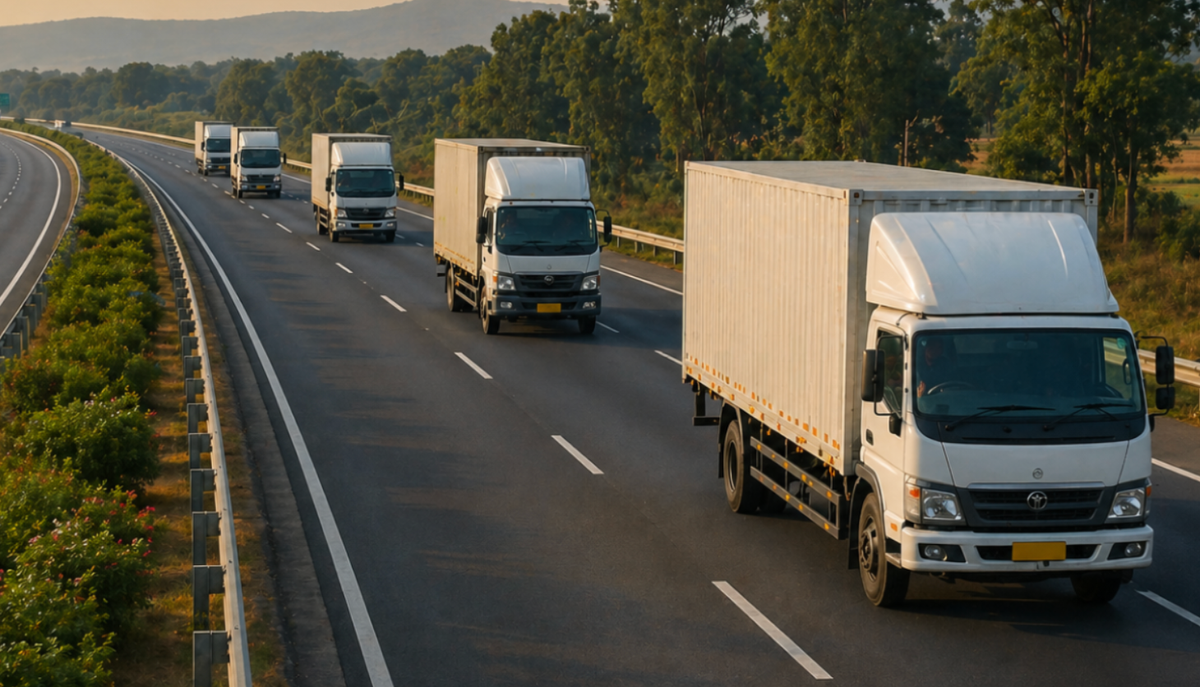
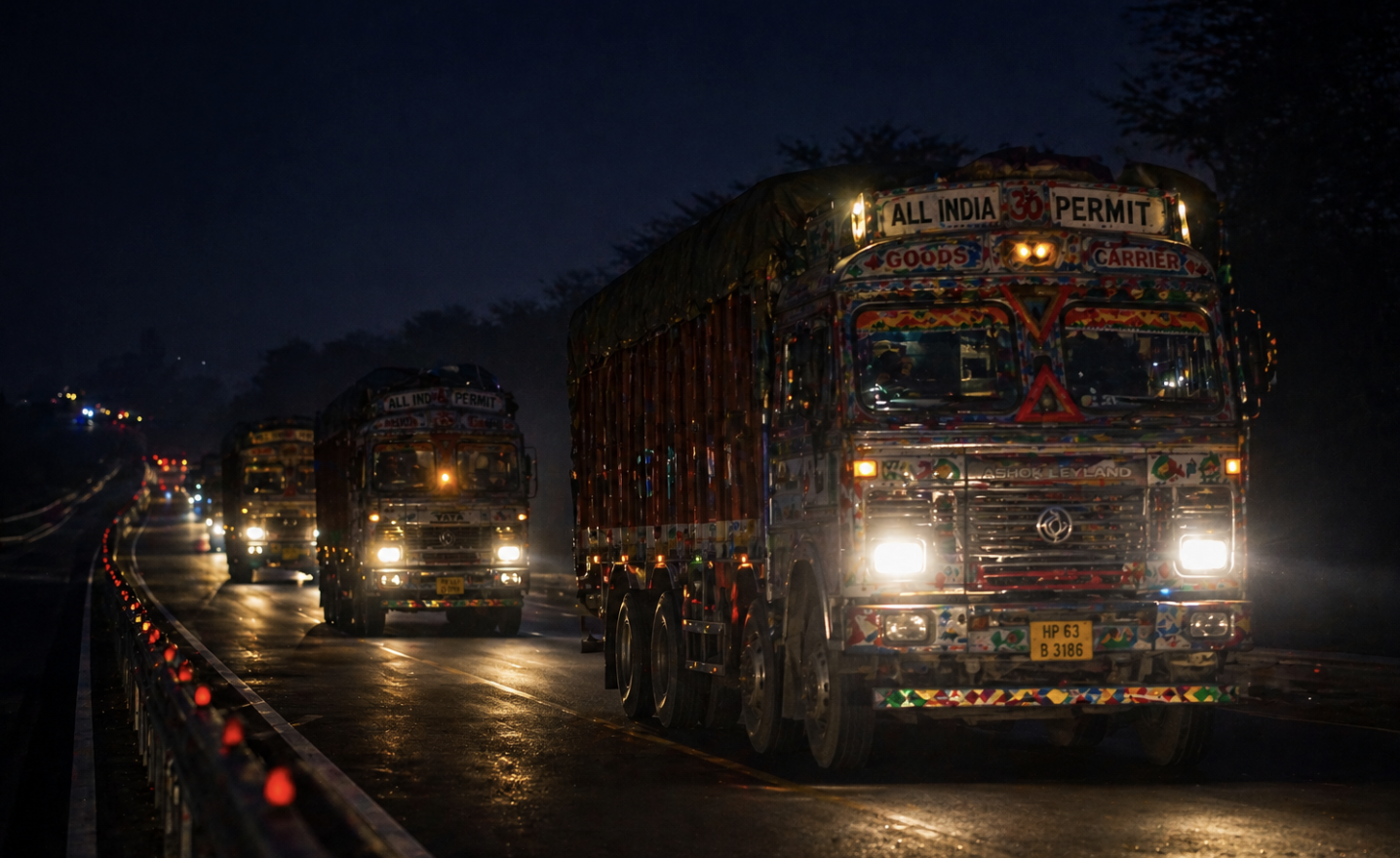
The Ministry of Road Transport and Highways reports over 1.5 lakh road fatalities annually, making Indian roads among the deadliest on the planet by absolute count. For every person who dies, many more are seriously injured. Families are destroyed. Livelihoods are lost. And a significant proportion of these deaths involve commercial vehicles- trucks, tankers, and passenger carriers — operating on national highways where speeds are higher, night driving is routine, and a single moment of driver inattention can kill dozens of people.
The causes of this crisis have been studied extensively. They are not mysterious. Driver fatigue is the single largest contributing factor in highway accidents involving commercial vehicles. Distraction — phone use, inattention, conversations — is the second. Overspeeding under schedule or delivery pressure is the third. Inadequate vehicle maintenance is the fourth. And underpinning all of it is a structural absence of oversight: for most of the history of India's commercial transport industry, what happened inside a vehicle cab once the driver left the depot was essentially invisible to fleet operators and safety managers.
That invisibility is ending. Not gradually, but rapidly and at scale — driven by a new generation of AI-powered technology that gives fleet operators real-time visibility into every vehicle, every driver, and every dangerous event across their entire operation. The technology isn't theoretical or experimental. It is deployed, working, and delivering measurable safety improvements on Indian roads right now.
This post covers what that technology is, how it works, why it is proving effective where previous interventions have failed, and what India's leading operators — including FlixBus India and AbhiBus- are building with it.
The Root Causes of Commercial Vehicle Accidents in India
Before understanding the technology, it's worth being precise about the problem it is solving.
Driver Fatigue: The Silent Killer on Indian Highways
India's commercial transport industry runs on long hours and longer routes. A truck driver on a Mumbai–Delhi run covers over 1,400 kilometres — typically in under 24 hours when schedule pressure is high. A long-haul bus driver on an overnight intercity route boards at 10 PM and arrives at 6 AM, having been behind the wheel for eight continuous hours through the night — the most biologically dangerous window for fatigue. In many operations, that same driver does the return trip the following evening.
Fatigue impairs driving in ways that are clinically well understood but subjectively difficult for the driver to self-monitor. A fatigued driver has slower reaction time, narrowed attention, reduced ability to process complex situations, and- most dangerously- microsleep episodes: involuntary moments of sleep lasting two to five seconds. At 80 km/h, a five-second microsleep means travelling over 110 metres with zero driver awareness. On a national highway with trucks, pedestrians, and two-wheelers sharing the road, the consequences can be catastrophic.
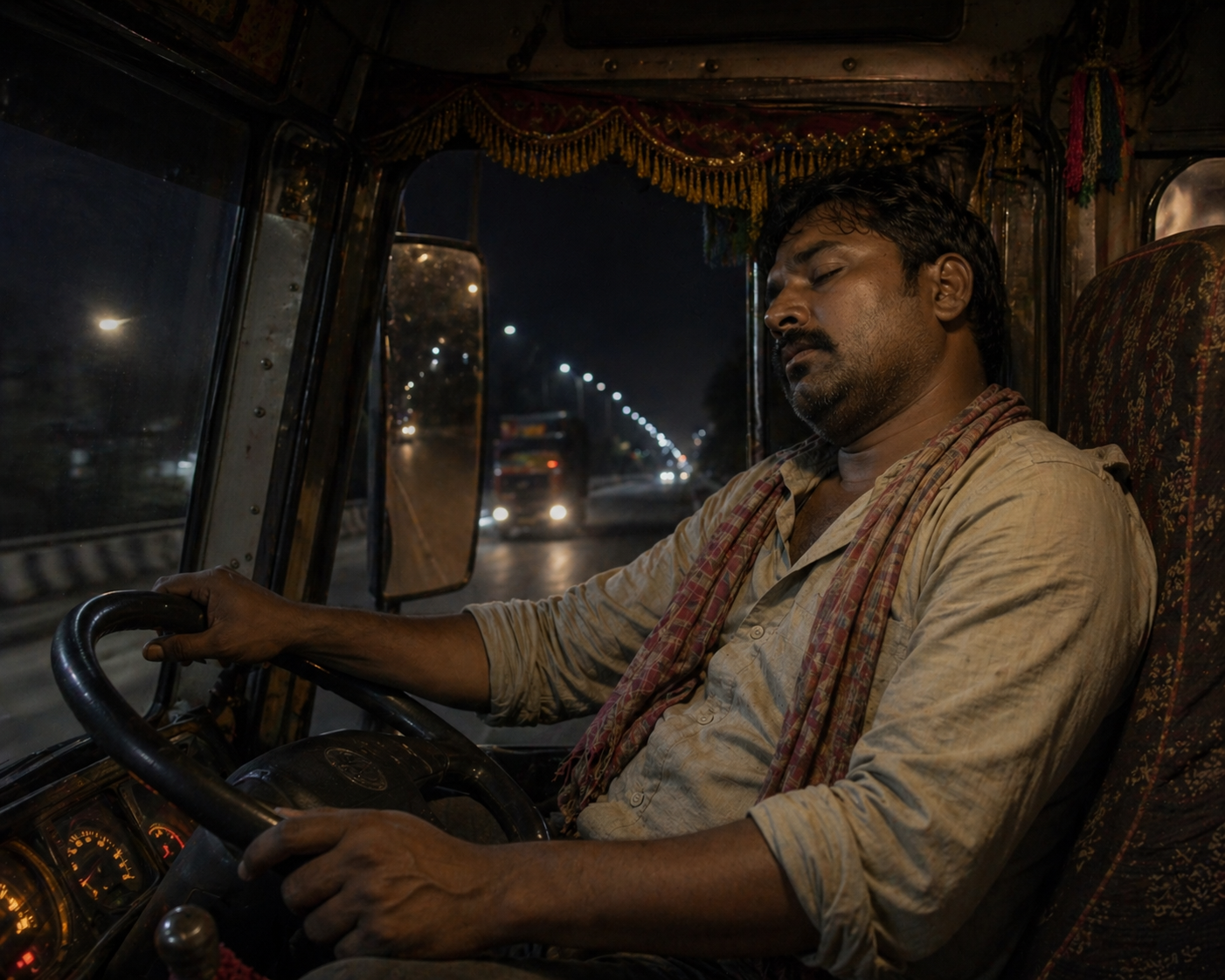
The problem is systemic, not individual. Most drivers are not reckless — they are operating within an industry structure that normalises fatigue as a cost of doing business. Without monitoring, that structure is invisible and therefore unchangeable.
Distraction: The Modern Epidemic
Phone use while driving has become endemic across India's commercial vehicle workforce. Smartphones are how drivers navigate (Google Maps), communicate (WhatsApp), and stay entertained on long monotonous highway stretches. A driver glancing at a phone for three seconds while travelling at 80 km/h has effectively driven 67 metres blind.
Distraction extends beyond phones. Conversations with co-drivers, eating behind the wheel, adjusting vehicle controls — any sustained attention shift away from the road creates a window of vulnerability. On a highway with mixed traffic and limited road quality, that window is rarely consequence-free for long.
Overspeeding Under Pressure
India's freight and passenger transport industry operates under intense schedule pressure. Deliveries have time windows. Passengers expect punctuality. Drivers who run late face complaints, supervisor calls, and in some operations, pay penalties. This creates a direct financial and social incentive to speed — particularly on long stretches of good highway where the risk feels low and enforcement is sparse.
The relationship between speed and accident severity is exponential, not linear. A collision at 100 km/h releases four times the kinetic energy of a collision at 50 km/h. Overspeeding doesn't just increase accident probability; it dramatically increases the probability that an accident will be fatal.
Mechanical Failure and Deferred Maintenance
India's commercial vehicle fleet skews old and is often maintained reactively — fix it when it breaks, rather than service it before it does. The consequences of this approach are periodically catastrophic: brake failures on ghat sections, tyre blowouts at highway speed, steering failures on loaded trucks. These events are not random bad luck; they are the predictable outcome of inadequate preventive maintenance.
For the operators deploying the latest safety technology, all four of these root causes are now addressable in ways they were not five years ago.
AI Dashcams: From Recording Devices to Real-Time Safety Systems
The word "dashcam" conjures a simple recording device — a camera that captures footage of the road ahead, useful after an accident. What modern AI dashcams actually do bears little resemblance to that description.
An AI dashcam is a real-time event detection and intervention system. It doesn't passively record; it continuously watches, analyses, and acts. The distinction is the difference between a security camera and a security guard.
The Dual-Lens Architecture
Modern AI dashcams deployed in commercial vehicles use two camera lenses operating simultaneously — one road-facing, one driver-facing. Some advanced deployments add cabin cameras for passenger vehicle applications.
The road-facing lens feeds into ADAS (Advanced Driver Assistance System) algorithms that analyse the driving environment in real time:
Forward Collision Warning (FCW) continuously calculates the closing speed between the vehicle and whatever is ahead of it. When the algorithm determines that a collision is imminent unless the driver brakes immediately, an audio alert fires in the cabin — loud, specific, and designed to cut through driver distraction or fatigue in the critical seconds before impact. In a scenario where the driver is drowsy or distracted and hasn't noticed a vehicle braking ahead, this warning can be the difference between a near-miss and a fatal accident.
Lane Departure Warning (LDW) monitors the vehicle's position relative to lane markings. When the vehicle drifts out of its lane without an active turn signal — one of the most reliable early indicators of driver fatigue or distraction on highway sections — an alert fires immediately. On Indian national highways, where lane discipline is variable and two-wheelers frequently occupy shoulder zones, unintended lane departure is a significant accident trigger.
Headway Monitoring continuously calculates the time gap between the vehicle and the one ahead of it. Persistent following too closely — tailgating — is logged as a safety event, since the relationship between following distance and rear-end collision probability is well established. Drivers who consistently tailgate receive coaching feedback; persistent tailgating on a specific journey triggers real-time escalation.
Pedestrian and Obstacle Detection provides alerts in urban and semi-urban environments where the density of non-motorised road users — pedestrians, cyclists, auto-rickshaws — creates constant cross-traffic risk.
The driver-facing lens feeds into DMS (Driver Monitoring System) algorithms that analyse the driver's face and body posture:
Drowsiness Detection is the most important capability for preventing fatigue-related accidents on Indian highways. The algorithm tracks eye closure frequency, eye-opening percentage over time (a metric called PERCLOS in sleep science), head nodding patterns, and blink rate. When it detects microsleep patterns — even partial eye closures of two to three seconds at abnormal frequency — it triggers an escalating in-cabin audio alert designed to wake the driver and restore alertness. On an overnight highway run at 3 AM, this alert can literally save lives.
Distraction Detection monitors where the driver's gaze is directed. When the driver's eyes are off the road for more than two seconds — checking a phone, looking sideways, reading a roadside sign — an alert fires. The threshold is calibrated to reduce false positives while catching genuinely dangerous sustained off-road attention.
Yawning Frequency Monitoring logs high yawning frequency as a fatigue pre-indicator. A driver yawning repeatedly in a short window hasn't yet reached dangerous drowsiness but is on the path to it. Early logging allows pre-emptive intervention — a supervisor call, a scheduled rest stop — before the situation becomes dangerous.
Seatbelt and Smoking Detection round out the cabin monitoring — both compliance issues that also indicate broader driver discipline.
The Alert and Escalation Architecture
When the AI detects a safety event, the response doesn't stop at the in-cabin alert. It flows through a layered escalation system:
Layer 1 — In-cabin alert: Immediate audio alert to the driver, fired within milliseconds of event detection by the on-device AI. The driver gets the intervention in real time — not two minutes later when a notification has been processed by a cloud server.
Layer 2 — Fleet manager notification: Simultaneously, the event is transmitted to the fleet management platform. The operations control room receives a notification: driver name, vehicle number, location, event type. A safety manager monitoring 200 vehicles sees a drowsiness alert on Vehicle HR-26-AB-1234 near Karnal on NH-44 at 2:17 AM and can immediately call the driver.
Layer 3 — Video clip upload: A short video clip — typically 10 to 15 seconds before and after the event — is saved to the cloud and available for review within minutes. The safety manager doesn't just know that a drowsiness event occurred; they can see the driver's face, the road conditions, and the context. This clip-based review model makes monitoring manageable- teams review flagged events rather than hours of continuous footage.
Layer 4 — Configurable escalation rules: Operators define thresholds that trigger automatic escalation. Three drowsiness events within an hour triggers an automatic supervisor call to the driver. Five events triggers a mandatory pull-over instruction. These rules enforce rest without relying on driver self-reporting or manager availability at 3 AM.
Why This Works When Training and Policy Haven't
India's commercial transport industry has had driver training programmes, safety policies, and regulatory frameworks for decades. The accident rate has not fundamentally improved. The reason AI dashcam-based monitoring works where these interventions have been insufficient is the mechanism of change it creates.
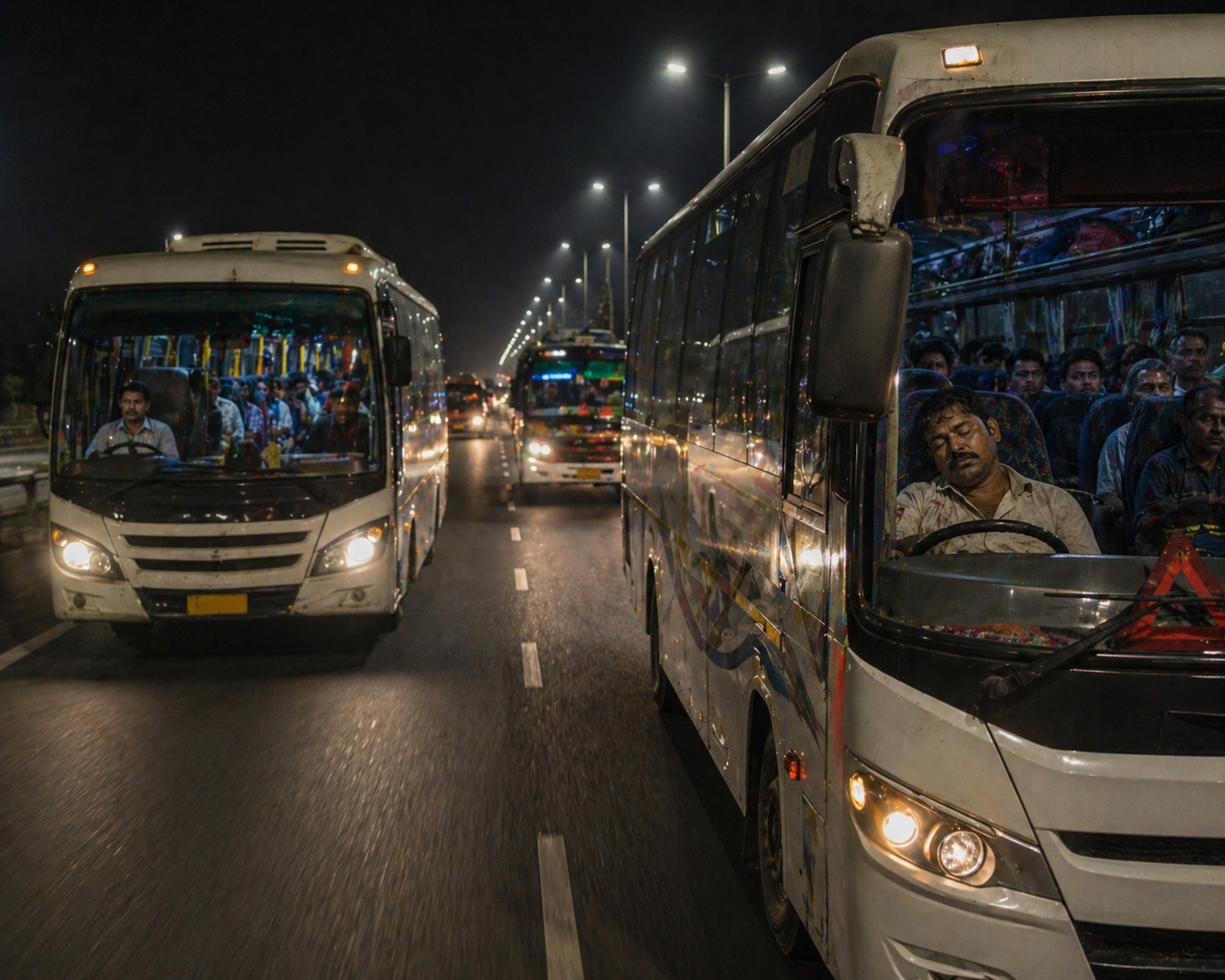
Monitoring creates awareness. Awareness changes behaviour. Changed behaviour produces safer outcomes. This is not a hypothesis — it is the mechanism that has driven dramatic safety improvements in aviation, maritime, and rail transport over the past 50 years. Those industries monitor everything: flight data recorders, voyage data recorders, train event recorders. The data is reviewed, patterns are identified, and behaviour is corrected before accidents occur.
Road transport has been the last major transport mode to adopt this approach at scale. AI dashcams are what make it economically and technically feasible — affordable enough to deploy across large fleets, capable enough to generate meaningful safety data, and connected enough to enable real-time intervention rather than just post-hoc analysis.
The behaviour change is documented and consistent. Fleets deploying AI dashcam monitoring report reductions in harsh driving events — overspeeding, harsh braking, harsh acceleration — of 30 to 50% within the first six months. Fuel consumption drops as aggressive driving declines. Accident rates fall. The improvement is not dramatic in the first week; it compounds as the culture of the fleet shifts from unmonitored to accountable.
Real-Time Fleet Visibility: The Safety Control Tower
AI dashcams address what happens in and around individual vehicles. Real-time fleet visibility addresses what the operation looks like from above — and enables the kind of centralised oversight that makes large-scale safety management possible.
What Real-Time Visibility Actually Means
Real-time fleet visibility in 2025 means a great deal more than a map showing vehicle locations. A modern fleet visibility platform gives an operations team a live, multi-dimensional picture of every vehicle in their fleet simultaneously:
Live location and speed for every vehicle, updated every 30 to 60 seconds, with current speed displayed against the speed limit for that road section. Overspeeding is visible the moment it happens — not when a driver is stopped at a checkpoint.
Active safety event feed: As AI dashcam events occur across the fleet — a drowsiness alert in Haryana, a harsh braking event in Maharashtra, a lane departure warning in Tamil Nadu- they appear in a live feed at the operations centre. A safety manager watching this feed has real-time situational awareness of the fleet's safety status across multiple states simultaneously.
Driver fatigue risk scores: Continuously updated scores for every active driver based on event frequency, time behind the wheel, and time of day. A driver accumulating drowsiness events in the third hour of a night run shows an escalating risk score- prompting proactive intervention before a serious event occurs.
Vehicle health indicators: Live OBD data from each vehicle feeding fault code alerts and performance anomalies into the operations dashboard. A brake pressure warning appearing on a vehicle in the field triggers an immediate instruction to pull over for inspection - not a post-breakdown investigation.
Route compliance: Every vehicle's position continuously compared against its planned route. Unauthorised deviations - whether a driver taking a shortcut, stopping at an unapproved location, or significantly departing from the planned corridor- are flagged automatically.
The Safety Control Tower Model
The most sophisticated fleet operators are building what is essentially a safety control tower- a centralised monitoring function modelled, conceptually, on the air traffic control centres that maintain safety oversight of aviation. The control tower watches the entire fleet in real time, acts on safety events as they occur, and maintains a continuous operational record of every vehicle and driver.
This model fundamentally changes the capacity of a fleet safety programme. A single safety manager with a well-configured control tower platform can maintain meaningful oversight of 200 vehicles simultaneously- flagging events, triggering interventions, and building the data record that enables pattern analysis and continuous improvement. Without the platform, meaningful oversight of 200 vehicles would require dozens of people and still be largely reactive.
Maintenance as a Safety Technology
When people discuss road safety technology, the conversation typically centres on driver monitoring — dashcams, fatigue detection, behaviour scoring. These are important. But mechanical failure is a significant and underappreciated cause of serious accidents on Indian roads, and preventive maintenance management is therefore a safety technology, not just a cost management tool.
OBD Integration and Real-Time Fault Detection
Modern commercial vehicles with OBD ports allow the fleet management platform to read live engine data continuously. When the vehicle's engine management system registers a fault code, the operations platform receives it in real time.
The safety implication is profound. A brake pressure warning that appears while a vehicle is still at the depot can be investigated and resolved before departure. The same warning appearing when a fully-loaded truck is descending a ghat section of a mountain highway is a potential catastrophe. Real-time fault monitoring creates the opportunity to catch mechanical issues at the safest possible moment — before the vehicle is on the road.
Tyre Pressure Monitoring
Tyre blowouts at highway speed are among the most violent and dangerous mechanical failures that can occur on a commercial vehicle. Tyre Pressure Monitoring Systems integrated with the fleet platform continuously monitor pressure across all axles and flag gradual pressure drops — the precursor to a blowout — enabling a controlled stop for inspection rather than a sudden high-speed failure.
Scheduled Maintenance Compliance
Fleet management platforms track each vehicle's service schedule — by kilometres driven, engine hours, or calendar time — and generate automated reminders when service is due. For safety-critical components like brakes, tyres, and steering systems, overdue service can be configured as a compliance gate: a vehicle with overdue brake maintenance cannot be dispatched until the service record is updated.
This preventive approach is what separates proactive safety management from reactive accident investigation.
FlixBus India: Safety at Scale on India's Intercity Corridors
FlixBus India is one of the country's fastest-growing intercity passenger transport operators, connecting major cities and tier-2 towns across key corridors. With a fleet of 200 buses and a brand promise built on reliability, comfort, and safety, FlixBus India faced a challenge that every scaling operator eventually confronts: how do you maintain safety standards when your fleet is spread across dozens of routes, in multiple states, at all hours of the day and night?
The answer, for FlixBus India, was to build a technology-backed safety infrastructure capable of maintaining 24×7 oversight of the entire fleet — not just as an aspiration, but as an operational reality.
The Fleetx Deployment
FlixBus India partnered with Fleetx to deploy AI-enabled dual-lens dashcams across all 200 buses. The deployment covered both road-facing ADAS and driver-facing DMS systems simultaneously, giving the operations team real-time visibility into both the driving environment and the driver's physical and attentional state on every trip, on every route, around the clock.
The core capability built was a centralised safety control tower — a 24×7 monitoring function that watches the entire FlixBus India fleet in real time, receives safety event notifications as they occur, reviews video clips in context, and enables immediate intervention when the data warrants it.
The Results
65% reduction in breakdowns. This is the headline outcome — and it reflects the combined impact of proactive maintenance management, real-time OBD fault monitoring, and the overall improvement in vehicle and driver discipline that comes from systematic, technology-backed oversight. Fewer breakdowns means fewer stranded vehicles on highways, fewer delayed passengers, and — critically — fewer situations where a vehicle emergency creates a secondary safety hazard for other road users.
Real-time fatigue management on overnight routes. FlixBus India's overnight intercity services — which account for a major proportion of their schedule — became the most direct beneficiary of the AI drowsiness detection system. Fatigue events are detected and responded to in real time, with in-cabin alerts and operations team notifications firing simultaneously. The critical window between a driver beginning to show fatigue signs and losing control of the vehicle is now a managed interval rather than an invisible one.
Scalable safety oversight. Perhaps the most strategically significant outcome is architectural: FlixBus India now has a safety monitoring infrastructure that scales with fleet growth. Adding buses to the fleet does not require proportionally adding safety staff. The control tower monitors 200 buses as efficiently as it monitors 20 — which means that as FlixBus India expands into new corridors and cities, its safety capability expands with it.
Cultural shift in driver accountability. Across the driver base, the awareness that every trip is monitored has demonstrably shifted behaviour. Harsh events — overspeeding, lane departures, harsh braking — declined as drivers internalised that their driving profile is continuously tracked. Coaching conversations moved from anecdotal to data-driven: "You had six overspeeding events on last Tuesday's Bangalore-Mysore run. Let's look at where on the route they occurred and why." This specificity makes coaching more effective and, importantly, makes drivers feel the system is fair rather than arbitrary.
 Fleetx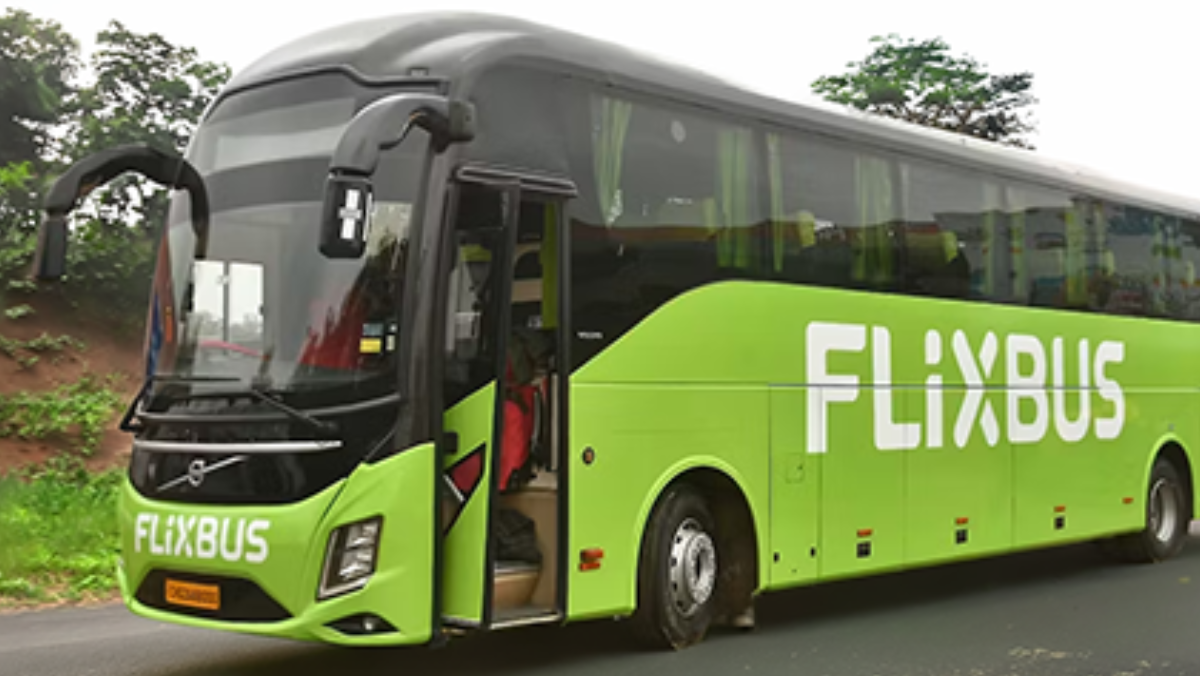
AbhiBus: Building a Dashcam-First Safety Culture
AbhiBus is one of India's leading bus ticketing and operations platforms — a company that combines technology with direct bus operations across key intercity corridors. With a business built on the promise of reliable, safe passenger transport, AbhiBus has been among the earliest adopters of AI-powered safety technology in the Indian transport sector.
What distinguishes AbhiBus's approach is its philosophy: dashcam-first. Rather than treating AI dashcams as an add-on to a GPS tracking and fleet management system, AbhiBus has built its safety programme with the dashcam and its real-time monitoring capabilities as the core — the primary instrument through which driver safety is monitored, measured, and managed.
Why Dashcam-First Makes Sense
For many freight operators, the primary value of fleet telematics is location and compliance — knowing where vehicles are, confirming route adherence, verifying delivery. Driver safety monitoring matters, but it's one capability among several.
For a passenger transport operator, the calculus is different. Passengers are on board. Their safety is the primary obligation — not an important consideration, the primary one. The AI dashcam, which monitors the driver and the road simultaneously and in real time, is therefore the most directly relevant safety technology available. It addresses the root causes of the accidents most likely to harm passengers: driver fatigue, distraction, and dangerous proximity to other vehicles.
AbhiBus's deployment with Fleetx concentrates on exactly these high-consequence events. Drowsiness and distraction detection on overnight routes. ADAS alerts that fire when dangerous following distances or collision scenarios develop. Harsh event detection that flags loss of situational awareness. Each event generates a real-time notification and a video clip — giving the safety team both the alert and the evidence simultaneously.
Real-Time Oversight as Operational Standard
AbhiBus uses the real-time event data from its dashcam deployment to maintain continuous safety oversight across its operated fleet. Safety events are flagged in real time to an operations monitoring function. Video clips are reviewed in context — distinguishing between a genuine fatigue event and a sensor artefact, between a harsh brake triggered by a road obstacle and one caused by driver inattention.
This distinction matters. Real-time monitoring without context creates alert fatigue — safety managers overwhelmed by notifications stop treating them with urgency. The combination of event detection and video clip review that Fleetx's platform delivers ensures that monitoring remains meaningful: every flagged event is reviewable, every intervention is justified, and every coaching conversation is grounded in actual footage rather than algorithmic abstraction.
For AbhiBus, the outcome is a safety programme that operates not just on paper — as a policy document or a compliance checklist — but as a live operational function that actively reduces the probability of accidents on every trip, every day.
Fleetx
The Technology Infrastructure Behind It All
The capabilities described above — edge AI event detection, real-time notifications, video clip upload, centralised control tower dashboards — rest on a technology architecture that has been specifically engineered for the realities of operating on Indian roads.
Edge AI processing is what makes millisecond event detection possible in a vehicle moving at highway speed through areas with intermittent connectivity. The AI algorithms that detect drowsiness, distraction, and ADAS events run on the dashcam device itself. The in-cabin alert fires in milliseconds because the decision is made locally — not after a round trip to a cloud server. This architecture also means the system operates through the connectivity gaps that are a fact of life on India's national highway network — the stretches between towns where 4G is patchy and 2G is the available fallback.
4G with 2G fallback connectivity ensures that event notifications and video clips reach the operations centre reliably. Telematics devices maintain a local data buffer when connectivity drops and sync automatically when signal is restored. No event data is lost, even on routes through the most connectivity-poor terrain in India's highway network.
Cloud video storage with event tagging makes managing video data at scale feasible. A fleet of 200 vehicles generating continuous footage would produce an unmanageable volume of raw video. The platform stores event-tagged clips — short segments around flagged events — and makes them accessible and searchable within minutes of occurrence. Safety teams review what matters rather than reviewing everything.
Integrated fleet management connects dashcam and driver safety data with the broader operational picture — route compliance, maintenance records, trip analytics, fuel data — in a single platform. This integration enables the safety control tower model: a unified operational view rather than a collection of disconnected data streams that require manual correlation.
The Compounding Returns of Safety Data
One of the least discussed but most valuable aspects of sustained AI-powered safety monitoring is what happens to the data over time.
In the first weeks of deployment, the primary value is real-time intervention — catching dangerous events as they happen. This is significant and immediate.
Over months, a richer value emerges: pattern recognition. The accumulated data reveals which routes carry the highest fatigue event rates (overnight highway runs in the early hours), which time windows are highest risk (2 to 5 AM consistently), which specific road sections generate the most ADAS alerts (known accident black spots, ghat sections, urban entry points), and which drivers need the most support (not the worst drivers, but the ones whose risk profile suggests they are operating close to their limits).
This pattern recognition allows safety programmes to become targeted rather than generic. Rather than applying the same monitoring and coaching to all drivers on all routes, operators can focus interventions where the risk is highest — mandatory rest stops at specific points on high-fatigue routes, enhanced monitoring during high-risk time windows, proactive coaching for drivers whose data shows emerging risk patterns.
The safety improvement compounds. A fleet that has been running AI-powered monitoring for two years is not just safer than it was at deployment; it is safer than it was at six months, because the programme has become progressively more targeted, more data-informed, and more embedded in the operational culture.
The Road Ahead: Where India's Safety Technology Is Going
The current generation of AI dashcams and real-time visibility platforms represents a step-change from where the industry was five years ago. The next five years will bring further capabilities that extend what is currently possible.
Predictive fatigue modelling will move beyond detecting fatigue as it occurs to predicting when a driver is likely to become fatigued based on cumulative driving hours, time of day, route characteristics, historical patterns for that specific driver, and environmental factors. This shifts intervention from reactive to pre-emptive — scheduling mandatory rest stops before a driver reaches the fatigue threshold rather than alerting after they have crossed it.
Integrated road hazard intelligence will combine dashcam data from across a fleet to build a real-time map of road hazards — accident scenes, waterlogged sections, debris, construction — and share that intelligence across vehicles on the same route, giving drivers upstream warning of hazards their own sensors haven't detected yet.
Insurance integration is beginning in mature markets and will reach India: operators with demonstrably safer fleets — evidenced by dashcam event data, driver behaviour scores, and accident records — will access preferential commercial vehicle insurance pricing. This creates a direct financial return on safety investment that goes beyond regulatory compliance and brand protection.
V2X connectivity — vehicle-to-everything communication, where vehicles exchange data directly with road infrastructure and with each other — will eventually add an environmental intelligence layer to driver and vehicle monitoring, enabling a level of situational awareness that no onboard sensor system can match independently.
Conclusion: Safer Roads Are a Technology Choice
India's road safety crisis is not unsolvable. It is not the inevitable consequence of traffic density, road quality, or cultural factors that can't be changed. It is, in significant part, the consequence of a historic absence of visibility — operators who could not see what their drivers were doing, roads that offered no accountability for dangerous behaviour, and a system where unsafe driving went undetected until it produced an accident.
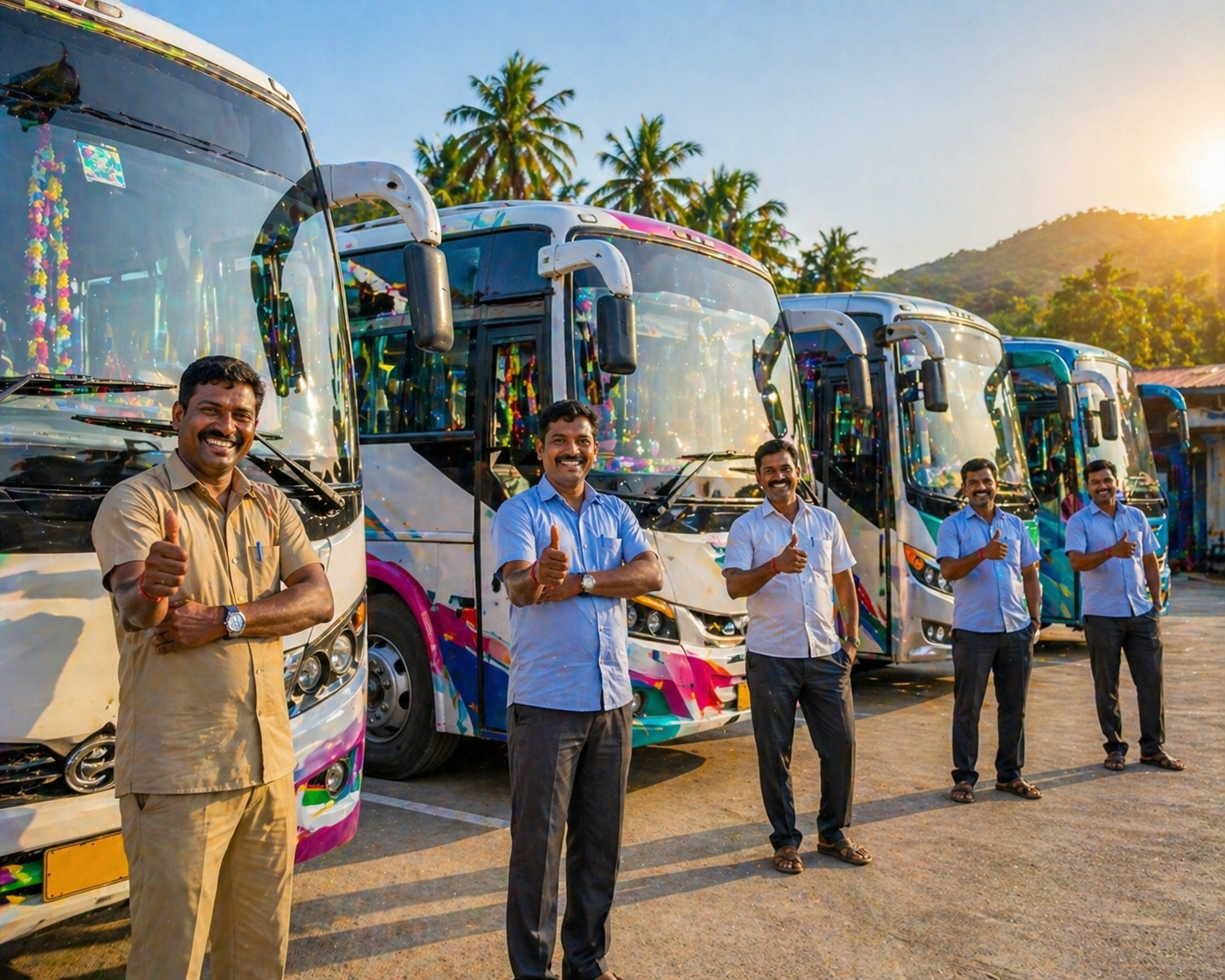
That absence of visibility is ending. The technology to monitor every driver on every kilometre of every trip — detecting fatigue before it becomes dangerous, flagging distraction in real time, alerting to mechanical failures before they cause breakdowns, and building a continuous safety record that enables accountability and continuous improvement — exists, works, and is deployed at scale today.
FlixBus India's 65% reduction in breakdowns. AbhiBus's dashcam-first safety programme delivering real-time oversight across their intercity operations. These are not isolated achievements — they are proof points for an approach that is replicable across India's commercial vehicle fleet.
Every fleet operator in India — whether they run trucks, buses, tankers, or delivery vehicles — now faces a choice. Continue operating with the historic absence of visibility and accept the safety and financial consequences that come with it. Or invest in the technology that makes Indian roads safer: not as a regulatory obligation, but as a genuine commitment to the drivers, passengers, and other road users whose safety depends on the quality of that choice.
The technology has never been more capable. The case has never been more clear.