
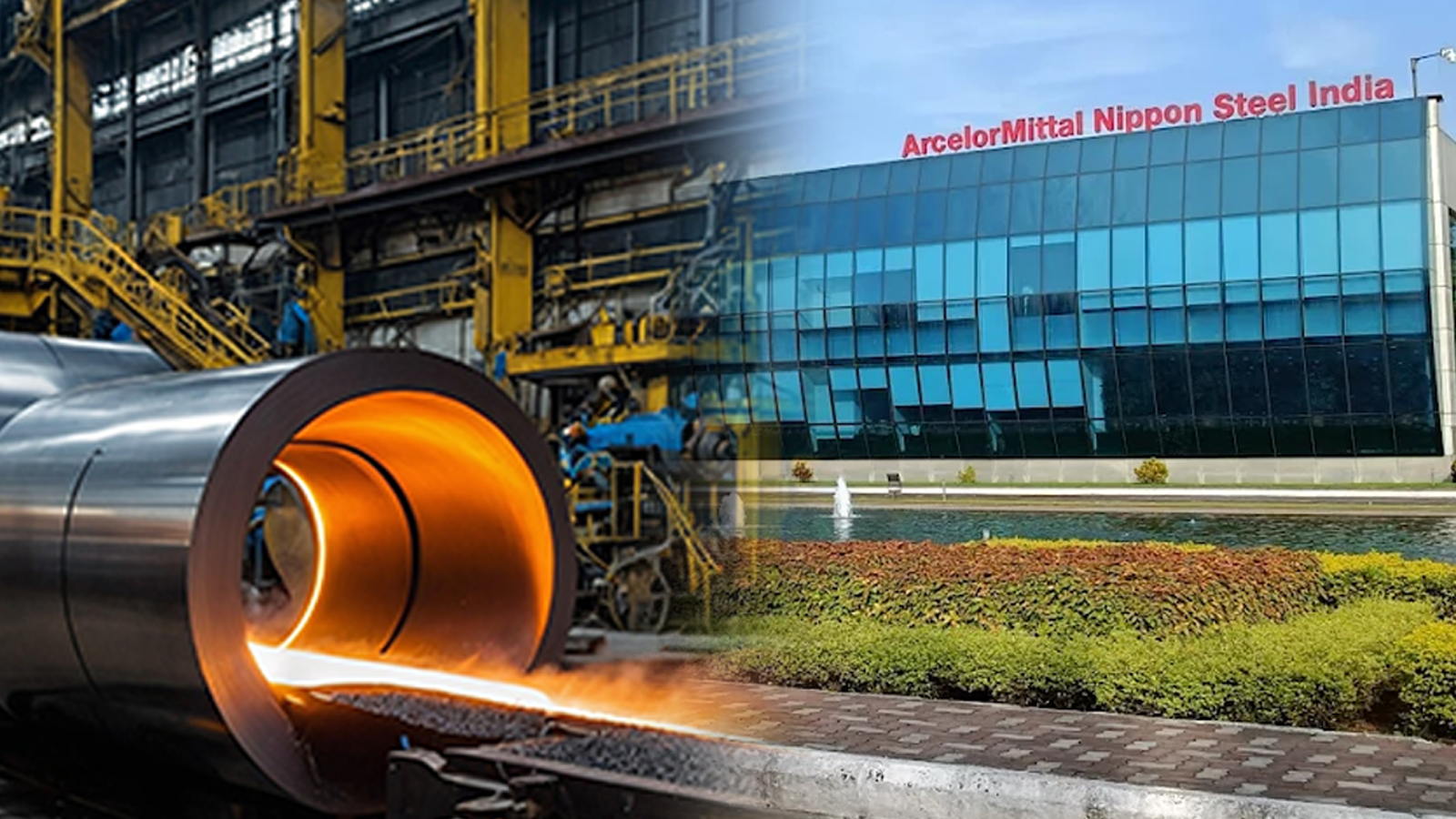
When 10% of your fleet isn't going where it should, the real cost isn't just fuel. It's trust, governance, and revenue.
The Problem with "We'll Check Tomorrow"
In high-value industrial logistics, tomorrow is too late.
For a steel enterprise managing outbound shipments of expensive raw materials and finished products across multiple locations, every trip carries significant financial and compliance weight. Strict dispatch timelines, third-party transporter dependency, mine-based vehicle management, and loading and unloading operations at both ends — steel logistics leaves almost no room for error.
Yet for ArcelorMittal Nippon Steel India (AM/NS India), nearly 10% of trips were experiencing route deviations. Vehicles were straying from pre-approved routes, and operations teams had no way to detect it in real-time. By the time a deviation was flagged, the damage — whether to delivery timelines, material security, or audit records — was already done.
This is what reactive fleet management costs. Not just operationally. Strategically.
Four Problems Hiding Inside One Number
A 10% route deviation rate is not a single problem. It is four problems compounding each other simultaneously.
Visibility
AM/NS India's operations teams were relying on manual transporter updates and phone-based coordination. There was no centralized control tower. Fleet movement across geographies was, in effect, invisible.
Material Security
Unmonitored stoppages and unauthorized detours created direct exposure to pilferage, unauthorized unloading, and unaccounted stoppage time — risks that are unacceptable when the cargo is high-value steel.
Transporter Accountability
Without real-time data, there was no objective mechanism to hold third-party transporters accountable for route compliance. Disputes became word-against-word conversations with no data to anchor them.
Governance & Compliance
For an enterprise of AM/NS India's scale, audit readiness is non-negotiable. The absence of structured movement records and route compliance data was creating growing liability — internally and with clients.
One metric. Four failure points. Each one quietly erodes operational integrity.
The Selection Criteria: What Intelligence-Led Monitoring Actually Looks Like
Fleetx deployed its Vehicle Tracking System with route intelligence capabilities designed specifically for the complexity of industrial logistics. The approach was structured, systematic, and built around one core principle: don't just track movement — understand it.
Every vehicle in AM/NS India's outbound fleet was integrated into a centralized Fleetx dashboard, giving operations teams live GPS visibility into location, stoppages, and trip progress across the entire network. Pre-approved routes were digitally mapped into the system, with automated deviation alerts triggered the moment a vehicle exceeded defined thresholds — and GPS disconnection alarms activated as an additional layer of security.
Strategic geo-fences were placed around plant exits, high-risk transit zones, delivery yards, and border checkpoints. Any unauthorized halt or route shift triggered an immediate alert. Operations teams moved from receiving information hours later to acting on it in real time.
The platform also generated structured, audit-ready compliance reports — deviation logs, route compliance scores, historical movement records — giving management and audit teams full, defensible transparency into fleet operations.
This is the difference between a tracking tool and an intelligence layer. One tells you where your vehicles are. The other tells you when something is wrong, why it matters, and what to do about it.
The Results: Measurable, Immediate, Strategic
Within the first phase of implementation, the numbers moved decisively.
Route deviations dropped from 10% to under 2% — an over 80% reduction. The operational impact was immediate: reduced risk exposure, higher delivery discipline, and significantly stronger transporter accountability across the network.
But the more meaningful shift was behavioral. Operations teams stopped firefighting. With real-time monitoring and automated alerts in place, the posture of the entire logistics function moved from reactive to proactive. Drivers and transporters became more compliant, knowing that every kilometre was being intelligently monitored.
On the governance side, AM/NS India now holds audit-ready movement logs and deviation records that can be shared with internal stakeholders, management, and external auditors at any time. The compliance liability that once existed has been replaced by a structured, data-driven control framework.
Strategically, the outcomes extended further — reduced revenue leakage risk, stronger trust with end customers, greater predictability in logistics performance, and enhanced data-driven decision-making across the supply chain.
Why This Matters Beyond Steel
The AM/NS India deployment is a proof point — but it is not an isolated one.
Across cement, construction, pharmaceuticals, FMCG, and 3PL logistics, the same four failure points exist: limited visibility, material security risk, transporter accountability gaps, and compliance exposure. The industries differ. The operational reality is the same.
What changes the equation is not more people monitoring more phones. It is intelligent, real-time infrastructure that converts raw fleet data into actionable decisions — automatically, at scale, before problems escalate.
Fleetx processes over 20 billion sensory data points every day across more than 350,000 vehicles. Every data point is an opportunity to prevent a deviation, flag a risk, or surface a decision that a human would otherwise make too late.
The future of industrial logistics is not faster trucks. It is smarter oversight.