In the past decade, automation and enhanced safety have been prioritized at the forefront of numerous industries as a result of the integration of technology into daily life. School transportation is one area that is undergoing substantial advancements in technology. Amidst these technological advancements, video telematics is a remarkable innovation that has the potential to completely transform the way school buses function.
The World Health Organization estimates that traffic injuries are the primary cause of death for children and young adults aged 5 to 29 worldwide, which is concerning information. India has one of the highest rates of traffic accidents in the world, with over 150,000 deaths each year, and a lot of those deaths are children. This makes the situation even more urgent. These startling statistics demonstrate how urgently improved safety precautions in school transportation are needed.
In order to solve this urgent problem, Video telematics in school buses is not just a trend but also a requirement. Video telematics offers a comprehensive solution to increase operational efficiency and safety by guaranteeing driver accountability, improving overall fleet management, and offering real-time monitoring capabilities.
School buses are the major form of transportation for millions of students around the world, and therefore play an important role in ensuring the security of children and providing them with access to educational opportunities. These are eight strong reasons why video telematics is a vital component of school buses in India and around the world.
What Is Video Telematics for School Buses?
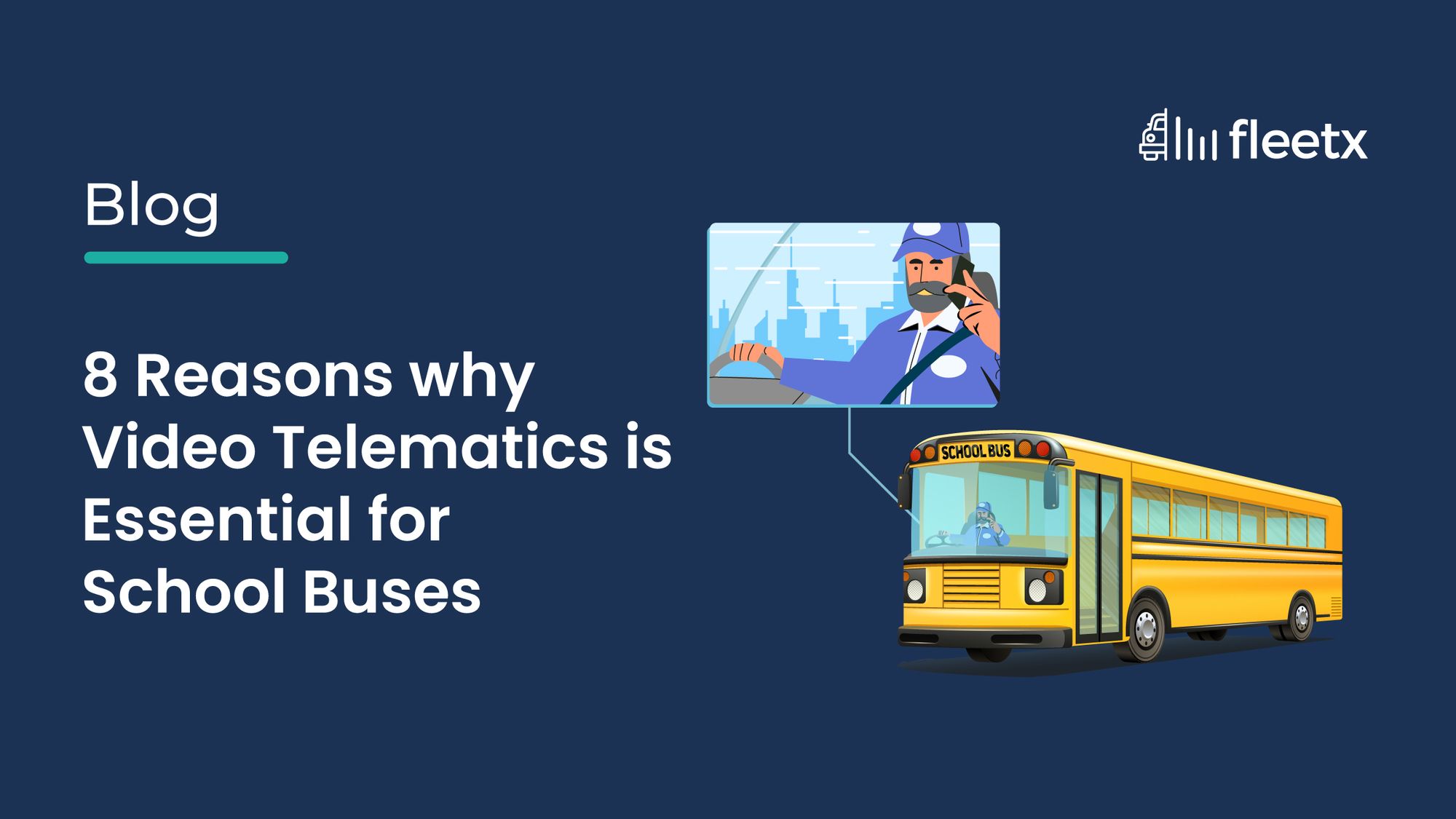
Video telematics is a technology that combines video surveillance, GPS tracking, AI-powered analytics, and telematics data to provide real-time visibility into school bus operations. Unlike traditional CCTV systems that only record footage, video telematics actively monitors driver behavior, vehicle activity, and road conditions while providing alerts for unsafe events.
For schools and transportation providers, video telematics helps improve student safety, monitor driver performance, investigate incidents, and optimize fleet operations. Modern systems can detect distracted driving, harsh braking, speeding, fatigue, and other risky behaviors that may compromise student safety.
As schools increasingly prioritize transportation safety, video telematics has become an essential component of modern school bus fleet management.
Video telematics for school buses combines AI-powered cameras, GPS tracking, live video monitoring, and driver behavior analytics to improve student safety, enhance driver accountability, prevent accidents, and provide real-time visibility into school transportation operations.
Traditional School Bus Monitoring vs Video Telematics
| Traditional Monitoring | Video Telematics |
|---|---|
| Limited visibility | Real-time visibility |
| Manual incident reporting | Automated event detection |
| Reactive safety management | Proactive risk prevention |
| No live monitoring | Live video monitoring |
| Limited evidence collection | Video-based incident evidence |
How Video Telematics Improves Student Safety
The key objective of any school transportation system is student safety. Real-time monitoring inside the bus is made possible by video telematics, which contributes to an increase in safety. Driver behavior monitoring guarantees that drivers follow safe driving procedures and discourage dangerous driving. Such monitoring is essential in areas such as India, where road safety is a major concern—evidenced by the country's 11% global share of road accident mortality.
Accident Prevention Through AI-Powered Alerts
Video telematics, which incorporates intelligent driver aid technologies like forward collision alarms and lane departure warnings, is essential for preventing accidents. These devices warn drivers of possible dangers, assisting them in keeping their composure in difficult traffic circumstances that are common in crowded places.
Driver Coaching and Accountability
Driver performance can be assessed using data from video telematics systems. This is important for carrying out training programs that work and making sure drivers follow the rules of the road and school regulations. To improve general safety and driving standards, video review can spot trends of harsh braking or quick acceleration and address these issues through focused training.
Smarter School Bus Fleet Management
The effective administration of a school bus fleet entails route optimization, adequate vehicle maintenance, and observance of environmental requirements. Video telematics with integration of fleet management system enables these activities by providing real-time monitoring. In addition to optimizing routes to save time and fuel, this also makes preventative maintenance possible, which lowers the chance of breakdowns and increases the longevity of vehicles.
Real-Time Communication During Emergencies
Particularly in emergency situations, the ability to send live footage from buses to emergency responders or school administration is required. This function makes sure that the right information is communicated right away, enabling prompt and appropriate actions. In India, where school routes may reach distant locations, this kind of technology is crucial for immediate crisis planning and communication.
Compliance, Documentation, and Legal Protection
An objective record of the events is provided by video telematics, which is essential for legal protection in the case of incidents or accidents. In the event of a disagreement, this video may be extremely helpful in clearing the names of drivers and educational institutions. Furthermore, video proof ensures compliance and helps to prevent potential legal complications by making it easier to follow the strict requirements on school bus operations set by the Supreme Court.
Greater Peace of Mind for Parents
It is only normal for parents to worry about the well-being of their children. These worries can be answered by video telematics, which has capabilities that let parents track their child's bus in real-time. With the use of applications that offer GPS tracking or live video feeds, parents can feel more secure about their children's safety and the dependability of the services that schools provide.
Supporting Sustainable School Transportation
Ultimately, the use of video telematics integrated with fleet management system makes school transportation operations more environmentally friendly. It assists in lowering pollutants and fuel consumption by streamlining routes and enhancing driver behavior.
Key Benefits of Video Telematics for Schools
- Improves student safety through real-time monitoring.
- Helps prevent accidents using AI-powered alerts.
- Increases driver accountability and performance.
- Provides video evidence during incidents.
- Improves emergency response capabilities.
- Enhances communication with parents.
- Optimizes school transportation operations.
- Supports compliance and risk management.
Conclusion
School transportation safety remains a top priority for educational institutions, parents, and transportation providers. Video telematics offers a comprehensive solution by combining AI-powered monitoring, real-time visibility, driver coaching, and incident management capabilities into a single platform.
From improving student safety and preventing accidents to enhancing fleet management and parent communication, video telematics delivers measurable benefits across every aspect of school transportation operations.
As schools continue to modernize transportation systems, adopting video telematics will play a critical role in creating safer, smarter, and more efficient school bus fleets.
Enhance School Bus Safety with Fleetx Video Telematics
Monitor school buses in real time, improve driver accountability, receive instant safety alerts, and provide parents with greater visibility through Fleetx Video Telematics.
Book a Fleetx demo today and discover how video telematics can transform school transportation safety.